NA panel flags key hurdles to e-bike rollout in Pakistan
⚡ Quick Summary
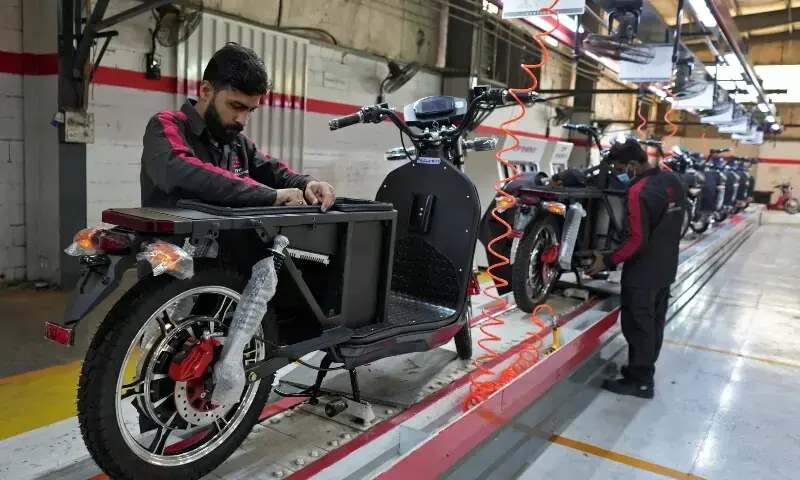
ISLAMABAD: While the government is pushing to replace petrol-powered motorcycles with electric two-wheelers, a sub-committee of the National Assembly Standing Committee on Industries was informed on Monday that Pakistan lacks a dedicated regulatory authority for e-motorcycles, while the absence of a comprehensive lithium battery policy has encouraged the sale of substandard batteries.
ISLAMABAD: While the government is pushing to replace petrol-powered motorcycles with electric two-wheelers, a sub-committee of the National Assembly Standing Committee on Industries was informed on Monday that Pakistan lacks a dedicated regulatory authority for e-motorcycles, while the absence of a comprehensive lithium battery policy has encouraged the sale of substandard batteries.
Soon after the meeting began, sub-committee convener Dr Mehreen Bhutto expressed concern over the fragmented regulatory framework, noting that too many ministries and departments were involved in overseeing different aspects of the e-motorcycle sector.
The committee was told that manufacturing licences are issued by the Engineering Development Board (EDB) under the Ministry of Industries and Production, while quality standards for e-motorcycles and their batteries are certified by the Pakistan Standards and Quality Control Authority (PSQCA), which falls under the Ministry of Science and Technology.
Charging infrastructure, the lawmakers were informed, would be developed by the National Energy Efficiency and Conservation Authority (NEECA) under the Ministry of Energy.
Pakistan lacks dedicated regulatory authority for electric two-wheelers, legislators told
Officials also said that nearly all lithium-ion batteries are imported, while used batteries often enter the country as scrap—a matter that falls under the jurisdiction of the Customs Department and the Ministry of Commerce. The PSQCA representative added that vehicles operating on roads are regulated by provincial authorities.
Dr Bhutto questioned the lack of oversight, expressing concern that some manufacturers use low-quality batteries that become unusable within two to three years, with replacement batteries costing as much as Rs90,000.
Grey market fuels unsafe battery trade
Representing e-motorcycle manufacturers, Dr Muhammad Amjad said manufacturing licences issued by the EDB did not specifically require the use of lithium-ion batteries, allowing some companies to install cheaper lead-acid dry batteries instead.
He also pointed to high import duties on lithium-ion batteries, saying they had fuelled the growth of a grey market in which unlicensed and unregistered operators refurbish lithium-ion cells imported as scrap and sell them openly.
Another manufacturer, Shahid Bajwa, said the industry’s biggest challenge was the absence of any mechanism to promote localisation of components and manufacturing.
“Besides, if we want to report illegal battery manufacturers, is there any forum where we can lodge such a complaint?” he asked.
Localisation, safety
Participants broadly agreed that the PSQCA needs to strengthen its technical capacity and establish dedicated lithium battery testing laboratories.
Dr Bhutto asked stakeholders to submit recommendations to the committee, stressing that unlike conventional petrol-powered motorcycles, electric two-wheelers pose unique safety risks if batteries and components fail.
EDB Chief Executive Officer Hammad Mansoor informed the committee that a new battery policy was being finalised and said many of the issues raised during the meeting would be addressed once it is approved.
Published in Dawn, July 14th, 2026
📰 Related Articles

Chembur tree-fall incident: Clean chit to Garden and Roads Department, Contactors to be penalised
The Hindu
Punjab Congress: Why the Channi–Raja Warring leadership battle matters | Explained
The Hindu
Wildlife rehab centre warns of impact as University of Saskatchewan suspends services
Global News CA
ETMarkets Smart Talk | Equity, mutual funds, bonds or property: Tax rules every NRI should know: Ritu Shaktawat
Economic Times IN
ETMarkets Management Talk | We want to grow 20% annually without taking on debt: Bansal Wire's Pranav Bansal
Economic Times IN