"Students must make mistakes, idealize and build", says award-winning teacher
⚡ Quick Summary
A teacher at a municipal public school in São Paulo, Débora Garofalo started, in 2015, a scrap robotics project for elementary school students.
A teacher at a municipal public school in São Paulo, Débora Garofalo started, in 2015, a scrap robotics project for elementary school students. The work won several awards and placed the professional among the top ten in the Global Teacher Prize, considered the Nobel Prize for education, in 2019. She was the first Brazilian and first South American to be a finalist in the award.
Ten years after the project began, Débora was recognized as the most influential teacher in the world, in a new award category. Invited to the 2026 edition, held in Dubai, in the United Arab Emirates, the educator received the Global Teacher Influencer of the Year award, recognition for her teaching career that goes beyond everyday school life. Last Thursday (11), the teacher was honored again, with the Faz Diferença 2025 Award, in the Education category, in a ceremony at Casa Firjan, in Rio de Janeiro.
Related news:
Study highlights advances in early childhood education in language and mathematics.
Schools in SP open registration for food during the holidays.
Research highlights the strength of the debate about menstrual dignity on social networks.
In addition to the results such as reducing school dropouts and child labor at the school, located on the outskirts of the southern zone of São Paulo, the project to teach robotics with scrap gained scale and became state public policy, under Débora's guidance.
In an interview with Agência Brasil, Débora Garofalo spoke about the origin of the project, the obstacles and achievements resulting from this work. She also shared her vision about the use of technology in the learning process of children and young people, and how this does not necessarily depend on screens.
See the main excerpts from the interview.
Agência Brasil: How did you start the robotics project at the public school where you worked?
Débora Garofalo: The scrap robotics project was born in 2015, at EMEF [Escola Municipal de Ensino Fundamental] Almirante Ary Parreiras, which is a school concentrated between four large favelas in the city of São Paulo, with a high rate of violence and a high rate of drug trafficking. There, I also saw the opportunity to leave my comfort zone, as a Portuguese language teacher, to apply for a technology and innovation vacancy that had arisen.
I went with this perspective, to give a new meaning to that educational territory, working with programming and robotics. From this, I carried out an assessment with the entire school and was surprised, because 70% of the students reported that garbage was a problem in their lives, that it prevented these children from getting to school and caused diseases such as dengue fever and leptospirosis. Faced with that scenario, I said: "Well, I only have two paths. Either I'm going to regret it or I'm going to take this rubbish as an object of knowledge. I preferred the second option, even though I knew it would be a lot of work."
The first prototype we made became a rage at school. It was a cart [made] with the trash that we removed from the street, using a balloon and the law of physics, Newton's Third Law. The next day, a colleague tapped me on the shoulder and said: “Débora, I don’t know what you did with the children yesterday, but there are a lot of children out there with caps, with rolls, with bladders, saying they want to have a lesson with the robotics teacher”. I knew I had found a path, it just needed to be polished.
Professor Débora Garofalo / Personal Archive
Agência Brasil: How did you achieve the involvement of those responsible and the community?
Débora Garofalo: We held a technology fair, which was a way of integrating the community. Our last fair, which was in 2019, had more than 500 people. For the children, it was great. There were everything from a popcorn maker made from cans to incredible prototypes, such as a water filter and sensor to warn residents that the stream was going to overflow. They were fantastic things. So, the children began to create a different culture.
In three and a half years of work, we jumped in the school's Ideb, in the final years, from 4.2 to 5.2, which was the country's average at the time. We removed more than a ton of trash from the streets and transformed it into different prototypes. We reduced school dropout rates by 93%, looking for potentially at-risk children and bringing them to school, so that they could stay with me all day, helping other children develop their projects. And, for this, they received food and a volunteer certificate.
We reduced child labor, which for me was an essential point, by 95%. I also started doing work, bringing the public sector, bringing the judge into the school, to make family members aware of the importance of not having this type of situation. So, it was work that really impacted that entire community.
Agência Brasil: How did the project become public policy in São Paulo?
Débora Garofalo: I accepted the invitation to go to the State Department of Education to make this work the curriculum of the State of São Paulo and implement it for 5.4 thousand schools and 3.7 million students. It was a very big challenge, because I didn't want teachers to collect trash on the streets like me, but I wanted them to work with this issue of material because they understood the power of creativity, and the importance of this for the teaching-learning process.
But, being there in the state, we understood that we could do a lot more things. We started to create a practice we called Expo Movimento Inova, which brought together students from across the state. There, we realized that the curriculum needed to have the students' face, so that the network had this belonging.
We created another public policy integrated with this, which is the São Paulo Basic Education Innovation Center. They were idle schools, at great risk of closing due to demographic reasons. We transformed them into innovation centers, so that children also had a place where they could think about different things and produce their projects. In 2022, I left the state with 18 of these units, plus a mobile trailer that circulated throughout the state of São Paulo and a technology and innovation curriculum that was a pioneer, before the BNCC [Base Nacional Comum Curricular] da Computação.
So, I went to Rio de Janeiro, because they created a very similar project, but that needed to be structured, which are GETs [Technological Educational Gymnasiums]. I stayed for two years and we launched 300 schools dedicated to the use of technology and innovation. After that, I began to support, through teacher training and consultancy, other states and municipalities.
Agência Brasil: And was there a surprise from the Global Teacher Prize this year?
Débora Garofalo: I was at home very quiet this year, because for me I've already reached my maximum, you know? Now, just keep working, continue this activism. Then, I received a call in the early hours of the morning, on a Saturday. The person insisted, 3 am, and I answered. They were the award organizers, saying that I had to go to Dubai. I said: "No. I'm not going. I haven't bought anything, I wasn't invited this year." They said: "We have already bought the ticket for you, you get on the plane now at one o'clock in the afternoon. You will be recognized."
When I got there and they gave me the award schedule, I already imagined it. They had a very nice dinner to recognize the teachers. In the end, they started talking about my work, a light came into my head, everyone was looking at me. Imagine an auditorium, a dinner with 1,000 people, and everyone looking at you. They had an international jury, it was a new category, the Global Teacher Influencer. So, I was being recognized for the impact of my work outside the classroom, for having had all this impact on public policy, and I was the first to receive this award. I broke down.
I was in the same place as in 2019, same hotel. I'll confess to you that I was wearing the same clothes. There was a movie playing in my head, you know? At that moment, I felt very happy, because I wasn't there alone. I was with all the Brazilian teachers, with all the students who struggle every day.
Professor Débora Garofalo wins award in Dubai. Photo: Débora Garofalo/Personal archive
Agência Brasil: What are the obstacles for schools to use technology in favor of education?
Débora Garofalo: We are at a special moment in our country, in which we have a guiding document, which is the BNCC and now the BNCC of Computing. This document was approved in 2022, we are in 2026, with the obligation to do it this year, and teachers don't know how to do it. Why? If we look at the data, the departments don't have technical support, they don't have resources, they don't have infrastructure, they don't have a technical team, they don't have the means to provide training. We have to evolve in these aspects.
On the other hand, technology arrives very quickly in the classroom. These boys who are being born are already born connected. What's missing? Bring this contribution to education so we can talk about criticality, ethics, responsibility. It is no longer possible to leave technology outside the classroom, it is impossible.
For me, just banning cell phones in the classroom is a shot in the foot. We banned cell phones because it was much easier, but that won't solve the education problem. What would solve? Bring media education into the classroom, that is, train teachers for this and teachers can then train students for this concept.
Technology alone does not solve the problem, because it needs to be accompanied by problem solving, kindness. The student needs to go through mistakes, through a process of frustration, and this is what education 5.0 will say, that we need to humanize this process, work on these socio-emotional skills and competencies.
Agência Brasil: The use of technology at school is not necessarily linked to the use of screens in the classroom, is that so?
Débora Garofalo: I wanted to demystify it. I'll give you practical examples: São Paulo has a tablet for each student. Did it solve the education problem and improve learning rates? No. Why? Because this is not linked to the issue of pedagogical intentionality. The criticism I make is not about the issue of having infrastructure or not. I will always fight, even as a public manager, so that we have infrastructure. The point I want to get to is the intentionality that will reach the end.
Many things you do out of attitude. I started working with my students, I had no knowledge, I wanted to work on programming, robotics, without having a specific kit. Where did I find the solution? In the very problem they brought. Waste was a solution and opened doors for us to work differently. What we often need is to look away and understand that simple things work.
Agência Brasil: You launched the book Robotics with Scrap - An adventure through creativity, by publisher Moderna. What was the process of creating this almanac like?
Débora Garofalo: The book was a great joy, because many teachers asked: "how do I apply your project in the classroom?" The idea was to create a very “hands-on” book, but which also addressed the issue of reading and literature, so that the student could explore moments in the history [of science].
The book is a way to democratize this access a little more for boys and girls, and understand that they can transform a glass, for example, into a lamp. This is the proposal, [to show] that children can disassemble a toy and use the pieces to create a robot.
We spent a lot of time with a passive traditional education. And we know that learning, to be effective, needs to be active. To do this, the student has to make mistakes, he has to idealize, he has to build, he has to test, he has to collaborate. This is why hands-on education is so important.
The book brings several reflections on how to take problems and transform them into solutions. It worked so well that we released the first book Robotics with Scrap and it was a success. The second book is out and, I'm going to give you a spoiler, the third comes in the second half.
📰 Related Articles
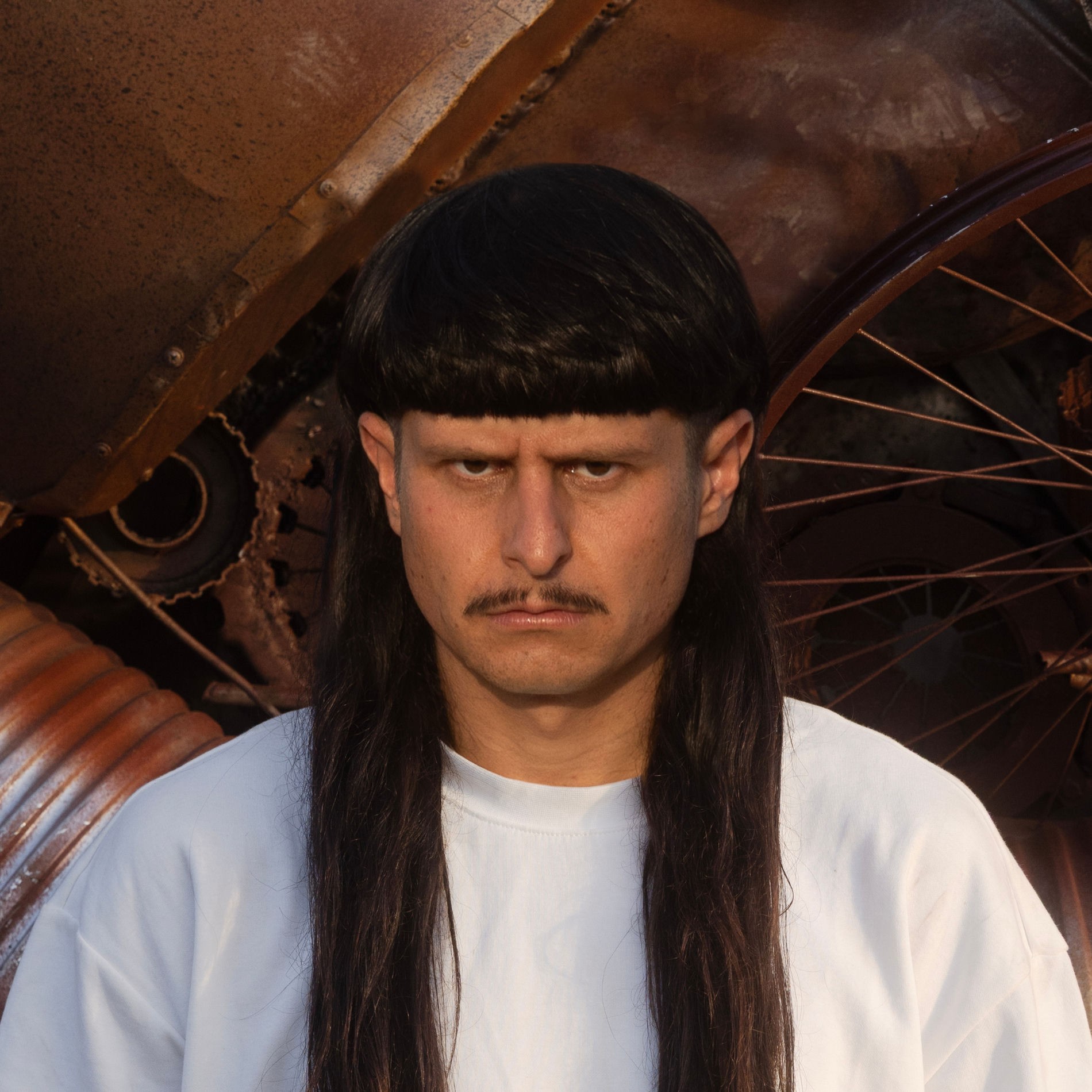
Who was Oliver Tree? American musician who died in Rio had 11 million listeners and collaborated with David Guetta
G1 Globo
Argentine YouTuber Gaspi and American singer Oliver Tree are among the victims of a helicopter accident in Rio; see list
G1 Globo
Outpatient clinic to support dengue and respiratory diseases has a new address in Divinópolis
G1 Globo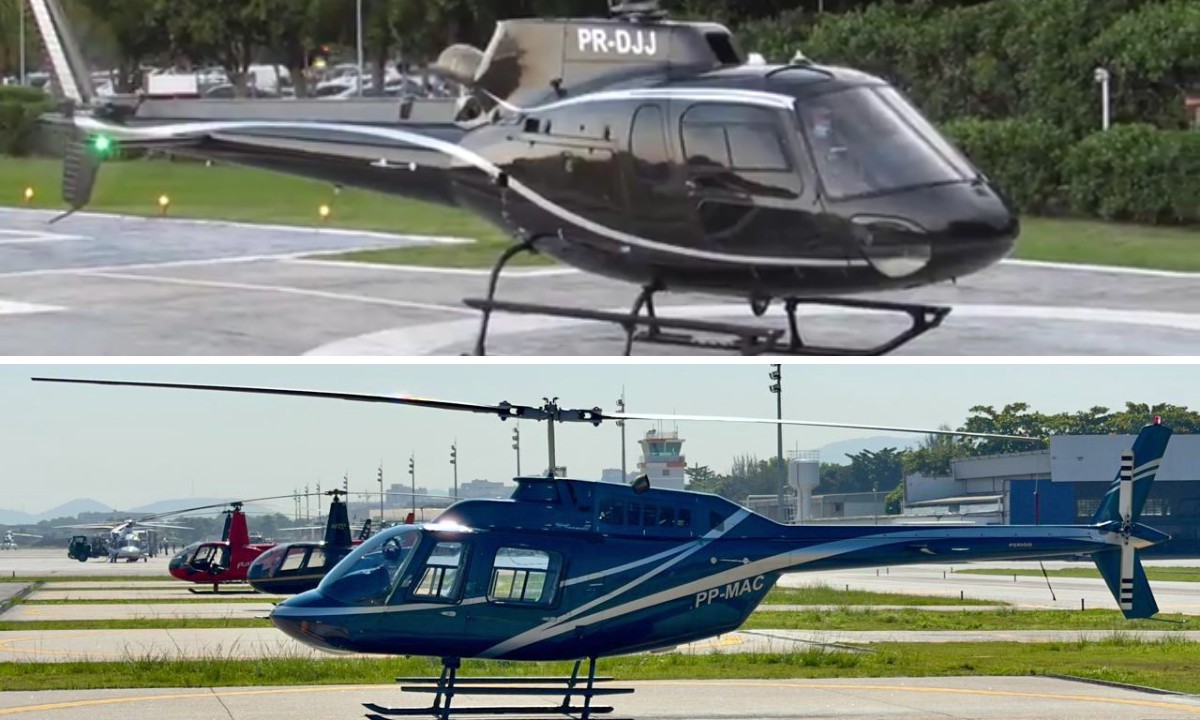
Owner of helicopter involved in accident in RJ was fined by Anac in 2025
G1 Globo
Agreement with Iran better than the one in 2015 is “unlikely”
Observador