Chamber approves amnesty for fines for roadblocks after 2022 election; text also reinforces freight floor
⚡ Quick Summary
The Chamber of Deputies approved this Wednesday (17) a provisional measure that provides for amnesty of fines imposed on truck drivers for demonstrations in 2022, in the context of the attempted coup d'état promoted by former president Jair Bolsonaro.
The Chamber of Deputies approved this Wednesday (17) a provisional measure that provides for amnesty of fines imposed on truck drivers for demonstrations in 2022, in the context of the attempted coup d'état promoted by former president Jair Bolsonaro. (see below)
The amnesty was included by the project's rapporteur in the Chamber, deputy Zé Trovão (PL-SC), through a "jabuti" – the inclusion of a topic foreign to the original content of the proposal.
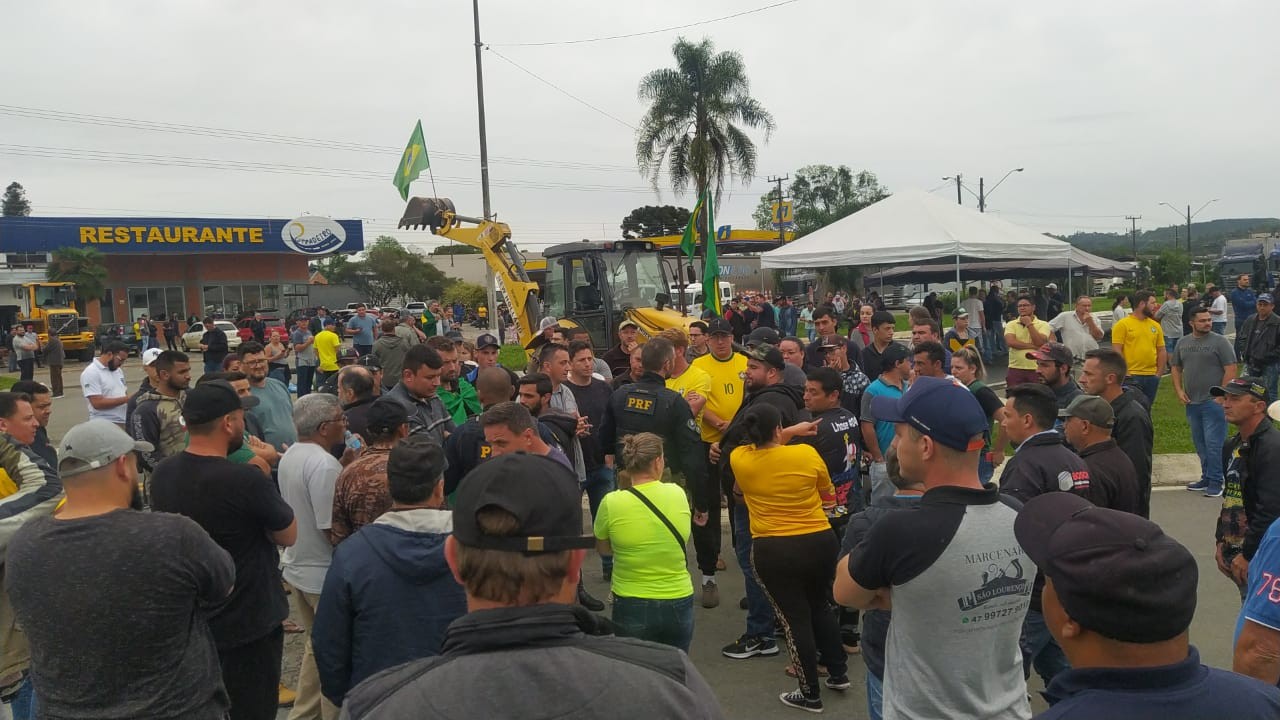
SC highway blockade in October 2022
Federal Highway Police/Disclosure
Initially, the provisional measure presented by the government focused on tightening inspections for non-compliance with the minimum freight floor and creating mandatory control of transport operations (CIOT).
The proposal will now be sent to the Senate. As it was modified by the deputies, if approved by the senators, it will need to be sanctioned by President Lula.
The text was approved by the joint committee made up of deputies and senators this afternoon and went to the Chamber plenary.
Now on g1
Trovão presented a supplementary vote this afternoon and included points such as the possibility of subcontracting an autonomous transporter (TAC).
Another section included was the reduction of the adaptation period from 90 to 60 days in the case of obligations that depend on specific regulations, technological integration, systems enablement, registration adequacy, among others.
The report establishes a national salary minimum of R$5,000 per month for truck drivers who work over long distances, considered when the driver needs to remain outside the company's headquarters or home for more than 24 hours.
Forgiveness of fines
The project also forgave fines imposed on truck drivers due to the 2022 strike, carried out across the country, after the presidential elections.
According to the rapporteur, the fines imposed were unfair, given that many truck drivers did not join the movement, but had no way of getting around due to the road blocks.
"The stoppage wasn't even carried out by truck drivers, it was carried out by people who went onto the road and blocked the truck drivers' passage. This is the amnesty that is being given. There are truck drivers who were fined R$3 million and the guy wasn't even standing there because he wanted to, he couldn't get through", said the deputy.
Rapporteur of the proposal, deputy Zé Trovão (PL-SC)
Bruno Spada/Chamber of Deputies
The approved text did not include the suspension of legal proceedings, an item that was proposed by the rapporteur during the discussion in the committee.
The project cancels fines for cargo transporters, individuals and legal entities, and drivers resulting from demonstrations in 2022, including those already registered in active debt and with collections in progress.
Operations log
The text makes it mandatory to register every transport operation with a code, called Transport Operation Identifier Code (Ciot)
The record, according to the text, must contain details of the contractor, the transporter, the value of the freight and the form and term of payment.
The objective is to gather information about contractors, transporters, cargo, values and payment conditions, expanding the traceability of transactions in the sector.
Text makes it mandatory to register all transport operations with a unique code
Reproduction/Internet
Freight floor
The text reinforces the National Policy on Minimum Floors for Road Cargo Transport. The freight value must reflect the real operational costs and will be binding, i.e., non-compliance will generate sanctions.
The National Land Transport Agency (ANTT) will be responsible for updating the floors periodically and whenever there are relevant variations in the price of fuel.
The report establishes a scale of penalties for those who hire freight below the legal minimum:
high fine, which can reach R$1 million;
suspension of transporter registration;
cancellation of registration in cases of serious recidivism. The rules also affect intermediaries and digital platforms that offer services that do not comply with the minimum.
🗞️ 1 sources covered this story
📰 Related Articles

Ghana seeks victory against Panama in stoppage time in World Cup debut
CNN Brasil
Young man without driver's license wanted for running over and killing retired PRF in Bahia is arrested in the interior of SP
G1 Globo
+Millionaire today: results of the 364 contest and numbers drawn
G1 Globo
Dupla Sena today: results of contest 2971 and numbers drawn
G1 Globo
“Children of the diaspora”: how changes to FIFA rules impact the World Cup
CNN Brasil