


Herbalists from Rio Grande do Sul win gold medals in the first yerba mate world championship, held in Argentina
⚡ Quick Summary
Herbalists from Rio Grande do Sul win gold medals in the first yerba mate world championship, held in Argentina Rafael Becker/Personal archive Buenos Aires, capital of Argentina, hosted the first Yerba Mate World Cup.
Herbalists from Rio Grande do Sul win gold medals in the first yerba mate world championship, held in Argentina
Rafael Becker/Personal archive
Buenos Aires, capital of Argentina, hosted the first Yerba Mate World Cup. The event, held at the Museo del Mate, received 406 samples from different parts of the planet and crowned brands from Rio Grande do Sul, awarding gold medals for herbs planted, harvested and industrialized in Rio Grande do Sul.
There were eight herbalists from Rio Grande do Sul classified as 'gran oro', the highest award, five won a gold medal, seven silver and three bronze. Another six were also awarded (See the full list below)
📲 Access the g1 RS channel on WhatsApp
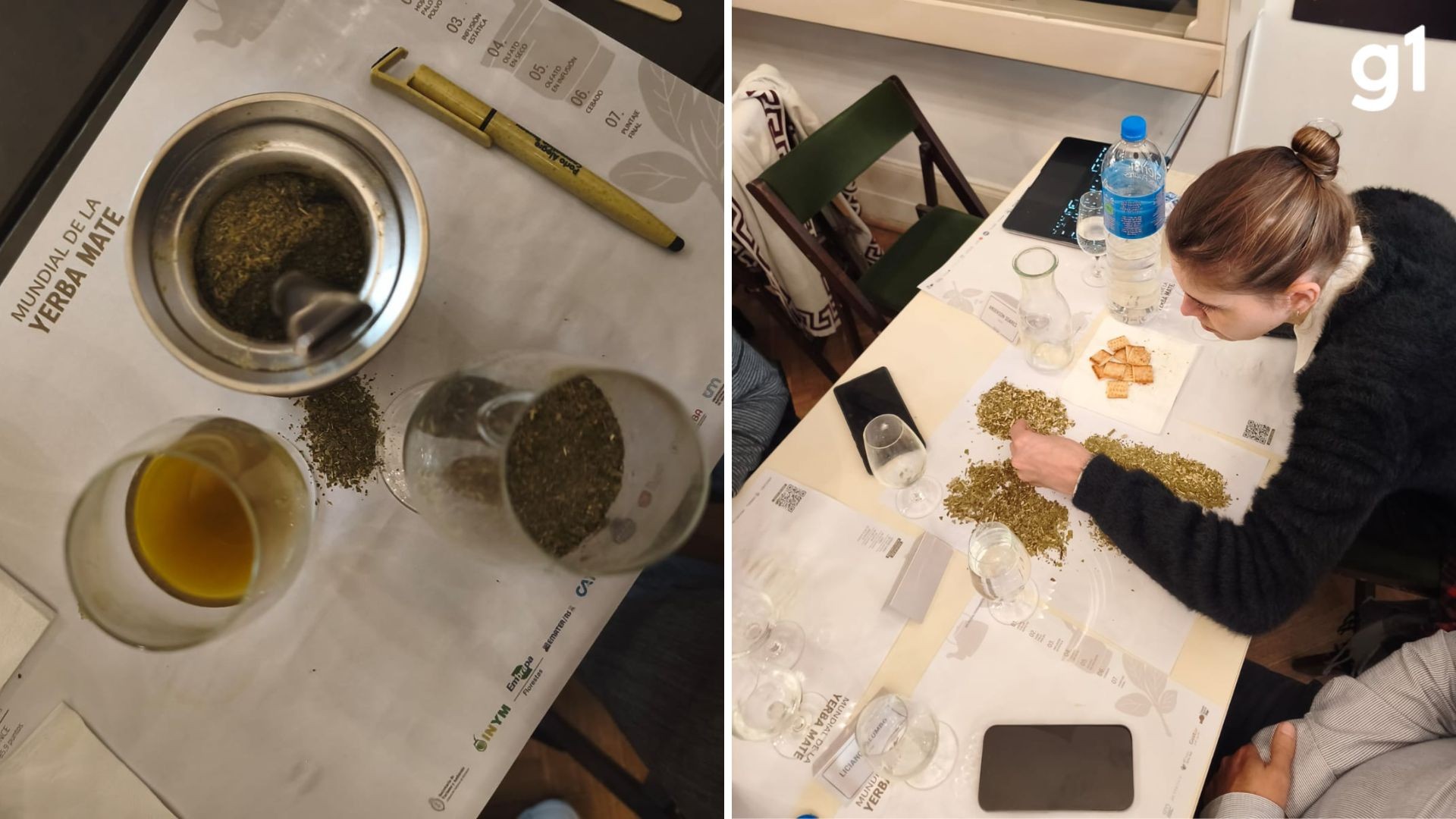
The evaluation takes place based on the gustatory, olfactory, sensorial and visual analysis of the products. Liquid yerba mate liqueurs made at a higher temperature than chimarrão, the dry visual phase and the herb infused in the gourd are evaluated.
"The idea is that the person has the perception of carrying out analysis within each product. Just as wine and tea are evaluated, yerba mate is evaluated in the same way", says Rafael Becker, yerba mate sommelier, who was an ambassador for the World Cup and a judge at the competition.
Does chimarrão gourd have an expiration date?
Each product starts with 100 points and loses points as the evaluation progresses. Herbs that scored 94 points or more are considered 'gran oro'. Gold medals score from 90 to 93.9, silver medals range from 86 to 89.9 and bronze medals range from 82 to 85.9.
The best positioned yerba mate from Rio Grande do Sul was from Ervateira Amável, from Ilópolis. "She won the 'gran oro' with an excellent score and had almost no lost marks. Amável who won the 'gran oro' was the best in her category", points out Rafael.
The jury included yerba mate sommeliers, chemical engineers, coffee experts and wine sommeliers, in order to generate a greater diversity of opinions.
Brazilian jurors, including those from Rio Grande do Sul and Paraná, Argentines, Uruguayans, Chileans, Americans, Canadians, Australians, Poles and Russians, participated in the panels.
The competition was divided into categories, such as Argentine standard yerba mate, Uruguayan standard, Brazilian standard, tererê and yerba mate-based drink, such as a soft drink.
"They plant their own yerba mate and make an extract from young leaves, so the soda has a greenish color. It is transparent, but has a greenish color and has a very interesting flavor. And it also brings the benefits of yerba mate," says Rafael.
"The Uruguayan grinding standard is with pure thin leaf, rested without a toothpick. The Argentine standard is with pure leaf rested on a toothpick. The Brazilian standard is green. We are the only country that consumes green yerba mate. The others consume a golden yellow tone, rested", explains the sommelier.
The great champion has 'three homelands'
The great world champion had no lost points. It was Uruguay yerba mate, which is produced in Argentina, with herbs from Rio Grande do Sul.
"It is a splendid, spectacular yerba mate. I met the owner there and I can say that it is a yerba mate from three homelands, because the name is Uruguay, with a Uruguayan grinding standard, their company is Argentine, but the yerba mate is from Rio Grande do Sul", says Rafael.
World Cup should be annual
There were already other regional yerba mate competitions, but this was the first time there was a consolidated world championship. The idea now is for the competition to be annual — and why not take place in Rio Grande do Sul?
"We want to do it annually. And I, Rafael, will do my best to make it happen in Brazil next year. And in Porto Alegre. I would be very happy,” said the sommelier.
Herbalists from Rio Grande do Sul win gold medals in the first yerba mate world championship. From left to right: Rafael Becker yerba mate sommelier, ambassador and juror; Carolina Teixeira, wine sommelier and judge; and Pablo Scheren, yerba mate scholar and influencer, ambassador and juror
Rafael Becker/Personal archive
Herbalists from Rio Grande do Sul who ‘medalded’ in the world championship
Gran Oro:
Amável (Ilópolis)
Green Lake (Ilópolis)
Sabadin (Little Tree)
Herbals of the Future (Foamy)
Baron (Baron of Cotegipe)
Rancho Nativo (Porto Alegre)
Mate & Vida (Putinga)
Elacy (Venâncio Aires)
Gold Medal:
Amável (Ilópolis)
Herbals of the Future (Foamy)
Green Lake (Ilópolis)
Ximango (Ilópolis)
DeValérios (Little Tree)
Silver Medal:
Milonga (Porto Alegre)
Machadinho (Machadinho)
Green King (Erechim)
Mate & Vida (Putinga)
Wholesale Mix (São Leopoldo)
Ximango (Ilópolis)
DeValérios (Little Tree)
Bronze medal:
Herbals of the Future (Foamy)
Rancho Nativo (Porto Alegre)
DeValérios (Little Tree)
Also awarded were the herb plants Ka’a eté (Camaquã), GOAT (Lajeado), Seiva Verde (Áurea), Portão (Portão) and Ki Mate (Arvorezinha).
VIDEOS: Everything about RS
🗞️ 1 sources covered this story

📰 Related Articles

The steel duo sponsored the debut of those who played the cielito
Observador
Sweden beats Tunisia and debuts with victory in the World Cup
CNN Brasil
Cape Verde player was called up by LinkedIn, almost missed a message, and is now competing in the World Cup
G1 Globo
Bridge where young woman died after being thrown without rope in rope jump accumulates history of accidents
G1 Globo
Helicopters crash in mid-air in Rio: collisions between aircraft in flight are very rare in Brazilian aviation; understand
G1 Globo