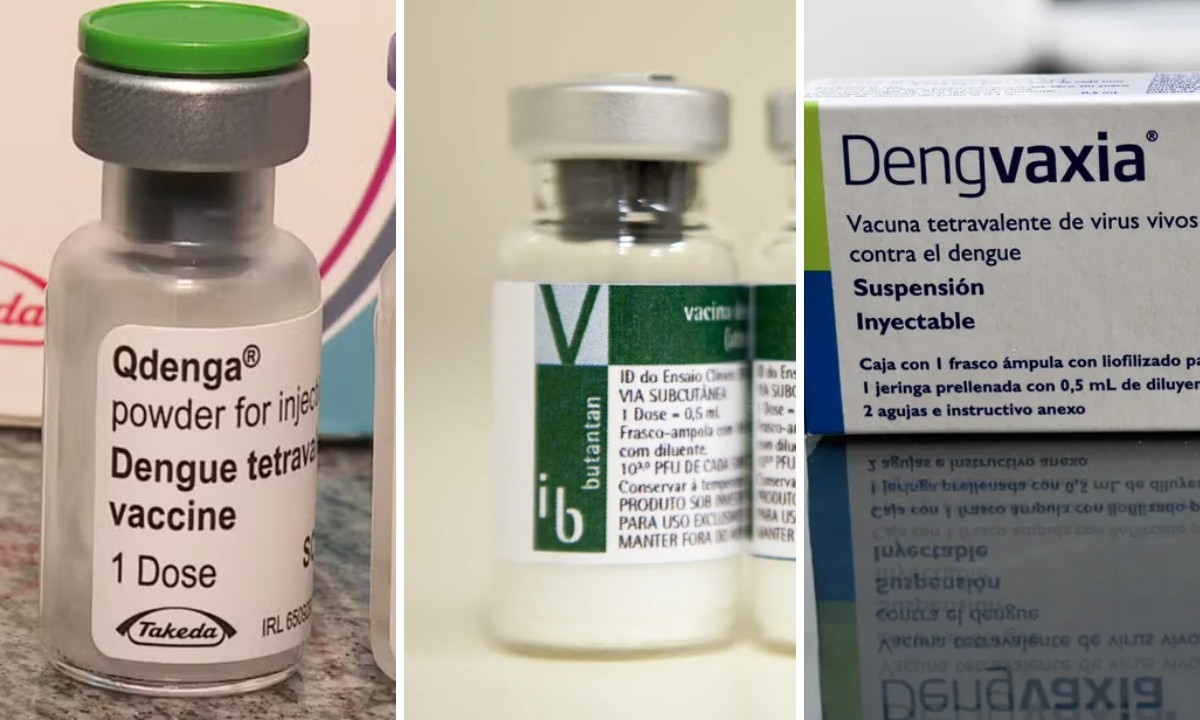
Dengue vaccines: who can take Qdenga, Butantan-DV and Dengvaxia — and who is left out
⚡ Quick Summary
Dengue vaccines: who can take Qdenga, Butantan-DV and Dengvaxia — and who is left out Reproduction/EPTV/Government of São Paulo / Yuri Cortez/AFP The temporary suspension of the dengue vaccine developed by the Butantan Institute led many Brazilians to seek information about the vaccines available in the country.
Dengue vaccines: who can take Qdenga, Butantan-DV and Dengvaxia — and who is left out
Reproduction/EPTV/Government of São Paulo / Yuri Cortez/AFP
The temporary suspension of the dengue vaccine developed by the Butantan Institute led many Brazilians to seek information about the vaccines available in the country. Today, three vaccines are registered with Anvisa — Qdenga, Butantan-DV and Dengvaxia — but each was tested in different groups and follows its own indication and safety criteria.
While the Ministry of Health is investigating 42 cases of serious reactions recorded after the application of Butantan-DV, experts emphasize that dengue vaccines are not interchangeable: they vary according to age, history of infection with the disease and other health conditions. Understand who can receive each vaccine, who is left out of the recommendations and the reasons for these restrictions.
Below, understand who was studied, who received approval for vaccination, who can take it in practice and which groups were left out of the recommendations.
Qdenga: approved for those who have or have never had dengue
Qdenga (TAK-003), from the Japanese pharmaceutical company Takeda, was approved by Anvisa in March 2023. The vaccine uses live attenuated viruses and induces an immunological response against the four dengue serotypes.
According to infectologist and researcher Antônio Carlos Bandeira, the vaccine is based on the attenuated type 2 dengue virus and incorporates proteins from types 1, 3 and 4 viruses.
Understand how the dengue vaccine suspended by the Ministry of Health works
Who was studied
The vaccine has been studied in people aged 4 to 59.
Who received approval from Anvisa
Anvisa approved the application for the same age group analyzed in the studies: from 4 to 59 years old.
Who can take it in practice
The vaccine can be administered to people aged 4 to 59 - both those who have had dengue fever and those who have never had contact with the virus.
In SUS, vaccination is restricted to children and adolescents aged 10 to 14.
Who was left out of studies
People under 4 years old and over 59 years old were not part of the studied population, as well as pregnant women and people with more severe immunodeficiency (e.g.: people with HIV, cancer, undergoing chemotherapy and with autoimmune diseases).
Who shouldn't take
The vaccine is contraindicated for:
immunosuppressed people;
pregnant women;
breastfeeding women;
individuals with allergies to components of the formula.
Why is there this cutout?
Anvisa's approval followed the age range evaluated in clinical studies. The restriction in the SUS occurs because vaccination was targeted at the 10 to 14 year old group, considered a priority as it concentrates a high rate of hospitalizations after the elderly.
Effectiveness
According to updated results from the TIDES study, released in November 2025, the overall efficacy was 80.2% against dengue fever caused by any serotype after 12 months of the second dose.
The vaccine reduced hospitalizations by 90%. Over seven years of follow-up, the data showed an 84% reduction in the risk of hospitalization and a 61% reduction in symptomatic cases.
Dengvaxia: recommended only for those who have already had dengue fever
Dengvaxia, from the French company Sanofi, was the first vaccine against dengue approved by Anvisa and remained the only one available in the country until the arrival of Qdenga, in 2023.
According to Bandeira, the structure of the vaccine uses the yellow fever virus as a base and incorporates components from the four dengue serotypes.
Who was studied
The vaccine was studied in people aged 9 to 45 years.
Who received approval from Anvisa
The approval covers people aged 9 to 45 who have already had dengue.
Who can take it in practice
The vaccine is only available in the private network and can only be administered to people with proven prior infection.
The leaflet determines that a laboratory or serological test must be carried out to confirm previous contact with the virus.
Who was left out of studies
People under 9 years old and over 45 years old did not participate in the studies mentioned. Who shouldn't take
The vaccine is contraindicated for:
people who have never had dengue fever or who cannot prove previous infection.
people with hypersensitivity to the vaccine components or who had a severe allergic reaction after a previous dose;
people with congenital or acquired immunodeficiency, including immunosuppression caused by disease or medication;
pregnant women
lactating
Why is there this cutout?
Studies by the manufacturer showed that individuals without previous infection who received the vaccine presented, over time, a greater risk of developing severe forms of the disease after a natural infection.
Therefore, Anvisa and the World Health Organization recommend vaccination only for those who have already had dengue fever.
Effectiveness
According to the manufacturer, the vaccine prevents approximately eight out of ten serious cases or those requiring hospitalization.
"Dengvaxia is currently very little used. It has tended to be left aside in relation to Qdenga and Butantan-DV. We have tried not to use this vaccine because it is more laborious. You need to know whether you have had dengue or not", explains Bandeira.
Butantan-DV: the first Brazilian vaccine against dengue
Butantan-DV, developed by the Butantan Institute, is the first 100% Brazilian vaccine against dengue and also the first in the world applied in a single dose.
The vaccine was developed to protect against the four serotypes of the virus and offers protection for at least five years, according to available data.
According to Bandeira, the vaccine is based on the attenuation of dengue viruses types 1, 3 and 4, while type 2 components are inserted into the structure based on dengue virus type 4.
The doctor also adds that, although the vaccine was freeze-dried in Brazil and phase 3 approval studies also took place in the country, this is a vaccine with an initial component developed by the National Institutes of Health (NIH) in the United States.
Who was studied
The vaccine was studied in around 16 thousand participants aged 2 to 59 years, distributed in 17 research centers in Brazil.
Who received approval from Anvisa
Approval was granted for people aged 12 to 59.
Who can take it in practice
The vaccine can be applied to people who have already had dengue fever and also to those without previous infection.
Immunization began in January this year, initially aimed at health professionals, who received 417 thousand doses.
Another 83,600 doses were administered to residents of municipalities in São Paulo, Ceará, Minas Gerais and Tocantins. According to the Ministry of Health, there were no reports of adverse events among residents of these locations.
Who was left out of studies
People under 2 years old and over 59 years old did not participate in the studies.
Who shouldn't take
children under 12 years old
adults aged 60 and over
people with immunosuppression caused by illness or the use of immunosuppressive medications, as stated in the leaflet.
people with a history of a serious allergic reaction to vaccine components
pregnant women
lactating
Why is there this cutout?
Although the vaccine has been studied between ages 2 and 59, Anvisa approved its use only for people aged 12 to 59 because the efficacy observed was greater in this group.
Furthermore, as the vaccine is a live attenuated virus, although the viruses have been weakened so as not to cause disease in healthy people, there are safety concerns in individuals with compromised immune systems.
Effectiveness
After five years of follow-up, the overall effectiveness was 65% against symptomatic dengue confirmed by laboratory tests.
Protection against severe dengue or with warning signs reached 80.5%.
Among people who had already been exposed to the virus, the effectiveness was 77.1%. Among those without previous infection, it was 58.9%.
Why was Butantan-DV suspended?
On Monday (8), the Ministry of Health announced the temporary suspension of the vaccine after 42 cases of severe reactions were recorded.
By May 30, around 500,000 doses had been administered. During this period, 3,703 reports of adverse events were recorded, equivalent to 0.7% of the total number of people vaccinated.
The 42 cases classified as serious corresponded to 0.008% of immunized people. Among them, three episodes considered serious were identified, including two deaths.
According to the ministry, it is not yet possible to establish a causal relationship between the application of the vaccine and deaths. Therefore, the investigation will continue.
READ ALSO:
'Butantan's vaccine against dengue would be approved anywhere in the world', says former director of Anvisa
How the system that identified warning signs in Butantan's dengue vaccine works
Those immunized against dengue for more than 21 days can be 'absolutely at ease', says director of Butantan
Butantan vaccine against dengue is suspended; understand what led to the decision and what to do if you have already been vaccinated
Why does an approved vaccine have a record of rare events and how does this impact safety? Experts explain the suspension of Butantan-DV
Suspension of the Butantan dengue vaccine: what are the next steps after the Ministry of Health's announcement?
Understand how the dengue vaccine suspended by the Ministry of Health works
📰 Related Articles
Communication Agency - ABF Expo 2026: Yungas highlights the role of AI as a pillar of franchising expansion
Estadão Blue Studio
The Cavalhadas of Vildemoinhos, the virtuosity of a legend
Observador
Going on vacation? Medications you can't forget
Observador
A horse's body with a human head to tell the story
Observador
Companies admit using AI as a pretext for layoffs and explain reasons
G1 Globo