Different but equal: words that bring Brazil and Morocco closer beyond football
⚡ Quick Summary
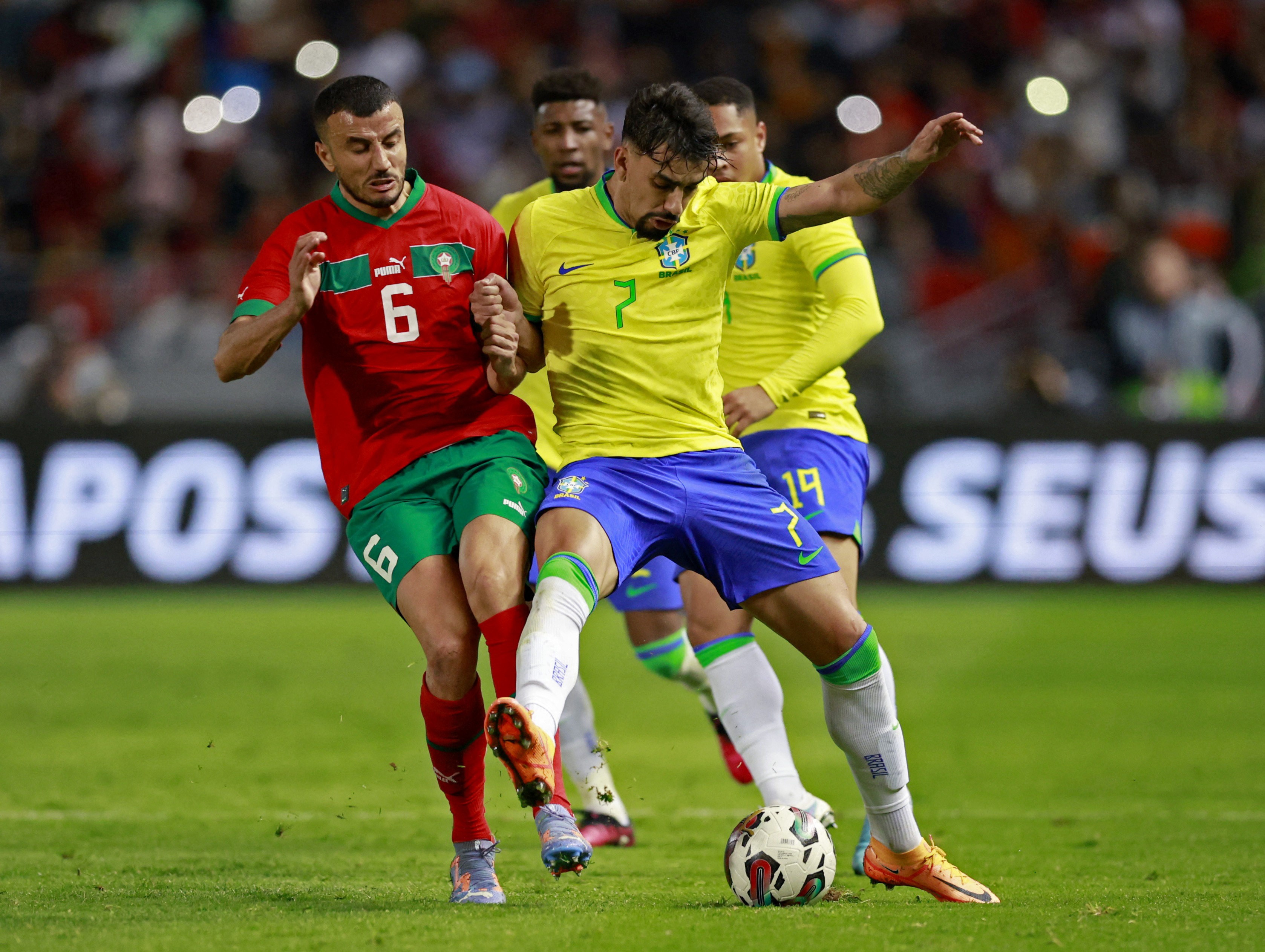
Friendly Brazil x Morocco in 2023 Reuters Brazil and Morocco face each other this Saturday (13) in the World Cup, but the connection between the two countries goes far beyond the four lines of the field.
Friendly Brazil x Morocco in 2023
Reuters
Brazil and Morocco face each other this Saturday (13) in the World Cup, but the connection between the two countries goes far beyond the four lines of the field.
Although the official languages of Morocco are Arabic — in the variant known as Darija — and Amazigh, some words present in the daily lives of Brazilians are also part of Moroccan culture or have a common origin. They are traces of centuries of cultural, commercial and historical exchanges that crossed continents.
The result is a linguistic curiosity: even though they speak different languages, Brazilians and Moroccans share words, dishes and even place names.
Now on g1
Couscous: one dish, two versions
If there is a word capable of bringing Brazil and Morocco together at the table, it is "cuscous".
In Brazil, especially in the Northeast, the dish is usually prepared with corn flour and served for breakfast or a snack. In Morocco, couscous is one of the symbols of national cuisine, made with wheat semolina and accompanied by vegetables, meat and spices.
Despite the differences in the recipe, the name has the same origin. The word derives from the Arabic kuskus and crossed centuries before reaching Portuguese.
Moroccan couscous
Eulâmpio Vianna Neto
In common:
the name of the dish;
the origin linked to the Arab world;
a strong presence in the food culture of both countries.
What changes:
in Brazil, corn flour predominates;
in Morocco, the base is wheat semolina;
the side dishes and seasonings are also different.
Arabic words that reached Portuguese
The Arabic influence on Portuguese is much greater than many people imagine. During the centuries that Muslim people occupied parts of the Iberian Peninsula, hundreds of words were incorporated into the language. Many of them remain in use today and are also part of the cultural universe of Arab countries, such as Morocco.
Among the best-known examples are terms linked to food, commerce and everyday life.
Some words often associated with this linguistic heritage include:
sugar (as-sukkar);
olive oil (az-zait);
rice (ar-ruzz);
coffee (qahwa);
cushion (al-mukhadda);
customs (al-fundaq);
so-and-so (so-and-so);
warehouse (al-makhzan);
tile (az-zulayj).
These words show how the Portuguese language has been shaped by different historical and cultural influences over the centuries.
"Mazagão" on both sides of the Atlantic
The connection between Brazil and Morocco also appears on the maps. In Amapá, there is the municipality of Mazagão, founded in the 18th century.
In Morocco, the name refers to the ancient city of Mazagão, today part of the El Jadida region, which was occupied by the Portuguese during part of the maritime expansion.
The coincidence is not by chance. When the Portuguese left the Moroccan fortress, part of the inhabitants were transferred to the Amazon, giving rise to the so-called Nova Mazagão.
🗞️ 4 sources covered this story

Brazil x Morocco: see the likely lineups for the World Cup debut
CNN Brasil
More experienced, Vini Jr. says that Brazil "is enough to be champion"
Agência Brasil
Brazil x Morocco: time and where to watch the World Cup game
opovo.com.br
2026 FIFA World Cup: what you need to know about Morocco, Brazil's first opponent
BBC Brasil📰 Related Articles

How to deal with professional frustration: what athletes outside the World Cup teach about disappointment
G1 Globo
Tren de Aragua: how Venezuelan faction in Trump's sights acts in Northern Brazil
G1 Globo
General manager of the Brazilian team receives honor in his hometown in RS
G1 Globo
João Fonseca at the Halle ATP: time and where to watch the doubles debut
CNN Brasil
With “Brazilian” goals, the United States beats Paraguay in their World Cup debut
CNN Brasil