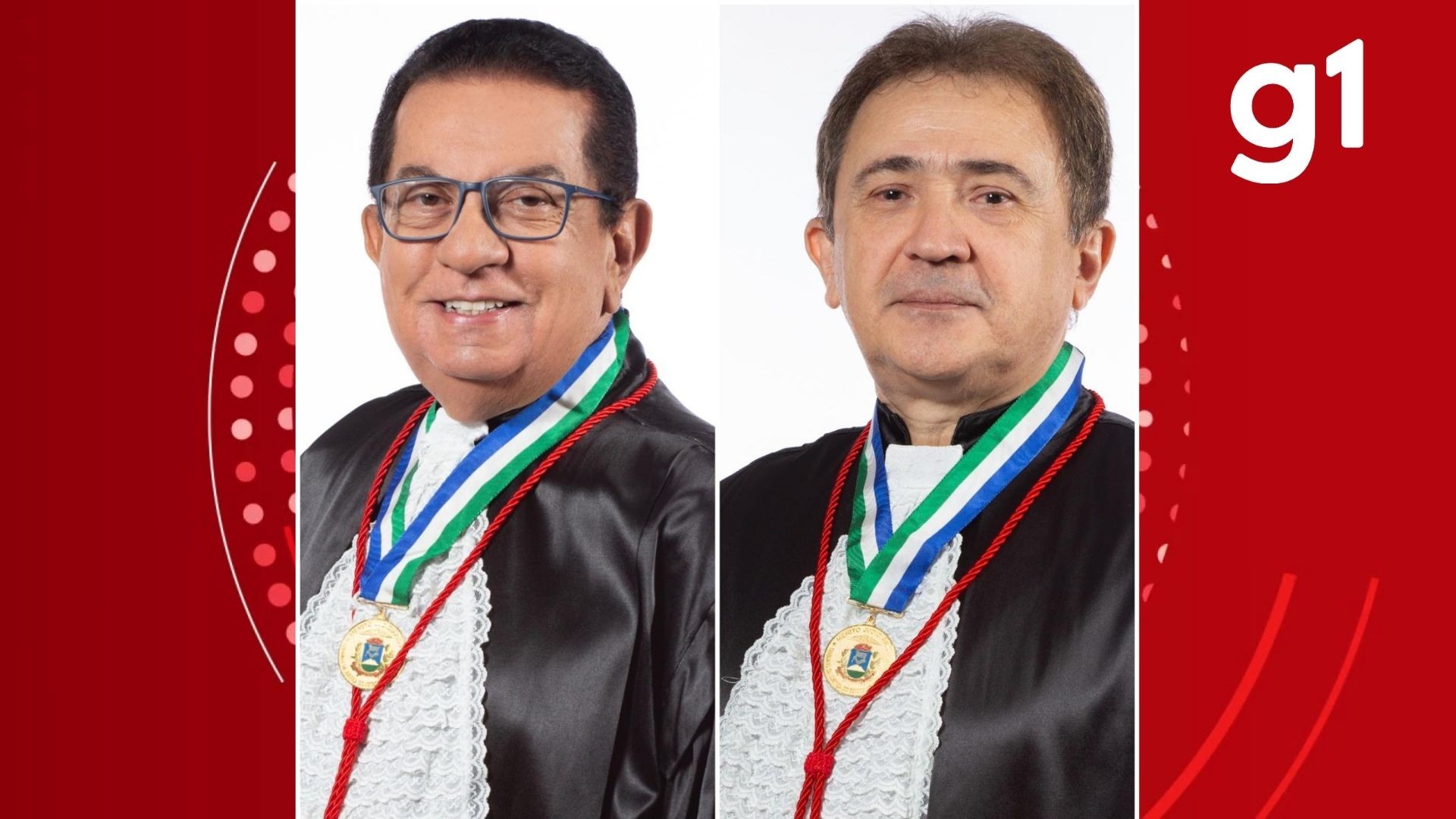
CNJ files requests against judges removed from MT after lawyers try to reopen judged cases
⚡ Quick Summary
Sebastião de Moraes Filho and João Ferreira Filho were removed Reproduction The National Council of Justice (CNJ) archived three procedures that pointed out alleged irregularities in decisions given by judges Sebastião de Moraes Filho and João Ferreira Filho, both removed from the Court of Justice of Mato Grosso (TJMT).
Sebastião de Moraes Filho and João Ferreira Filho were removed
Reproduction
The National Council of Justice (CNJ) archived three procedures that pointed out alleged irregularities in decisions given by judges Sebastião de Moraes Filho and João Ferreira Filho, both removed from the Court of Justice of Mato Grosso (TJMT). The decisions were published on June 9th and 10th.
The lawyers who lost the cases tried to reopen the cases and asked for disciplinary investigations against the judges, however, according to the national inspector of justice, Minister Mauro Campbell Marques, there was not enough evidence to do so.
Sebastião Filho was compulsorily retired by the CNJ in 2025, after being investigated on suspicion of participating in a scheme to sell judicial decisions. João Ferreira Filho, on the other hand, has been removed from office since August 2024 after also being investigated on suspicion of participating in a scheme to sell judicial decisions.
✅ Click here to follow the g1 MT channel on WhatsApp
Now on g1
Requests question decisions on land disputes
After the repercussions against the magistrates, a company began to question a court decision related to the termination of a purchase and sale contract for a rural property after the recognition of indigenous interest in the area. The complaint cited judges Sebastião de Moraes Filho and João Ferreira Filho.
In the complaint, the company mentioned the work of lawyer Roberto Zampieri, murdered in December 2023 and, subsequently, cited in investigations investigating an alleged scheme to commercialize judicial decisions.
The complainant also alleged evidence of fraud in the property's registration and maintained that information about an environmental embargo had been omitted during the negotiation of the property. Based on these arguments, he asked the CNJ to open an administrative disciplinary procedure against the judges.
When analyzing the request, Mauro Campbell understood that the party sought to re-discuss a judicial decision due to disagreement with the result of the trial by the panel that reformed the sentence. In the absence of evidence of a disciplinary infraction, the procedure was archived.
In the second case, the CNJ analyzed a complaint related to a possession dispute involving a farm in Mato Grosso, in an action linked to Sebastião.
The plaintiff even requested access to confidential procedures related to Operation Sisamnes, which investigates suspicions of the sale of judicial decisions and cites judge Sebastião Filho and lawyer Zampieri.
The request was denied by the inspector on the understanding that the complainant was not a party or interested party with a legal right to access the documents. In the same decision, Mauro Campbell stated that no elements capable of demonstrating a possible functional infringement were presented.
“For now, there is no evidence of materiality and authorship of an administrative infraction capable of triggering disciplinary administrative proceedings,” he said.
The Estate
In another procedure filed by the CNJ, the complainants questioned the actions of judge João Filho in a compensation action filed against a company after an accident that resulted in the death of family members. They alleged that the magistrate had adopted a mistaken interpretation of the legislation when voting to recognize the request's statute of limitations and requested the opening of a disciplinary investigation.
When archiving the cases, the magistrate reinforced that the CNJ does not have the authority to review judicial decisions and that any questions about the merits of the judgments must be analyzed by the appellate bodies of the Judiciary.
🗞️ 3 sources covered this story

📰 Related Articles

UNISUD integrates innovation, practice and research in medical teaching
G1 Globo
PRF finds human bones and ashes in suitcase when searching buses on highway in DF; VIDEO
G1 Globo
MP-BA investigates possible irregularities after expanding the Blue Zone in Salvador
G1 Globo
Gang is arrested in Itu with R$30,000 worth of clothes stolen from a shopping mall in Sorocaba
G1 Globo
Doctors report worsening of Bolsonaro's hiccups and ask for more tests
CNN Brasil