How the system that identified warning signs in Butantan's dengue vaccine works
⚡ Quick Summary
'Pharmacovigilance in our country is working very well', says infectious disease specialist regarding suspension of the Butantan vaccine Since the dengue vaccine developed by the Butantan Institute began to be applied in the Unified Health System (SUS), in January this year, a structure little known to the public started to monitor each possible reaction recorded after immunization.
'Pharmacovigilance in our country is working very well', says infectious disease specialist regarding suspension of the Butantan vaccine
Since the dengue vaccine developed by the Butantan Institute began to be applied in the Unified Health System (SUS), in January this year, a structure little known to the public started to monitor each possible reaction recorded after immunization.
It was precisely this system that identified the warning signs that led the Ministry of Health to temporarily suspend the use of the vaccine this Monday (8).
The decision was taken after the so-called pharmacovigilance network registered 42 cases with signs considered serious among more than 500 thousand doses applied.
Among them, there were two deaths that remain under investigation.
So far, authorities say there is not enough evidence to conclude that the deaths were caused by the vaccine.
Experts interviewed by g1 state that the preventive suspension does not represent a failure of the vaccine or the immunization program.
On the contrary: it is precisely the type of response expected when the monitoring system identifies an unusual event that needs to be investigated.
“Pharmacovigilance in our country is working very well because, very early on, it identified some safety warning signs,” said infectious disease specialist Rosana Richtmann, director of the Immunization Committee of the Brazilian Society of Infectious Diseases.
But after all, how does this system work? Understand below.
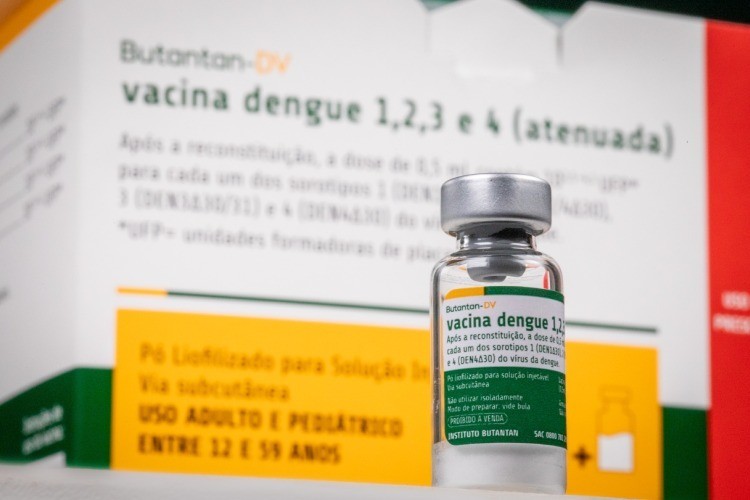
Dengue vaccine made by Butantan
Butantan Institute/ Disclosure
What is pharmacovigilance?
Pharmacovigilance is the set of actions that monitor the safety of medicines and vaccines after they begin to be used by the population.
Although vaccines undergo years of testing before being approved, clinical studies involve a limited number of volunteers.
Thus, when a vaccine is administered to hundreds of thousands or millions of people, very rare events may appear for the first time.
Therefore, monitoring continues even after authorization for use.
In Brazil, this monitoring has been part of the National Immunization Program (PNI) since 1993 and operates permanently throughout the country.
How is a reaction investigated?
Whenever a person presents a health problem after being vaccinated, health professionals can register a notification in the surveillance system.
These reports are analyzed by municipal, state and federal teams.
In cases considered more serious, experts from the Ministry of Health, Anvisa and technical institutions responsible for evaluating the safety of immunizers come into play.
The goal is to answer a fundamental question: was the problem really caused by the vaccine or did it just happen after vaccination by coincidence?
This distinction is important because not every event recorded after an immunization is related to the immunizing agent.
For professor Maria Anice Mureb Sallum, from the Department of Epidemiology at the Faculty of Public Health at USP, the temporary suspension of the Butantan vaccine is an appropriate measure and in line with the precautionary principle, as the two deaths and serious adverse events recorded need to be investigated before resuming vaccination.
“The temporary suspension does not necessarily mean that the vaccine caused these events, but it allows us to assess whether there is a causal relationship,” says the expert.
"If the association with the vaccine is proven, use may be suspended indefinitely, until the formulation, indication or use protocol are reevaluated by the competent authorities."
Government of SP anticipates delivery of 1.3 million doses of the Butantan dengue vaccine
What caught your attention in the case of the Butantan vaccine?
What led to the temporary suspension was not the number of registered cases, considered very small compared to the total number of people vaccinated. By the end of May, 501,044 doses of Butantan-DV had been administered. During this period, 42 cases with alarm signals were recorded, equivalent to around eight occurrences for every 100,000 doses applied.
The point that aroused concern was another: these events had not appeared during the clinical studies that preceded the approval of the vaccine and were also not described in the leaflet.
Therefore, the authorities decided to temporarily suspend vaccination to further investigate.
For Carla Domingues, epidemiologist and former coordinator of the National Immunization Program (PNI), the temporary suspension is part of the precautionary measures adopted when unexpected events arise after the start of large-scale vaccination.
"There are two possible paths: either the cases are only related in time to vaccination and there is no causal link, or there is some connection. In this case, it will be necessary to assess whether the benefits outweigh the risks," he said. "Data analysis must be in-depth."
Who participates in the analysis?
Cases are evaluated by different technical bodies.
Among them is the Interinstitutional Committee for Pharmacovigilance of Vaccines and other Immunobiologicals (Cifavi), which brings together representatives from the Ministry of Health, the National Health Surveillance Agency (Anvisa) and the National Institute for Health Quality Control (INCQS).
The information is also discussed by the Technical Immunization Advisory Chamber (CTAI), made up of independent experts who assist the National Immunization Program.
It was this flow of analysis that resulted in the recommendation to temporarily suspend the Butantan vaccine.
Has this happened other times?
Yes.
One of the best-known examples occurred during the Covid-19 pandemic. In 2021, several countries temporarily suspended the application of the AstraZeneca vaccine after reports of rare cases of thrombosis.
After completing the investigations, health authorities understood that the benefits of vaccination continued to outweigh the risks and immunization was resumed.
There are also cases in which suspension led to the definitive withdrawal of a product.
This was what happened with the Rotashield vaccine, against rotavirus, withdrawn from the market in the United States in 1998 after confirmation of an increased risk of intestinal obstruction in babies.
"The Brazilian vaccination system is safe. If any adverse event related to a vaccine is identified, this will be communicated and investigated transparently", said the vice-president of the Brazilian Society of Immunizations (SBIm), Renato Kfouri.
Whenever a person presents a health problem after being vaccinated, health professionals can register a notification in the surveillance system.
Pexels
What happens now?
The investigation will continue involving the Ministry of Health, Anvisa, the Butantan Institute and independent experts.
Technicians will try to identify whether the observed cases are directly related to the vaccine or whether they represent just a temporal coincidence.
If a causal link is not found, vaccination can be resumed. If any specific risk is identified, authorities will be able to evaluate changes in the vaccine use strategy, such as restrictions for certain groups.
There is still no deadline for completing the analysis.
"The temporary suspension allows the necessary investigation to be carried out to establish whether or not there is a causal association between the vaccine and the reported events. At this stage, the topic must be addressed with experts, with continuous, transparent and broad communication to society", adds Mureb.
🗞️ 2 sources covered this story

📰 Related Articles
With beds, kitchen and emergency stock: Germans build bunkers at home amid tensions in Ukraine
G1 Globo
Police protected fugitives and leaked information about operations in Paraíba, investigation shows
G1 Globo
Water delivery man sexually assaults elderly woman alone at home in MG
G1 Globo
Airbus reveals helicopter capable of flying without a pilot; see how it works
G1 Globo
Valentine's Day: check out options to celebrate love in DF
G1 Globo