Rural school 30 km from the city wins national education award and puts municipality in the interior of SP in the spotlight
⚡ Quick Summary
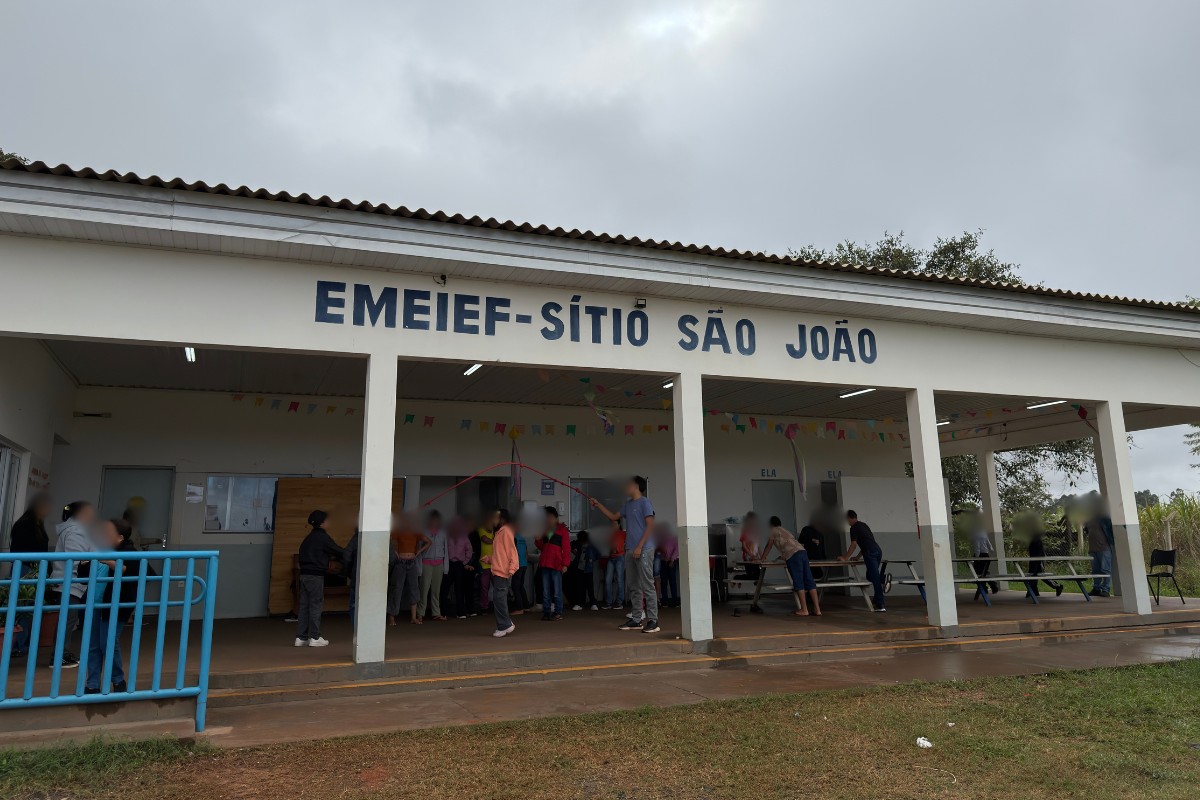
Municipal School of Early Childhood Education and Elementary Education Sítio São João in Rosana (SP) Reproduction/Rosana City Hall An initiative that transformed the teaching of mathematics in rural areas guaranteed a historic achievement for the municipality of Rosana (SP).
Municipal School of Early Childhood Education and Elementary Education Sítio São João in Rosana (SP)
Reproduction/Rosana City Hall
An initiative that transformed the teaching of mathematics in rural areas guaranteed a historic achievement for the municipality of Rosana (SP). A municipal school, located almost 30 kilometers from the urban area, won a prestigious national education award.
Through the "Alfabetiza Junto" project, the Municipal School of Early Childhood Education and Elementary Education Sítio São João, located in a settlement area of Rosana, was awarded in the 2025 Education Valorization Program (PVE).
📲 Join the g1 Presidente Prudente e Região channel on WhatsApp
The award was presented in May this year, during a ceremony held with representatives and experts from 54 Brazilian municipalities. In total, eight schools were awarded, from regions such as Rio Grande do Sul, Piauí, Pernambuco, Tocantins, Bahia and Rio de Janeiro.
In the state of São Paulo, Rosana's school was the only one awarded. According to the organizers, 61 projects were registered in 35 municipalities, with solutions that address topics such as equity, inclusion, use of data, technology and environmental education.
Now on g1
The Sítio São João School project had the support of Companhia Energética de São Paulo (Cesp) and was created based on the perception of teacher Marcos Vinicius dos Santos, aged 25, when he noticed that many students reached the 3rd year with difficulties in basic logical reasoning and multiplication.
READ ALSO:
Forró, popcorn and little flags: Brazilian teacher in the USA brings June festival tradition to American children
Morro do Diabo Park is a symbol of preservation in a region marked by fires
Sweet shops in the interior of SP transform difficult moments into stories of reinvention: 'The art of sweetening life'
Education in practice
To g1, Marcos Vinicius commented on the project created at the school and the importance it brought to him, as he was born and raised in the same settlement where the school is located, in the rural area of Gleba XV de Novembro.
“The practice arose from the need to overcome the difficulties presented by the class in solving problems that involved logical reasoning and understanding multiplication.”
Using teaching techniques, such as the use of cartoons, educational games and digital platforms, the results of the project appeared in the first weeks of development, according to the professor.
“In addition, we observed greater participation, autonomy and confidence during mathematical activities, which showed that the methodology used contributed positively to learning”, continues Marcos Vinicius.
When the project began, 73% of students were within the learning goal. In the end, the index reached 100%. “It is an opportunity to show Brazil the excellent work that is carried out daily within our school and value the work carried out by the entire school community”, says the teacher.
“Achieving this result with students has a very important meaning for me, because it represents overcoming difficulties and proving that, when we use playful strategies planned with intention, learning really happens.”
Last year, the school had 75 students and currently has 61 enrolled in primary education, initial years, according to the Rosana Department of Education. To ensure quality education, the municipality continually invests in human, pedagogical, technological and infrastructure resources.
"No child was left behind. The teacher was able to understand the students' needs and use technology as a language of approach, creating strategies connected to their reality", highlights Joelma Gimendes, Secretary of Education. Municipal School of Early Childhood Education and Elementary Education Sítio São João in Rosana (SP)
Reproduction/Rosana City Hall
Educational support
The municipality works on continuing training for teachers, managers and pedagogical teams to guarantee effective results like this, according to Rosana City Hall. In addition to free school transport, especially for students in rural areas.
In the case of the Gleba XV de Novembro settlement, students can take up to two hours to get to school, due to the distance from the farms to the unit, according to Joelma.
Technological resources and internet access, as well as reading, culture, sports and environmental education projects, also become incentives for teachers and students, especially in more remote areas, with the Sítio São João school.
These incentives also helped ensure that Marcos Vinicius had the necessary support when he was young, living in the settlement, and became a teacher. “From an early age, I realized that knowledge gives us the power to change our reality and create new opportunities”, he says.
Throughout my career, I faced several challenges to achieve my goals, and it was these experiences that taught me the importance of persistence and effort so that I could achieve my dreams.”
According to the young man, it was precisely education and knowledge that provided opportunities for personal, academic and professional growth. “Being a teacher goes far beyond teaching content; It’s about participating in the formation of citizens, stimulating dreams and helping each student to believe in their potential.”
“Seeing the progress of students and knowing that, in some way, I am part of this construction is what makes this profession so rewarding for me”, adds Marcos Vinicius.
Municipal School of Early Childhood Education and Elementary Education Sítio São João in Rosana (SP)
Reproduction/Rosana City Hall
Initial plugin text
See more news on g1 Presidente Prudente and Region
VIDEOS: watch TV TEM reports
📰 Related Articles
Haiti: gang violence has killed at least 2,300 people this year, says UN
Euronews PT
Return of the cold brings frost and cold of -2.7°C to RS
G1 Globo
Climate phenomenon El Niño will increase temperatures in Piauí, says director of Civil Defense
G1 Globo
Woman is stabbed to death in São Gonçalo; crime happened in front of the children
G1 Globo
Competition in Campina Grande: registration ends this Monday (15)
G1 Globo