Cotton candy from the Amazon: Discover the origin of ingá-açu and its health benefits
⚡ Quick Summary
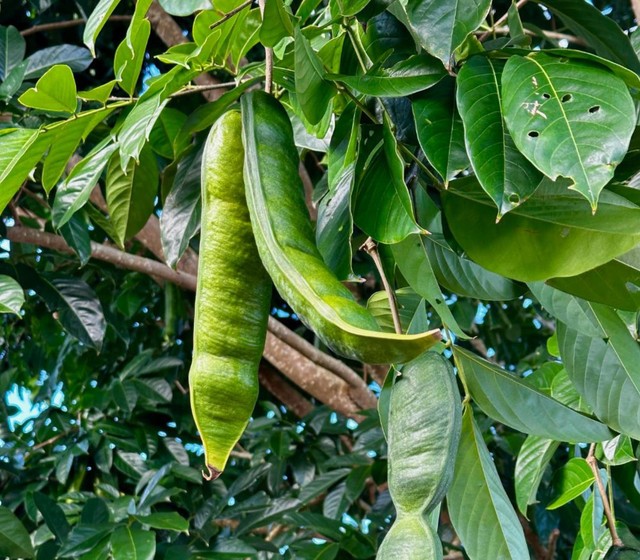
Ingá-açu: Amazonian fruit that resembles cotton candy attracts attention on social media With a sweet flavor and white pulp that resembles cotton candy, ingá-açu, a typical Amazonian fruit, has attracted attention not only for its taste, but also for the size of its pods, which can exceed 30 centimeters.
Ingá-açu: Amazonian fruit that resembles cotton candy attracts attention on social media
With a sweet flavor and white pulp that resembles cotton candy, ingá-açu, a typical Amazonian fruit, has attracted attention not only for its taste, but also for the size of its pods, which can exceed 30 centimeters. Found in Rondônia and other northern states, the fruit once again aroused curiosity after a video by biologist Flávio Terassini drew attention on social media.
📱Download the g1 app to see RO news in real time and for free
According to Osvanda Silva de Moura, PhD in Botany and professor at the Federal University of Rondônia (Unir), ingá-açu is a fruit tree native to the Amazon and belongs to the legume family, the same as beans and peas.
"Ingá-açu is a tree typical of the Amazon rainforest and occurs naturally in areas close to rivers, lakes and floodplain regions. Its fruits stand out for their pod shape and the white, fleshy and very sweet pulp that surrounds the seeds", he explains.
The name also originates from the characteristics of the fruit. According to the researcher, “ingá” comes from Tupi and means “soaked seed” or “soaked”, in reference to the pulp that surrounds the seeds. “Açu” means big.
“The name refers precisely to the size of the fruits, larger than those of other species of ingá”, he states.
The species, scientifically named Inga cinnamomea, occurs in states of the Legal Amazon, such as Amazonas, Pará, Acre, Rondônia and Amapá. It is also present in neighboring countries, such as Peru, Colombia, Ecuador and Bolivia.
According to the researcher, the tree easily adapts to humid environments and is common in riparian forests, flood forests and floodplain areas.
“It is a species closely associated with water and can develop well in soils subject to periodic flooding”, he highlights.
Fruit can reach 30 centimeters
One of the main characteristics of ingá-açu is the size of the pods, which are cylindrical in shape, have a firm shell and can measure between 20 and 30 centimeters in length. When opening the fruit, it is possible to observe internal compartments with seeds surrounded by white, juicy pulp.
"The flavor is quite sweet and pleasant. That's why many people know it as cotton candy from the Amazon", he says.
The tree also stands out for its size. In nature, it can reach up to 40 meters in height, although, in backyards and domestic orchards, it is generally smaller.
Despite the similar names, the ingá-açu is not the same species as the ingá-cipó, also known as ingá-de-metro.
"Many people confuse the two species. Ingá-cipó has thinner and longer fruits, which can exceed one meter in length. Ingá-açu has thicker and more robust pods", explains Osvanda.
According to the researcher, there are around 300 known species of ingá, with approximately 180 recorded in the Amazon.
Ingá-açu flowering occurs mainly between October and January, a period marked by high temperatures and the beginning of rain. The fruits ripen between March and May, when the main harvest season occurs.
"Climatic conditions directly influence production. Severe droughts, heat waves and low humidity can compromise the plant's development and affect the quality of the pulp", he states.
Among the curiosities, the researcher highlights the tree's ability to enrich the soil. Another important characteristic is in the seeds.
"As it is a legume, ingá-açu can fix nitrogen, functioning as a natural fertilizer. They quickly lose their germination capacity when they dry out. Therefore, they need to be planted immediately after being removed from the fruit", he explains.
READ ALSO:
Barbers create World Cup-inspired haircuts in Porto Velho
Land where 'Índio do Buraco' lived isolated for decades becomes a national park in RO
Health benefits
In addition to its flavor, ingá-açu has nutritional value. The fruit contains vitamin C, B vitamins and vitamin A, as well as minerals such as calcium, iron, magnesium and manganese.
The pulp is also rich in fiber and antioxidant compounds, such as flavonoids.
“Vitamin C helps to strengthen the immune system, while fiber contributes to the functioning of the digestive system and helps control the absorption of sugar in the blood”, he explains.
Despite being widely consumed by Amazonian communities, the researcher highlights that the chemical composition of the species is still little studied, which opens up space for new research into the nutritional and medicinal potential of the fruit.
Inga cinnamomea or Ingá-Açu
Reproduction
📰 Related Articles

The best gardening equipment for every type of home
CartaCapital
Notebook with local AI: why Nvidia wants to change the PC
CartaCapital
Driver emerges unharmed from accident after metal protection on the highway crosses car in SC; PHOTO
G1 Globo
Itapeva promotes free immunization against various diseases for dogs and cats
G1 Globo
Justice converts into preventive arrest of trio for death of young girl thrown without rope in rope jump
G1 Globo