A first for the World Cup, Curaçao has a 'mosaic of languages' as its official language; get to know papiamento
⚡ Quick Summary
Curacao and Papiamento Amidst so many songs and music echoing through the stadiums during this World Cup, an unprecedented cry may seem incomprehensible to many: hello blou!
Curacao and Papiamento
Amidst so many songs and music echoing through the stadiums during this World Cup, an unprecedented cry may seem incomprehensible to many: hello blou! And anyone who thinks this is a warning that the traditional hello made during games is coming is wrong.
In reality, the expression represents support for one of the newcomers in the competition – the Curaçao team – and in a language as rare as the country's participation in the World Cup, Papiamento. (learn more about the language below)
Although, on the field, football is almost a universal language, in Curaçao the reality is very different. The country has a true mosaic of languages when it comes to language.
➡️In short, the population lives with four different languages on a daily basis:
Papiamento - considered one of the official languages, is the predominant language in the media (TV, radio and newspapers), in family life and, increasingly, in literary production and school instruction.
Dutch - second official language. It prevails in formal, technical and administrative environments.
Spanish and English - present in service, tourism and commerce relationships.
Curacao
Bh Airport / Disclosure
Manuele Bandeira, PhD in Literature from USP and specialist in the phonology of Portuguese-based creole languages from the Gulf of Guinea and the morphology of Papiamento, explains that the population of Curaçao is truly polyglot, with a large part of the native community moving fluidly between the four languages.
"It is extremely common that, in everyday life, speakers change languages in the middle of the same conversation to emphasize specific terms or simply because they know that the interlocutor understands the different repertoires", comments Bandeira, who is a professor at the University of International Integration of Afro-Brazilian Lusofonia (Unilab-BA).
And, among all the languages spoken on this small island in the Caribbean, one stands out for being, in itself, a mixture of languages: Papiamento.
👉In this report you understand a little more about the origin of this language, its similarity to Portuguese and learn some expressions.
Creole language
Papiamento – or Papiamentu, in the official spelling – is a creole language, composed primarily of Portuguese and Spanish. It is present mainly on the islands of Aruba, Bonaire and Curaçao and has around 350 thousand speakers worldwide.
📝The term creole designates natural languages, with their own grammar and identity, born from a historical process of extreme contact between different languages.
"A creole language arises when populations that speak different languages are brought together in a confined environment (such as islands, barracks or colonial plantations) and need to create a common means of communication", explains Manuele.
She further details that, when this language starts to be adopted by a community and is transmitted to new generations as their mother tongue, nativization occurs.
In the case of papiamento, its emergence is directly related to the formation of colonial society in Curaçao.
Are we a different person when we speak another language?
👉In this context, two milestones play a fundamental role:
1634 - Dutch West India Company takes the island from Spanish rule. Due to its strategic location, the place quickly became a commercial warehouse and one of the largest deposits of African slaves in the Caribbean and the Americas.
from 1651 - arrival of Sephardic Jews, many coming from Recife after the Portuguese resumption. Initially this group spoke Portuguese, but began to adopt Papiamento in their daily lives. In this scenario, Manuele explains that Papiamento created a unique linguistic identity because it developed in continuous and intense contact with:
Dutch (administration language)
Spanish (due to commercial proximity to the continent)
Portuguese (with the presence of Sephardic Jews)
Afro-Portuguese varieties from West Africa (spoken by enslaved people)
and, later, English (due to commerce and tourism)
Papiamento and Portuguese
As it is a language that has Portuguese as one of its roots, there is a proximity, to this day, between the two languages.
One of the clearest examples is in the so-called functional words, such as prepositions and pronouns, structures that are generally more resistant to linguistic change:
Prepositions - di (from), ku (with) and pa (to)
Pronouns - ken (who) and unda (where)
"Although the language has undergone a strong process of Hispanicization over the centuries, its grammatical 'heart' remains linked to the Portuguese language", analyzes Bandeira.
The similarity can also be seen in the verbal system, especially in auxiliary verbs, and in some everyday words, in the most basic vocabulary:
Verbs - bai (go/go), por (can) and tin (has)
Vocabulary - still (yet), semper (always), kachó (dog) and nobo (new)
Expressions without translation
Although Papiamento has as lexifying languages languages spoken in several other countries, the language has its peculiarities, with expressions that are difficult to translate.
"Many expressions use metaphors that, if translated literally, lose the intended meaning. They are idiomatic expressions, rooted in local culture", says Manuele.
📚Among the expressions, the teacher highlights some of the most popular proverbs:
Now bichi bini ariba bisa ku e bou ta hole stinki kere
🗣️Literal meaning: "When an animal comes from above and says that the one below smells bad, believe it"
✅Symbolic meaning: When someone in a position of knowledge or authority says something is wrong, you should believe it.
Jambo biew a bulbe na wea
🗣️Literal meaning: "The old okra returned to the pot"
✅Symbolic meaning: It is generally used when someone who previously ended a relationship regrets it and gets back together with their partner.
Now tamarijn ta pidi suku bo mester duna
🗣️Literal meaning: "When the tamarind asks for sugar, you should give it"
✅Symbolic meaning: Warns that, in a relationship, if your partner asks you for something or demonstrates a need, you must respond or grant it.
Mira ku wowo laga para
🗣️Literal meaning: "Observe with your eyes and leave it still"
✅Symbolic meaning: Suggests observing a situation, but leaving things as they are, without interfering or causing problems.
Djente blanku no ta kurason
🗣️Literal meaning: "White teeth are not heart"
✅Symbolic meaning: Reinforces that an open smile or a friendly appearance do not guarantee good feelings or sincerity.
'Ola blou' at the World Cup
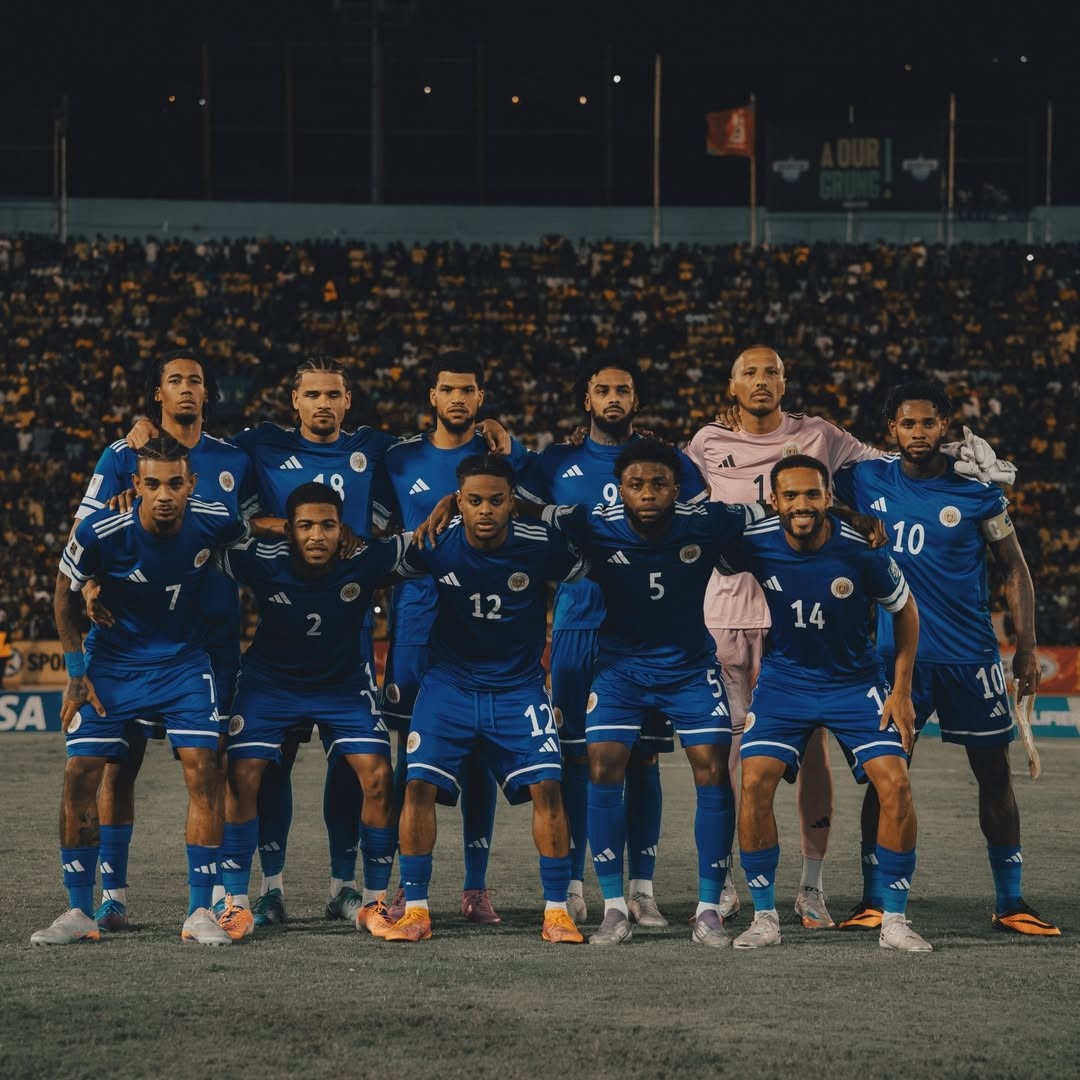
Curacao national team
Reproduction
It is also in papiamento that the fans supported the Curaçao team in the unprecedented achievement of a place to participate in the World Cup.
🌊The ola blou, or blue wave, represents the movement to support the team and also gives its name to the main song sung by fans during the qualifiers.
"The blue wave naturally references the iconic blue of Curaçao, a color that refers to its paradisiacal setting and the national flag, predominantly blue", explains Bandeira.
The expert also states that the country really appreciates football, even though it has never had a national team among the select group that competes in the World Cup.
"Just as football allows Curaçao, the smallest nation in terms of population numbers to qualify for a world tournament, to be seen and heard around the world, papiamento is the vehicle that symbolizes and brings together so many cultures, histories and ethnicities internally", he states.
🗞️ 4 sources covered this story
With Brazil's debut in the World Cup, Globo, SBT and CazéTV break audience records in 2026
UOL
Outside the World Cup, Rodrygo poses with the actress from “The Summer That Changed My Life”
CNN Brasil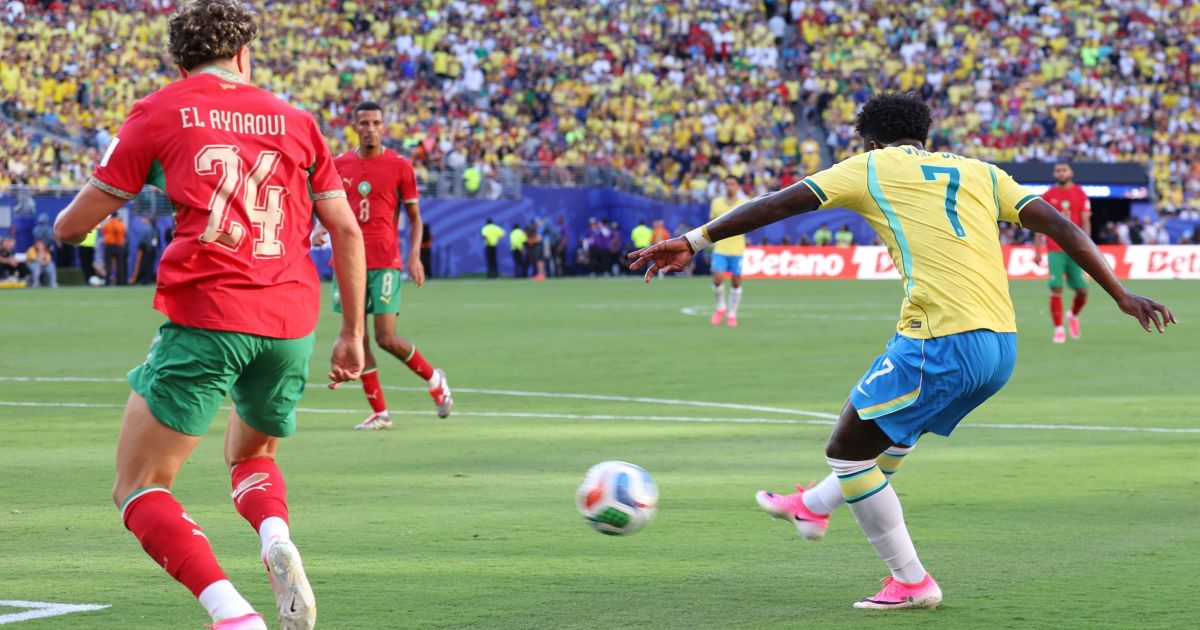
Vini Jr., Pelé and more: who scored Brazil's first goal in each World Cup
CNN Brasil
Candidate for protagonist in the World Cup, Vini Jr. scores a great goal against Morocco
CNN Brasil📰 Related Articles
Haiti 0 x 1 Scotland: see the best moments from the World Cup game
CNN Brasil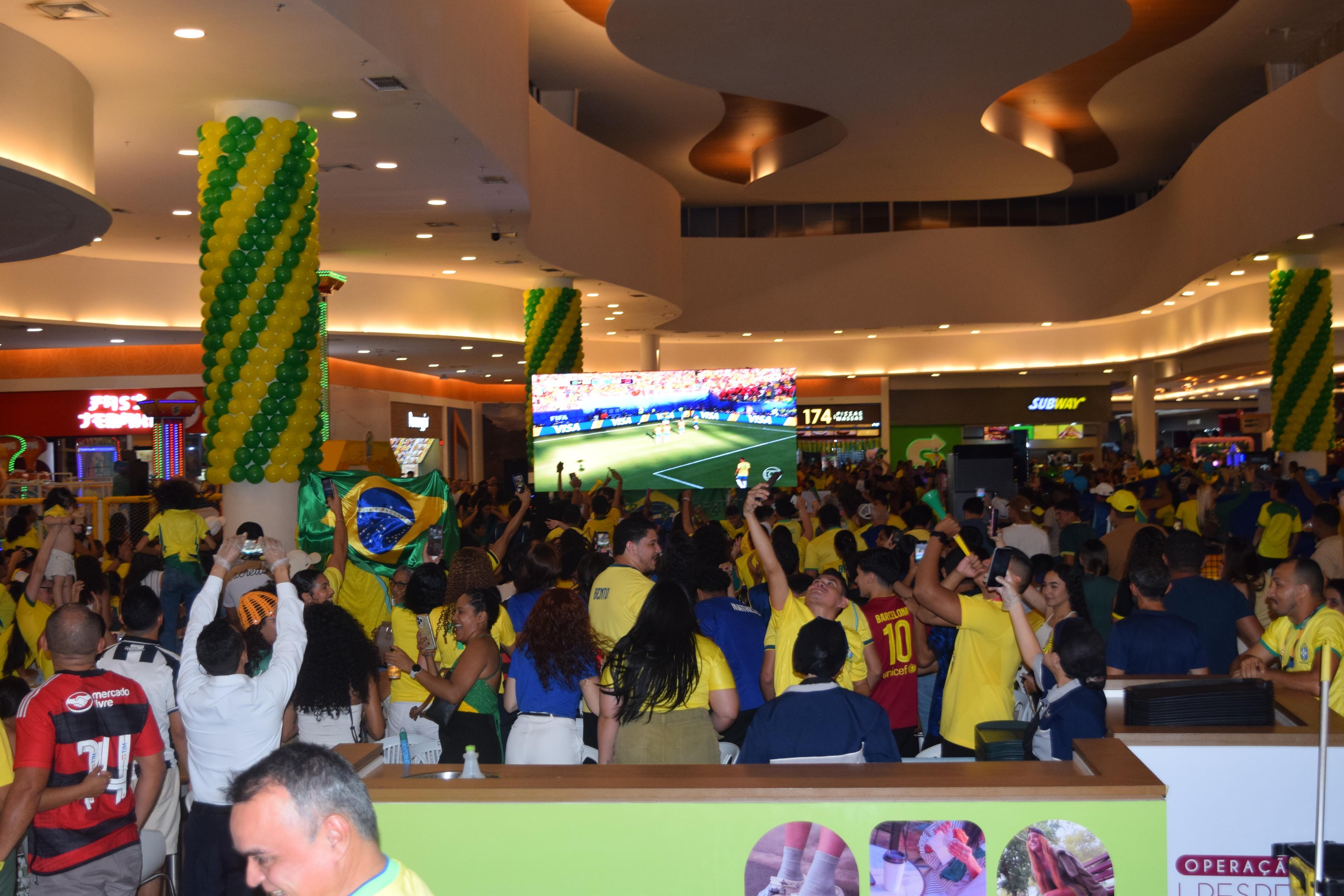
Draw between Brazil and Morocco unites Brazilians and rekindles hope for the sixth
G1 Globo
Scotland holds off pressure from Haiti and wins in World Cup debut
CNN Brasil
Vinícius Júnior admits Brazil's poor performance: "We need to improve"
Agência Brasil
Ancelotti guarantees that a draw in the World Cup opener will not shake confidence
Agência Brasil