Discover the history of the old train stations that helped in the growth of Ribeirão Preto, SP
⚡ Quick Summary
Discover the history of the train stations that helped in the growth of Ribeirão Preto, SP Decades before the Bus Terminal became one of the main circulation points in Ribeirão Preto (SP), trains played a central role in the city's mobility.
Discover the history of the train stations that helped in the growth of Ribeirão Preto, SP
Decades before the Bus Terminal became one of the main circulation points in Ribeirão Preto (SP), trains played a central role in the city's mobility.
The history of old railway stations, such as Companhia Mogiana de Estradas de Ferro, in Ribeirão Preto since 1983, and Estação Barracão founded in 1986, helps to explain the economic development of the municipality, in addition to the formation of neighborhoods and the arrival of thousands of immigrants to the interior of São Paulo.
This report is part of the series 'Hidden Stories', a special production by EPTV, a TV Globo affiliate, to celebrate Ribeirão Preto's 170th anniversary, celebrated on June 19th. Curiosities, notable characters and facts that few people know help to understand the trajectory of one of the most important cities in the state of São Paulo.
Mogiana Company
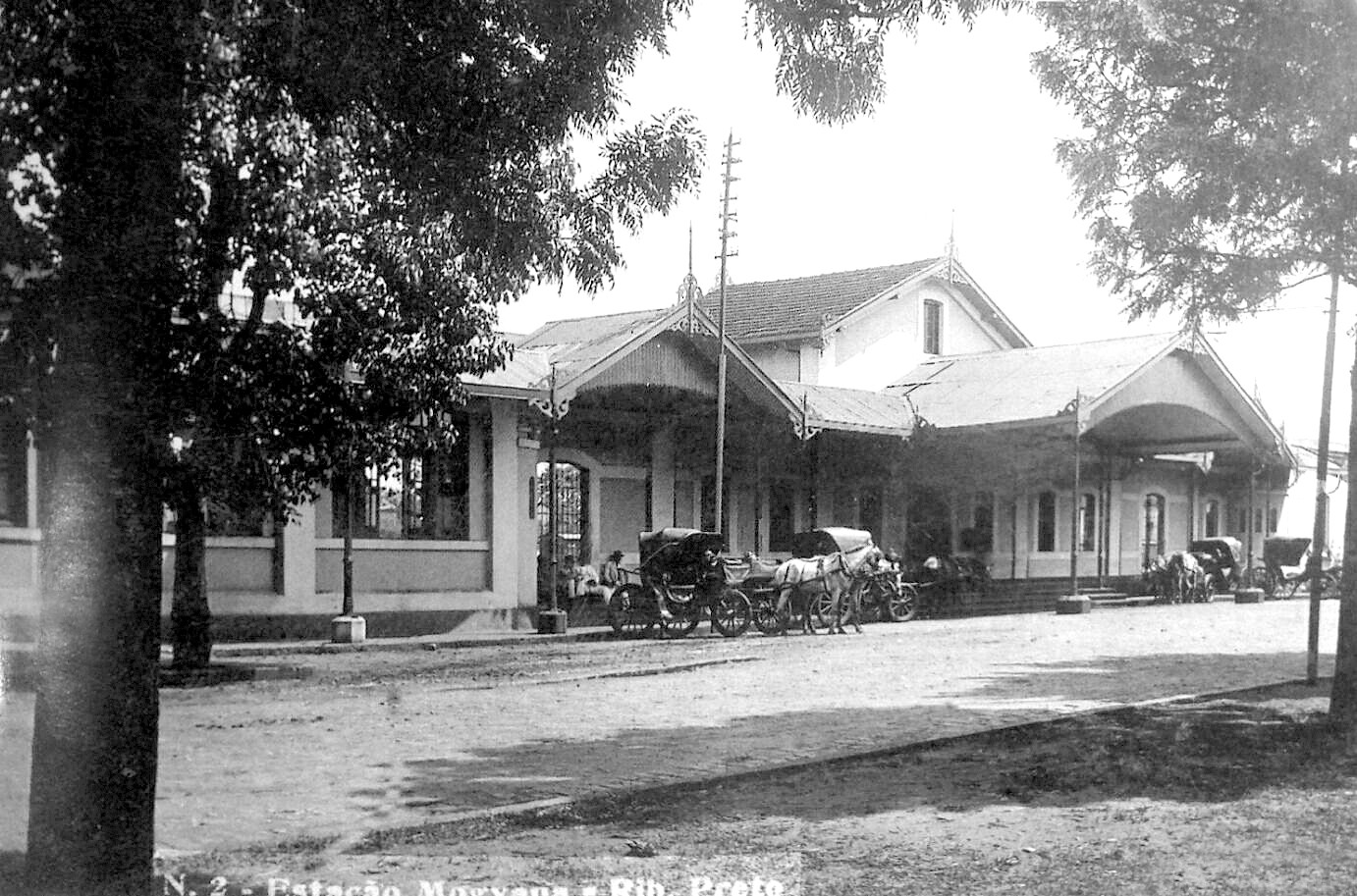
The Companhia Mogiana de Estradas de Ferro arrived in Ribeirão Preto in 1883, driven by the expansion of coffee growing. The trails played a fundamental role in the growth of the city, then known as one of the main coffee producers in the country.
The main railway station was located on Avenida Jerônimo Gonçalves. Farmers, businessmen and members of the elite linked to the coffee economy disembarked there.
Mogiana Station in 1920 in Ribeirão Preto
Village Newspaper/Collection
According to the article Modern Imaginary of Ribeirão Preto narrated by representations of Cia. Mogyana stations, by Ana Teresa Villela and Rodrigo Minot, at the height of economic prosperity, Companhia Mogiana commissioned, in 1917, a new project to replace the existing station. The person responsible was the renowned architect and engineer Francisco de Paula Ramos de Azevedo, author of important works in the state of São Paulo.
The project envisaged a station with dimensions much larger than the existing structure. But, despite publicity in newspapers at the time, the work was never built. According to the researchers, the proposal was presented as the city's future station, but it remained only on paper and the original station continued in operation until the 1960s.
In 1965, passenger trains started to go to the new station, which was located outside the city. In 1967, it was demolished to make way for the current bus terminal, following the change in transport policies in Brazil, which began to prioritize highways over railways.
Photo of Mogiana Station at its inauguration in 1965
Reproduction: EPTV
Immigrant station
While the central station received passengers linked to the economic elite, another railway stop played a decisive role in the history of immigration in Ribeirão Preto.
Located in the region of the current Ipiranga neighborhood, Estação Barracão, founded in 1886, was the main arrival point for immigrants, especially Italians, hired to work on the coffee plantations.
Estação Barracão, in Ipiranga, received Italian immigrants who came to Ribeirão Preto to work in the coffee industry
Antonio Luiz/EPTV
After disembarking, families were registered and remained in temporary accommodation before heading to farms in the region. The importance of the place was so great that it ended up influencing the names of neighboring neighborhoods.
Ipiranga became popularly known as "Barracão de Cima", while Campos Elíseos came to be called "Barracão de Baixo". Both neighborhoods grew with the arrival of workers and activities linked to the railroad.
Incomplete modernization
Decades after the unexecuted Ramos de Azevedo project, Companhia Mogiana returned to planning a new station for Ribeirão Preto.
In 1961, architect Oswaldo Bratke was hired to develop a modern complex in a more peripheral area of the city. However, only the first, of the three planned stages, was built and inaugurated in 1966. The project sought to transform the station into a multifunctional space, with areas for coexistence, commerce and services. However, the expansion was never completed.
A few years later, rail passenger transport began to decline and investments began to focus on the road system.
Today, although there are discussions and proposals to preserve railway memory, a large part of this heritage remains unrestored. Still, traces of this past can be found in the city, such as the old locomotive on display in Maurílio Biagi Park.
The place currently has broken windows, broken glass scattered across the floor, graffiti-covered walls and tall grass.
Reproduction: EPTV
*Under the supervision of Flávia Santucci
See more news from the region on g1 Ribeirão Preto e Franca
VIDEOS: Everything about Ribeirão Preto, Franca and the region
📰 Related Articles

Couple who met in São João de Campina Grande 1 year ago get married in a collective wedding: 'a dream come true'
G1 GloboIran's Chancellor says country won the war against the US
CNN Brasil
Understand the mystery of the floors of the Parthenon Center Building, in Goiânia
G1 Globo
Iran wants to dilute uranium reserves and new management of Hormuz
Observador
Curaçao takes Caribbean rhythm to its World Cup debut
Agência Brasil