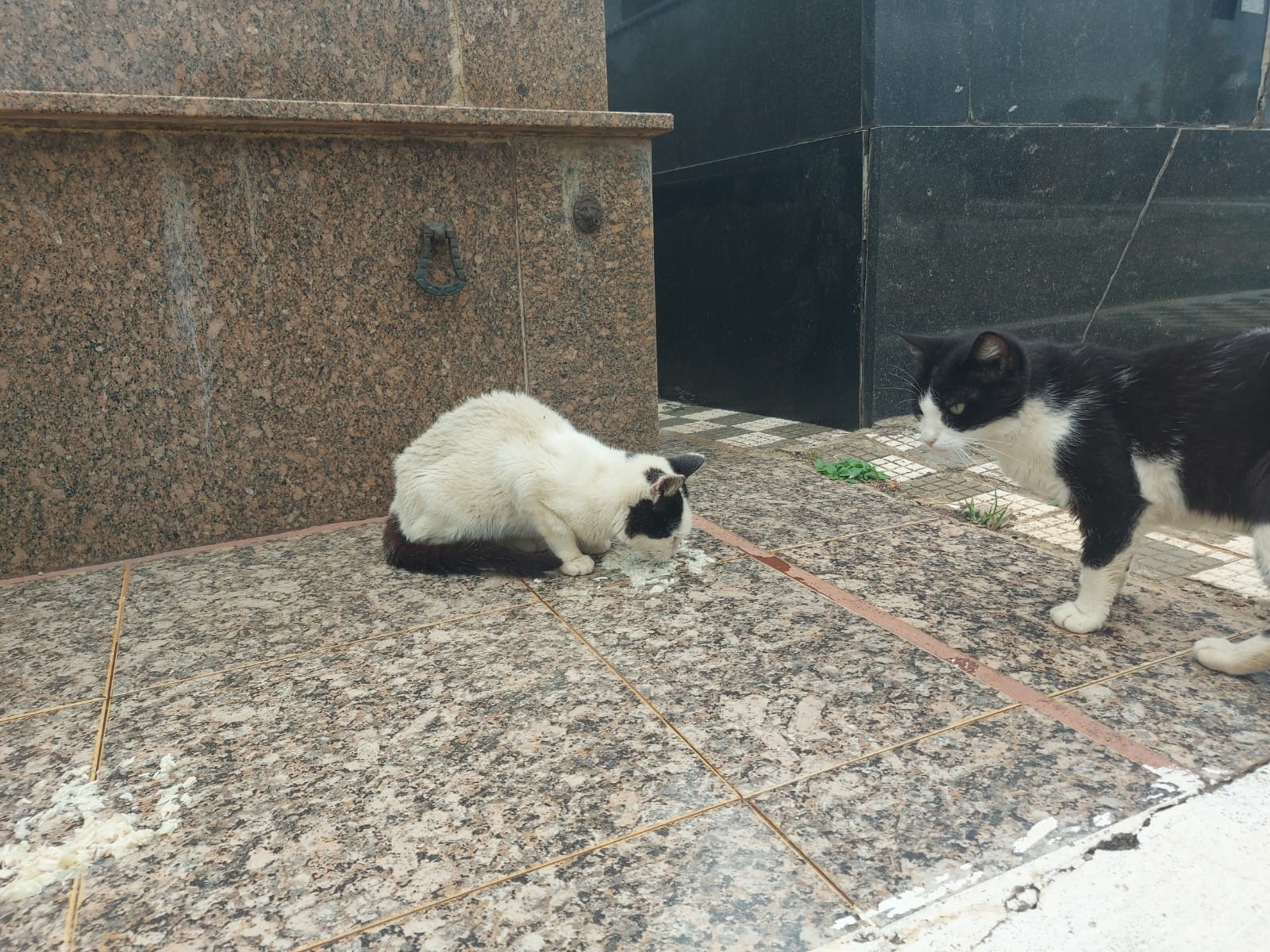
Piracicaba City Hall appeals injunction that ordered more food for cats abandoned in a cemetery
⚡ Quick Summary
Protectors denounce reduction in food supplied to abandoned cats in Piracicaba The City of Piracicaba (SP) filed an appeal against the injunction of the Court of Justice of São Paulo (TJ-SP) which ordered the reestablishment of the supply of 30 kilos of food per day for the colony of cats living in Cemitério da Saudade.
Protectors denounce reduction in food supplied to abandoned cats in Piracicaba
The City of Piracicaba (SP) filed an appeal against the injunction of the Court of Justice of São Paulo (TJ-SP) which ordered the reestablishment of the supply of 30 kilos of food per day for the colony of cats living in Cemitério da Saudade.
According to the document, obtained by g1 this Thursday (11), the municipality argued that it is being forced to buy food for 900 cats, but studies show that the number of animals is more than 20 times smaller.
The municipal administration also mentions that this expense could be allocated to "other public policies".
📲 Join the g1 Piracicaba WhatsApp channel
The NGO Gatos do Cemitério da Saudade takes care of the animals. Since 2014, this relationship has been regulated by a TAC. At the time, according to the city hall, a study showed that there were 30 unneutered cats on site.
The NGO, however, estimates that 900 abandoned cats live in the cemetery, a balance that the city hall does not recognize. According to the organization, in addition to being the home of these felines, the cemetery is also an abandonment point for these animals.
In the appeal, the City Hall asks for the decision to be reversed and tries to end the judicial obligation to provide food, claiming that the expense is unnecessary and is based on a population estimate that does not correspond to the municipality's technical studies. Check out the main requests below:
the reconsideration of the decision by the rapporteur himself;
the full reform by the collegiate, to reject the injunction;
the reestablishment of the first instance decision, which had denied compulsory supply;
and the refusal to grant the opposing party's appeal.
What the City Hall argues in the appeal
The central point of the municipality's defense is that the reduction in feed supply was not arbitrary, but technically based. See the decision point by point:
Scientific technical study: the city hall states that the adequacy of the amount of food was based on a technical study prepared by the competent administrative authority, based on 12 years of application of the "Capture, Castration and Return" (CCR) protocol
Need for expertise: the city council maintains that, as the definition of the number of animals is uncertain, the court should not anticipate the effects of the guardianship before an on-site expertise
Lack of legal urgency: the change in feed supply occurred in January 2025, but the action was only filed in March 2026, and the passage of 14 months between the fact and the court request would mischaracterize the danger of delay, revealing that the situation is not an emergency that justifies the injunction.
Damage to public property: the city hall claims that it is being compelled to purchase food for a population 20 times larger than the technically existing one, which constitutes a huge and unnecessary expenditure of public money
Understand the dispute
The dispute began with a Popular Action by the NGO to force the City Hall to provide cat food. According to the action, the city hall was obliged by a Conduct Adjustment Term (TAC) to provide food to the animals, but cut off the supply in January 2025.
🔎 The Conduct Adjustment Term (TAC) is an agreement between the Public Prosecutor's Office and anyone who fails to comply with the law or violates collective rights. Instead of opening a lawsuit, the aim is for the party — such as the city hall or company — to cease the illegal practice and repair or compensate the damage.
After four months, the municipality resumed delivering 15 kg of food, half of the previously determined quantity. In May 2025, the Public Ministry (MP-SP) asked the city hall for clarification about the reduction.
The request was denied in the first instance, but the TJ granted an injunction determining the resumption of delivery at the same levels from 2022 to 2024, on May 27. It is this decision that the City Hall is trying to reverse. How many cats are there in the cemetery?
The place is a historic point of animal abandonment, according to the protector
Personal collection
In the appeal, the city hall mentions that the Popular Action filed is based on a "supposed colony of 900 cats". The municipality does not recognize the number and classifies it as an "informal estimate", without a scientific methodology or documentary proof.
According to the volunteers, the city admitted the reduction in the quantity supplied was due to a possible decrease in the population of cats in the cemetery. Judge Paulo Ayrosa cited that the reduction was not proven, when ruling in favor of the NGO in May.
"As there is no proof that the number of animals abandoned in the cemetery has decreased, this is a mere estimate made by the municipality, an issue that should be the subject of on-site expertise at the appropriate procedural moment," he wrote at the time.
According to City Hall, the reference made to “30 cats” did not correspond to the total population, but only to an estimate of animals that were not neutered at the time of the creation of the TAC, which should have been sterilized by the NGO.
The municipality explained that it fully complied with the agreement, but that the NGO failed to carry out systematic castrations and promote adoptions planned to progressively reduce the number of cats, and that the lack of action prevented the extinction of the colony.
g1 tries to locate the organization's defense. The report will be updated after the demonstration.
VIDEOS: Everything about Piracicaba and the region
See more news about the region on the g1 Piracicaba page.
🗞️ 3 sources covered this story

SpaceX is valued at more than R$9 trillion before the IPO that could make Elon Musk the first trillionaire in history
BBC Brasil
The fierce dispute over the causes of the Air India crash that killed more than 250 people in 2025
BBC BrasilNew laws sanctioned in Vitória da Conquista bring changes to health, environment and citizens' rights - Vitória da Conquista City Hall
Prefeitura Municipal de Vitória da Conquista - PMVC📰 Related Articles

Americans' perception of war affected Trump's actions, says professor
CNN Brasil
Cancer patient who got married in hospital dies a week after ceremony in Acre
G1 Globo/https://i.s3.glbimg.com/v1/AUTH_59edd422c0c84a879bd37670ae4f538a/internal_photos/bs/2026/U/I/e6oHTyQLSvXAAaVXAZkw/jg-globocop-20260611-2131-frame-28311.jpeg)
Split between two truck drivers causes accident with 6 vehicles and leaves injured on the Aricanduva Bridge, East Zone of SP
G1 Globo
Princess Bajrakitiyabha of Thailand dies at 47
G1 Globo
Court suspends Randolfe Rodrigues' pre-candidacy event in Amapá on suspicion of early electoral propaganda
G1 Globo