Why public transport should be a priority in João Pessoa
⚡ Quick Summary
João Pessoa's vehicle fleet grew 49.2% in the last ten years and surpassed the 500,000 registration mark in 2025.
João Pessoa's vehicle fleet grew 49.2% in the last ten years and surpassed the 500,000 registration mark in 2025. In December 2015, the capital had 355,132 vehicles. Today, there are 504,480. The data comes from a recent survey by CBN Paraíba based on official information.
During the period, the city gained 164,072 more vehicles circulating on the streets. On average, this represents around 16,400 new vehicles per year, 1,376 per month or approximately 45 vehicles added daily to the capital's traffic.
Meanwhile, João Pessoa's population grew 15% in the same period, according to data from the Brazilian Institute of Geography and Statistics (IBGE). In practice, the car fleet grew more than three times the rate of population growth.
The increase in the number of vehicles has a direct impact on urban mobility. In many Brazilian cities, the road infrastructure has not kept up with the speed of this growth, as is the case of João Pessoa. It is possible to observe during peak hours that streets and avenues, planned for a smaller volume of cars, began to operate close to capacity limits, increasing the number of congestion and time spent in traffic.
In this scenario, experts point to public transport as one of the main tools to make cities more efficient. The main advantage is the ability to transport a large number of people using less road space and fewer vehicles circulating simultaneously.
"Urban planning, increasingly, needs to prioritize mobility and, in this area, transport occupies a very important place. Therefore, conditions for a good service in public passenger transport are essential", stated Isaac Júnior, institutional director of Sintur-JP
"Public transport has the capacity to move large volumes of people, which is why they pollute much less. Public transport transports, on a daily basis, people who need to access work, health services, education and leisure. Public managers must think collectively, from the good condition of the roads, the prioritization of the collective, tax policies and subsidies for economically fragile portions of the population, these issues need to be put into practice urgently", concluded Isaac.
Experts point to public transport as one of the main tools for making cities more efficient.
Sintur-JP
The debate on urban mobility gained a new chapter in May this year with the approval of Bill No. 3,278/2021, which establishes the new Legal Framework for Urban Collective Public Transport.
The new legislation is the result of more than six years of discussions involving experts, sector representatives, technicians and public bodies. For the National Association of Urban Transport Companies (NTU), the Legal Framework represents an opportunity to modernize Brazilian public transport and create more favorable conditions for investments in infrastructure, technology and fleet renewal.
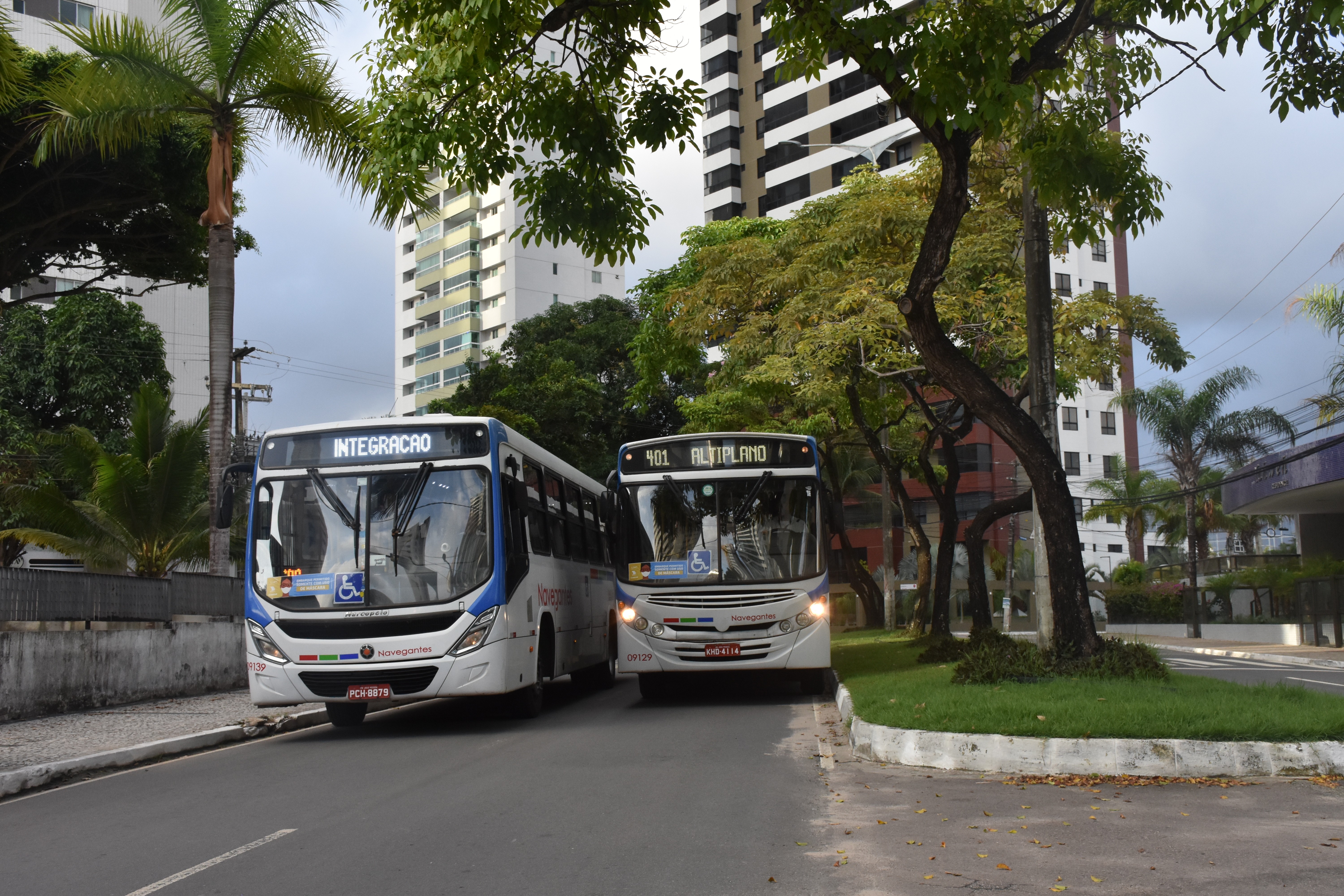
Currently, around 180 thousand people use public bus transport in João Pessoa to work, study, access services and keep their routine moving. Over the course of a month, around 4 million passengers use buses in the capital of Paraíba. The current fleet has more than 400 vehicles in circulation, operating 84 lines, connecting neighborhoods, with emphasis on the busiest corridors and circular lines.
Among the main advances expected with the Legal Framework are the expansion of investments in the sector, the modernization of vehicles, improvements in the infrastructure to support public transport and the creation of mechanisms that contribute to making fares more accessible to the population.
“The legal framework must make it possible for public transport to become the center of attention of public management”, highlighted Isaac Moreira. With the capital of Paraíba increasingly populated and an increasing number of vehicles on the streets, strengthening public transport appears as one of the main ways to improve urban mobility, expand people's access to services and opportunities and contribute to a more sustainable development of cities.
📰 Related Articles

Bill Gates admits "serious error in judgment" about Epstein
Observador
Epstein's "number two" makes new accusations
Observador
Festival has ‘different’ broths for R$20 in Juiz de Fora; discover participating bars and restaurants
G1 Globo
Chioro: Suspension of the Butantan vaccine against dengue is a sign of prudence, not failure
CartaCapital
Arrest of health secretary was ordered after attempted interference in investigations, says decision
G1 Globo