


Cristiano Ronaldo, Messi and more: what are the secrets to remaining a high-level athlete until the age of 40
⚡ Quick Summary
Football machine: How the body maintains high performance Several characteristics unite the stars Cristiano Ronaldo and Lionel Messi.
Football machine: How the body maintains high performance
Several characteristics unite the stars Cristiano Ronaldo and Lionel Messi. The undeniable quality with the ball; the title of idol in the European clubs they played for; the indispensable role in their respective national teams – just to name a few.
And one specific aspect, which is common to both, often seems unattainable to mere mortals: high-level sporting performance until the age of 40.
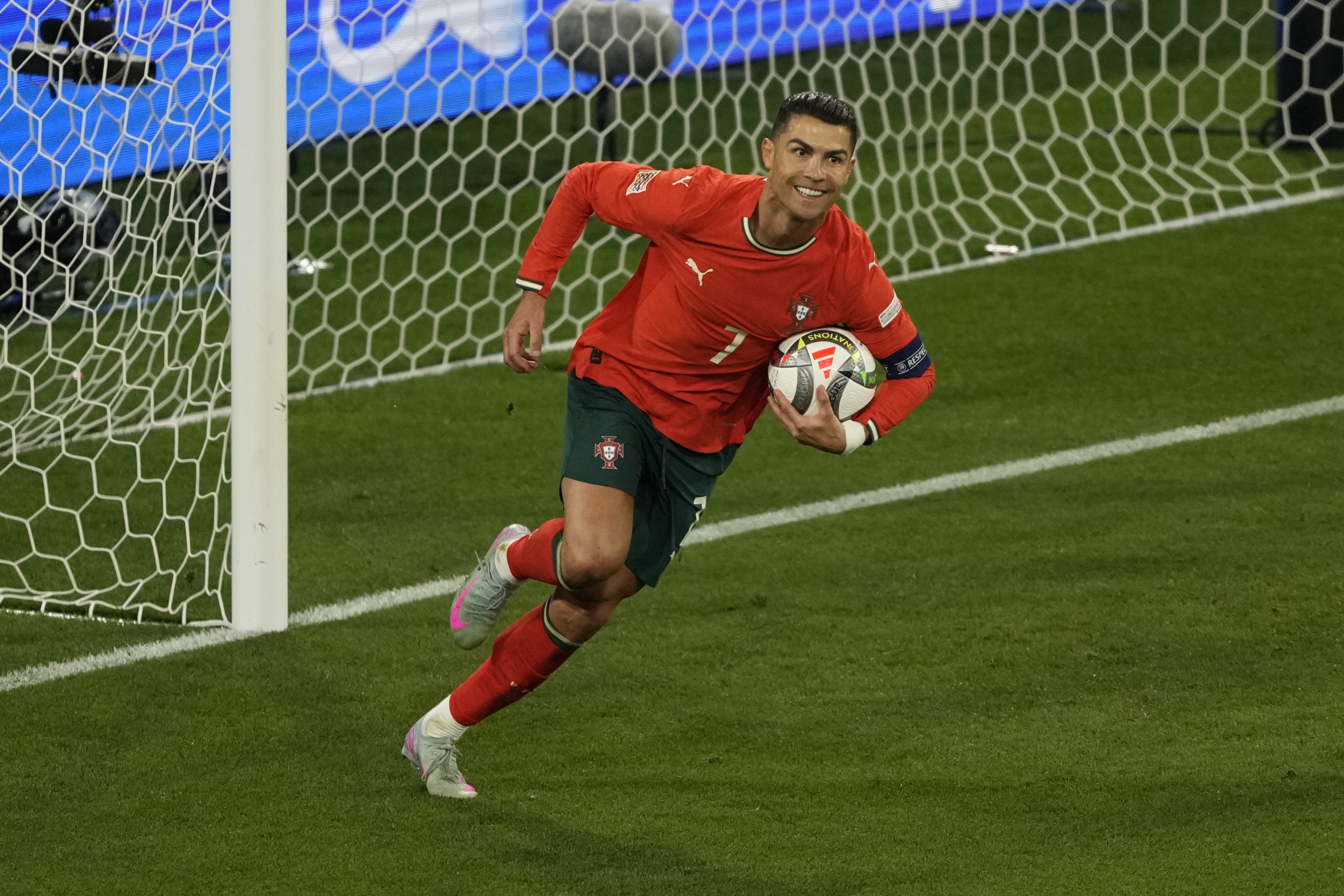
➡️In addition to all the impressive numbers, the duo will reach the World Cup as part of the select list of older players to compete in the competition: Cristiano Ronaldo aged 41 and Messi about to turn 39. Croatian Luka Modric, already 40 years old, should also join this group.
Cristiano Ronaldo will reach the World Cup at the age of 41.
Michael Probst/AP
But what factors explain the continuity of these athletes' careers up to this age, still at a high level? And more: what are the secrets to remaining a high-performance player until the age of 40?
👉Experts highlight that some points, which will be present throughout this article, are essential to achieve this result:
The role of genetics and the technical and tactical quality of these few players
The discipline and regulated routine of athletes
The advancement of sports medicine, especially traumatology
But they remember that this characteristic of longevity in the sport is still an exception among athletes. In other words, although there are some good examples in the World Cup, this does not mean that there is a change in the average age of the players, for example.
And as much as they can serve as inspiration for a more active life, high-performance sports are neither a rule nor a parameter for ordinary people.
READ ALSO:
Is it possible to live to be 150 or be immortal? What science knows about the limit of longevity
Loss of muscle mass: why the best investment for the future is to start building muscle reserves now
Genetics and technical level
Lionel Messi should also join the list of oldest players to compete in a World Cup, soon to turn 39 during the competition in 2026.
Reuters
Even though it is a condition for few, experts highlight that some physical factors and even technical characteristics of these players can contribute to the extension of their career.
For Bruno Gualano, president of the Center for Lifestyle Medicine at the USP Faculty of Medicine, genetics plays an important role in this context, as does much of what involves high-performance sport.
"When you think of a player like Cristiano Ronaldo, for example, who has a very privileged physique compared to other players, genetics actually plays a very relevant role and cannot be subjugated in relation to other behavioral factors", explains the expert.
According to the expert, genetics also plays a considerable role in the athlete's response to training and adaptation to physical stimulus, something that varies greatly from person to person.
"I can even train like Cristiano Ronaldo, but I'm unlikely to respond like him. Because that involves an important genetic load", comments Gualano.
Hamilton Roschel, physiologist and professor at the Faculty of Physical Education and Sport at USP, points out that there may certainly be a component of genetic influence, but there is currently no consistent scientific demonstration that proves this relationship.
➡️In other words, it is not possible to say that, if the athlete has a certain gene, he or she is more likely to continue performing at a high level until the age of 40.
Circulation problems, muscle weakness and depression: the risks of sitting for a long time
For him, the technical and tactical quality of these players is what stands out and allows them to continue playing in prominent positions, even though they are older. This is because the individual level is so high in these aspects that, even with possible physical deterioration throughout their career, they remain excellent players.
"Some of these athletes are so good technically and tactically that, even if they maintain a physical performance below what they had in the past, this still allows them to continue at a high level", compares the professor.
Discipline and recovery
Another important point that contributes to the longevity of these athletes in sport is discipline in training and recovery.
As much as every high-level player faces an intense day-to-day training, the constant concern of these exceptions mentioned with food, for example, is essential for them to reach competitions such as the World Cup – even at the age of 40.
🥗In the case of Cristiano Ronaldo, he adopts the Mediterranean diet, which, in general, includes a high consumption of vegetables, legumes, fruits, fish and fats considered good, such as olive oil. In addition, it provides for low consumption of dairy products and red meat.
"Caring for your body is fundamental. Those athletes who have a more regimented life and who, by luck and precaution, do not have very serious injuries tend to achieve a longer career within the sport", analyzes Gualano.
And in this scenario, recovery and load control are also very important. Roschel comments that load control and early detection of injuries help a lot to keep the player active in the long term.
"The most modern performance analyzes make it easier to create a training schedule and prevent overload, focusing much more on caring for the physical aspect", he states.
Mediterranean diet can reduce stroke risk, indicates study of more than 100,000 women
Evolution of sports medicine
In addition to the physical composition of these athletes and their willingness to take care of their bodies with the aim of remaining active for as long as possible, an external factor is also fundamental in this process: the evolution of sports medicine.
Experts especially highlight the technological gains in the field of traumatology, which is currently able to anticipate the return to sport after serious injuries.
"Not long ago, many injuries for which there is now treatment were not managed correctly, there was no return to practice protocol", explains Gualano.
👉One of these examples is meniscus problems. If previously an injury to this region could even shorten a player's career, today he can stand on the same day, depending on the procedure performed.
Hamilton also remembers that the technical development of equipment, such as boots and balls, better lawn care, as well as technologies such as performance monitoring play an important role in this longevity in the sport.
But, even with all the developments, they consider that it is not enough for high-level performance to stop being an exception, at least for now.
In general, these measures help to provide better health throughout your career, but do not change the average age of players within competitions.
And for the amateur athlete, is it possible?
Experts are categorical in saying that high-level sport is a totally different phenomenon from the occasional practice of physical activity, since the focus is performance and not necessarily health.
"Considering the training load to which athletes are subjected, training and competition, the risk of injuries, psychological stress, dietary restrictions, it is impossible to imagine that sport is a perfect type of health and longevity", analyzes Gualano.
Thus, the determination of these players can serve as inspiration for a more active life, but cannot be taken as a rule by an amateur athlete.
"People want to train like athletes, since they have lives beyond that, they have CLT jobs, they travel for that. [... ] We have to remember that these athletes are exceptions, with peculiar characteristics, and that this should not be a model to be followed", warns Roschel.
Practicing physical exercise is beneficial at all ages, but it must be done with professional guidance, without excess and guided by scientific evidence.
📰 Related Articles

"I cried, but it's not about football. I went through difficult days"
Observador
'He died doing what he loved', says mother of basketball athlete killed in bus accident on return from tournament
G1 Globo
After 2 years, the city that lost a cemetery in the biggest flood in RS gains land donated by a retired woman and identifies graves
G1 Globo
Messi talks about crying after first goal: “I went through difficult days”
CNN Brasil
Eduardo Bolsonaro sentenced for coercion of justice - The Issue #1741
G1 Globo