


Involuntary hospitalization: DF project repeats federal law and does not fill gaps, experts say
⚡ Quick Summary
Governor of DF talks about involuntary hospitalization of homeless people The governor of the Federal District, Celina Leão (PP), this week sent a bill to the Legislative Chamber that deals with the involuntary hospitalization of homeless people.
Governor of DF talks about involuntary hospitalization of homeless people
The governor of the Federal District, Celina Leão (PP), this week sent a bill to the Legislative Chamber that deals with the involuntary hospitalization of homeless people.
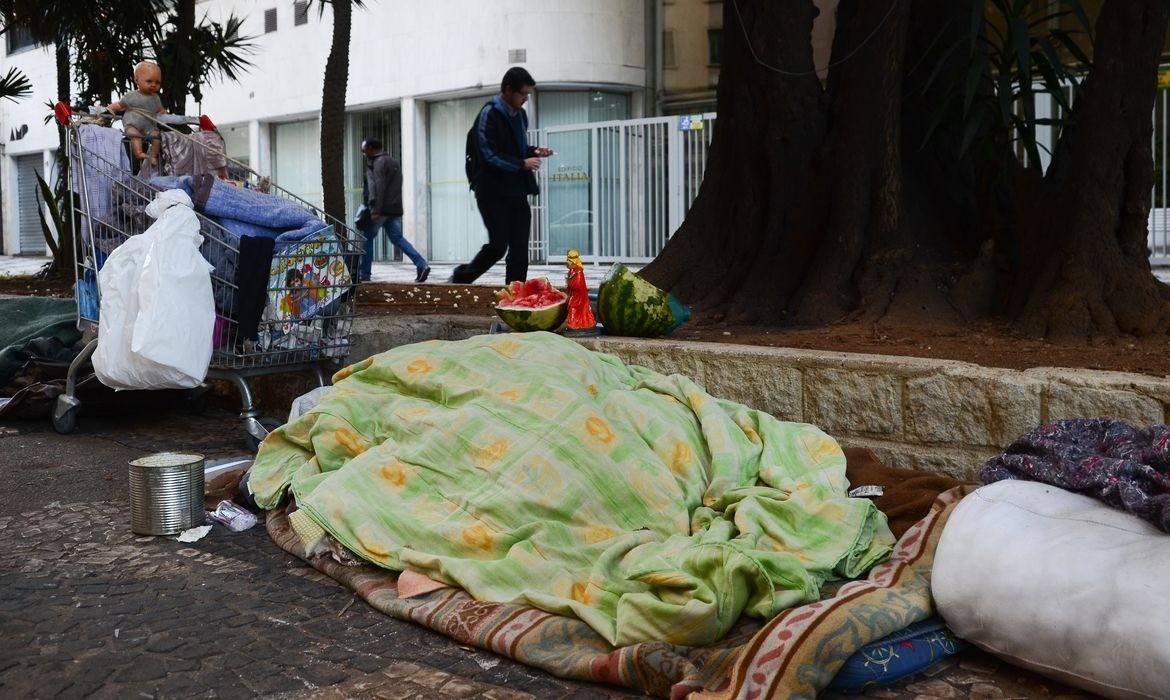
Data from IPE-DF indicate that, in January 2025, 3,521 people were homeless in the capital (see details below).
The proposal establishes the expansion of the reception network and integrated action between areas such as health, social assistance, housing, public security, education and social development.
At the federal level, a 2001 federal law already establishes involuntary hospitalization, despite not specifically dealing with homeless people (see details below).
In a video released on a social network, the governor spoke about the subject:
"We also address a situation that is now a reality here in the Federal District: the person who has an outbreak and who puts their life and the lives of other people at risk. This is a public health problem that ends up mixing with other problems that we have and transforming this into a public safety problem as well," declared the governor.
✅ Click here to follow the g1 DF channel on WhatsApp
Lacks originality and structure
The coordinator of the Reference Center on Drugs and Associated Vulnerabilities at the University of Brasília (UnB), Andrea Galassi, highlights that there is no novelty in the project presented by the DF government in relation to involuntary hospitalization -- and makes reservations.
"You cannot think that it is possible to resort to this resource, clearly described as an exceptional situation, as a public policy. If you consider involuntary hospitalization as a public policy, you are violating the law that already exists and which uses this resource in an extraordinary situation", says the expert.
The president of the Brazilian Psychiatric Association (ABP), Antônio Geraldo da Silva, points out the lack of a structured psychiatric evaluation of the project.
"Anyone who needs psychiatric treatment and can pay, makes an appointment with a psychiatrist to begin treatment. In the public system, there is an inversion and enormous difficulty in getting to a psychiatric appointment. We end up having a lot of loss of life as a result of this. We cannot continue like this", he says.
Specialist Andrea Galassi also highlights that, in addition to the fact that the DF does not have a public long-term hospitalization service, the government's bill does not say where these "collected" people go.
"Where are you going to send these people to, a private entity? In other words, the GDF will finance these hospitalizations in private services instead of strengthening SUS services. We have SUS resources to welcome these people and rehabilitate them to follow their treatments freely."
Next government actions
To g1, the Legislative Chamber stated that the PL will be processed urgently and should be discussed at the next meeting of the College of Leaders, next week.
Asked about the availability of medical and professional beds for the new demands that may arise with the possible approval of the law, the Health Department stated that the infrastructure of the public network "is ready and open to welcome and serve this population".
"Processes are underway to hire new professionals and teams, in addition to the implementation of new CAPS (General and AD - Alcohol and Other Drugs)", the ministry also pointed out.
The Secretariat of Social Development points out that "any demands for the area of social assistance will have to be evaluated later, if the law is sanctioned".
"This folder reiterates that it does not remove homeless people. The document is made up of integrated measures from different bodies, such as the reception action. "
Federal laws x district bill
Homeless person in DF, in file image
Brasilia Agency
A 2001 federal law already provides for the protection and rights of people with mental disorders and redirects the mental health care model.
At the time, it was sanctioned that involuntary hospitalization takes place without the user's consent and at the request of a third party, as long as it is approved by a doctor duly registered with the Regional Council of Medicine (CRM) where the hospitalization establishment is located.
The law also determines that the state's Public Prosecutor's Office (or DF, in this case) must be notified of the action within 72 hours.
"The end of involuntary hospitalization will occur at the written request of the family member, or legal guardian, or when established by the specialist responsible for the treatment", highlights federal legislation.
Another law, from 2019, establishes involuntary hospitalization for drug users or addicts along the same lines as the 2001 legislation. In this case, the maximum period for detoxification is 90 days.
🔎 Neither law specifically addresses homeless people. Furthermore, the National Policy on Decent Work and Citizenship for the Homeless Population, sanctioned in 2024, does not provide for hospitalizations.
The district law is more comprehensive: it deals not only with mental health, but also social assistance, housing, public security, education and social development.
The project establishes that, in cases of "imminent risk to the life of the individual and third parties, certified by a medical professional", humanized involuntary hospitalization is permitted as a "last instance and for a determined period".
As with federal law, the DF MP must be notified within 72 hours. Actions must be coordinated by the Department of Health. Forced isolation, compulsory hospitalization or other restrictive measures are prohibited, according to the bill.
🔎 Federal law is the national regulatory basis for mental health, and district legislation must respect its provisions.
Health of the homeless population in DF
Homeless people have difficulty quenching their thirst
In January 2025, IPE-DF released the 2nd District Census of the Homeless Population. Among the topics analyzed in the survey is health.
The three problems most cited by interviewees are:
Other issues cited were: toothaches (21.1%), injuries caused by accidents (17.1%) and high blood pressure (16%).
The research also addressed the use of alcohol and other psychoactive substances:
What the Department of Health says
"The Health Department of the Federal District (SES-DF) clarifies that comprehensive health care for homeless people is already a reality with legal provisions in the Unified Health System (SUS), through the National Primary Care Policy and specific equity guidelines.
The entire infrastructure of the DF public network is ready and with open doors to welcome and serve this population. In Primary Care, the Consultório na Rua program stands out as the main strategy, acting in a direct, itinerant and humanized way in the connection and health care of these people.
Regarding mental health support, the DF Psychosocial Care Network (RAPS) operates through the Psychosocial Care Centers (CAPS). In cases of urgency and emergency, the network has units prepared for crisis management.
SES-DF reiterates that hospitalization mechanisms — whether voluntary, involuntary or compulsory — already occur within the scope of SUS-DF strictly when there is clinical indication and the unavailability of other therapeutic alternatives. This flow strictly follows the precepts of national regulations, in particular Federal Law nº 10,216/2001 (Psychiatric Reform Law) and related legislation (such as the guidelines contained in Law nº 13. 840), which determine that psychiatric hospitalization should only be adopted as a last resort, always prioritizing social reintegration and community treatment.
Processes are underway to hire new professionals and teams, in addition to the implementation of new CAPS (General and AD - Alcohol and Other Drugs). In fact, the new CAPS in Gama will be delivered soon, expanding reception capacity and ensuring dignity for those who need it most.
It is important to clarify that the condition of social vulnerability is a complex and multifactorial phenomenon, directly associated with social vulnerability, and that it should not, under any circumstances, be confused or automatically associated with diagnoses of mental illness or chemical dependency. A large part of this public needs an integrated State protection network that involves transversal public policies, such as social assistance, housing, employment and income generation, education and urban mobility, in addition to general access to health. However, for people who have mental disorders or needs resulting from the use of alcohol and other drugs, the SUS network in the Federal District is already prepared and structured to offer the necessary therapeutic support.
The DF Psychosocial Care Network (RAPS) operates in a decentralized manner through the Psychosocial Care Centers (CAPS). Reception is carried out in a community environment, aiming at the individual's autonomy and social reintegration. For cases that require mental health interventions due to substance abuse, the CAPS AD (Alcohol and Drugs) units provide specialized and multidisciplinary assistance. In exceptional situations — when all previous strategies have been tried and exhausted —, the DF network already executes flows for hospitalizations in voluntary (with user consent), involuntary (without consent with a medical request) or compulsory (determined by the Judiciary) modalities."
What the Department of Social Development says
"In relation to the Secretariat of Social Development (Sedes-DF), it is worth highlighting, in this case, that this is a bill, which still needs to be analyzed by the Legislative Chamber of the DF (CLDF). Any demands for the area of social assistance will have to be evaluated later, if the law is sanctioned.
Furthermore, this department reiterates that it does not remove homeless people. The role of this GDF is to guarantee this population's access to the Federal District's social protection network, which has been addressed in a transversal way through the District Plan for the Homeless Population, a pioneer in Brazil, to create links, provide assistance, develop autonomy and accelerate the process of leaving people off the streets in the Federal District. The document is made up of integrated measures from different bodies, such as reception action.
The Secretariat also highlights that it systematically monitors homeless people in the DF, through 26 teams from the Specialized Service in Social Approach (Seas). This action includes evolution of service (creation of medical records with frequent approaches) in which reception in permanent units and the possibility of overnight stays at the Social Hotel are offered. Benefits and referral to other public policies in Justice, Health, Labor, etc. are also offered.
Sedes also has two Pop Centers (Asa Sul and Taguatinga) that operate daily, from 7am, and serve as a point of support during the day for those who live or survive on the streets. There you can access spaces to store your belongings, perform personal hygiene, eat food (breakfast, lunch and snacks), as well as receive guidance on your rights and benefits."
Read more news about the region on g1 DF.
📰 Related Articles

Young man from São Leopoldo is the only Brazilian selected for opera festival in Germany
G1 Globo
Success for the band Estakazero, 'Lua Minha' was written on a rainy day and is a tribute to the dancer
G1 Globo
Behind bars and dressed in pink: the story of the nuns of 'perpetual adoration' who live cloistered in Paraná
G1 Globo
Bruno, from the duo with Marrone, says that his partnership with Panda comes up against his choice of song: 'The one he liked, I didn't'
G1 Globo
Renault Chorus. Range of 3000km and 500kg of pumps
Observador