Hyundai launches i20 in Brazil and challenges the wave of SUVs with a new hatch; see the test
⚡ Quick Summary
Hyundai i20 arrives as modern and larger HB20 Hyundai presented this Friday (12) its main launch of 2026: the i20 hatch.
Hyundai i20 arrives as modern and larger HB20
Hyundai presented this Friday (12) its main launch of 2026: the i20 hatch. At a time when most automakers are betting on SUVs of different sizes in the Brazilian market, the Korean brand launches another compact to share space with one of its bestsellers, the HB20.
The market even speculated that the i20 could replace the HB20. Hyundai, however, claims that the two models will coexist in harmony, without competing for the same audience. To achieve this, the new hatch relies on a more modern look, more refined interior finish and more generous space.
✅ Click here to follow the g1 Carros channel on WhatsApp
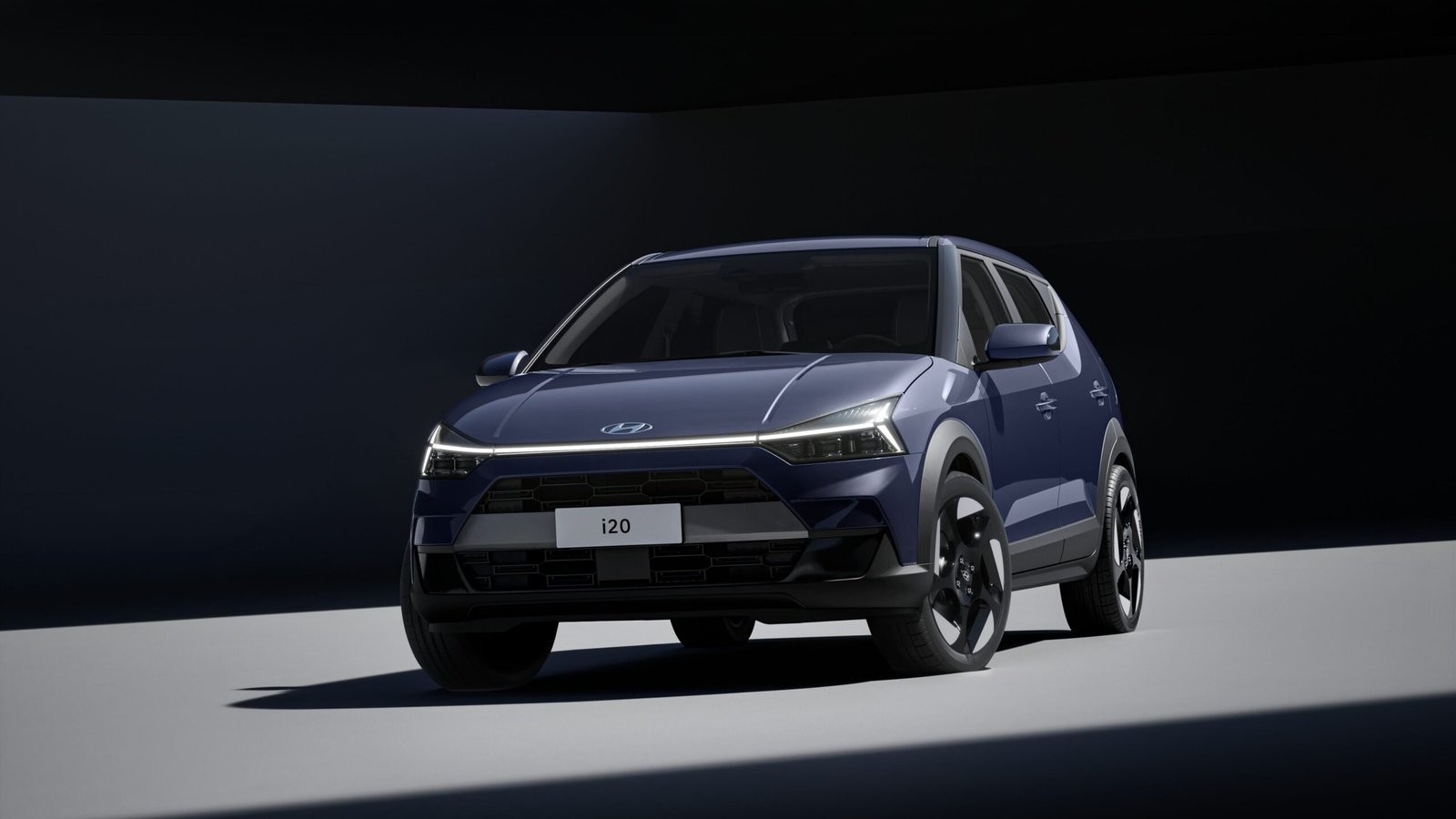
The car has more defined lines and adopts the new fashion of the LED strip that connects the headlights at the front. At the rear, the lights are also interconnected, but have a general design more similar to the HB20.
Related Galleries
The wheels are 17 inches, which matches the more aggressive style. The i20 is also a little larger than the HB20: it is 12 centimeters longer, six centimeters wider, two centimeters taller and five centimeters longer than the wheelbase.
But the most important differences are inside. The new steering wheel does away with the brand's traditional "H". The i20 also features a new digital panel, more beautiful and with fixed displays, as well as a much larger multimedia center, now measuring 12.3 inches.
Even though the footprint is more technological than the HB20, the physical buttons still predominate. The air conditioning controls have a new arrangement and form a kind of tower, connecting the central console to the multimedia center.
Those who are of average height and sit in the back seat will hardly lean their knees on the front seat. The trunk holds 346 liters of luggage, 46 liters more than the HB20.
And there the differences end. The i20 will have 1.0 naturally aspirated and 1.0 turbo engine versions, practically identical to the possibilities found in its smaller brother. Now, there is 115 horsepower, combined with 17.5 kgfm of torque.
The loss of 5 hp maintains the driving experience already familiar to anyone who has driven an HB20. The driving position is also practically the same, maintaining one of the model's main qualities: the feeling of a light and agile hatch.
Related Galleries
The i20's suspension setup focuses on comfort, a Hyundai tradition that goes from the most basic models to SUVs.
Both on the undulations of the closed circuit in Tuiuti (SP) and on dirt and gravel stretches, the i20's suspension absorbed impacts better than that of rivals such as the Volkswagen Polo and Fiat Argo. At the same time, it maintains the firmness expected of a hatchback in tighter curves.
The calibration of the automatic transmission is also a success. When pulling harder on an ascent, the i20 quickly reduces one gear to resume and it is necessary when engaging the next gear to release the acceleration.
Furthermore, the delay between the accelerator command and the car's response is small and does not bother those looking for faster reactions.
Why bet on a hatchback?
Brazil is living in the era of SUVs. Since last year, more than half of the brand new cars sold in the country belong to the segment, according to the National Federation of Motor Vehicle Distribution (Fenabrave).
Therefore, all recent and important launches in the automotive market have been SUVs.
Automakers that invested in hatchbacks in recent years preferred specific changes. Chevrolet renewed the Onix without major changes, while the Volkswagen Polo has been without relevant changes for a long time.
The question arises: what is Hyundai's strategy? To g1, Maurício Jordão, the automaker's public relations and press manager, stated that the i20 should compete for space with entry-level SUVs, and not with other hatchbacks.
"If you look at the line-up of other brands, you even have this proximity between a smaller SUV, a compact SUV and then you have larger SUVs. Hyundai has the HB20 and already has the Creta. And it is this niche of Kardian, Pulse, Tera, that the [i20] will enter here”, says Jordão.
Regarding the proximity of the HB20, the executive states that the internal space will be one of the main differentiators of the new model.
"Hyundai doesn't usually keep the versions very close to get the same price. So, if you look at a difference of R$1,500 or R$2,000, the consumer may choose the equipment package", he added.
*This report is being updated.
🗞️ 2 sources covered this story


📰 Related Articles

Between wires and data: the digital transformation of haircare
CartaCapital
Computex 2026: why the new PC wants to become an AI and gaming machine
CartaCapital
Best products to create a romantic breakfast on Valentine's Day
CartaCapital
Best Valentine's Day gifts for those who value comfort and practicality
CartaCapital