


/https://i.s3.glbimg.com/v1/AUTH_59edd422c0c84a879bd37670ae4f538a/internal_photos/bs/2026/J/R/qKaAfRQaqcyAROPEq8UA/15750f70-5594-11f1-ae6c-1b75cc68e68c.jpg-redimensionado-para-1200x675.jpeg)
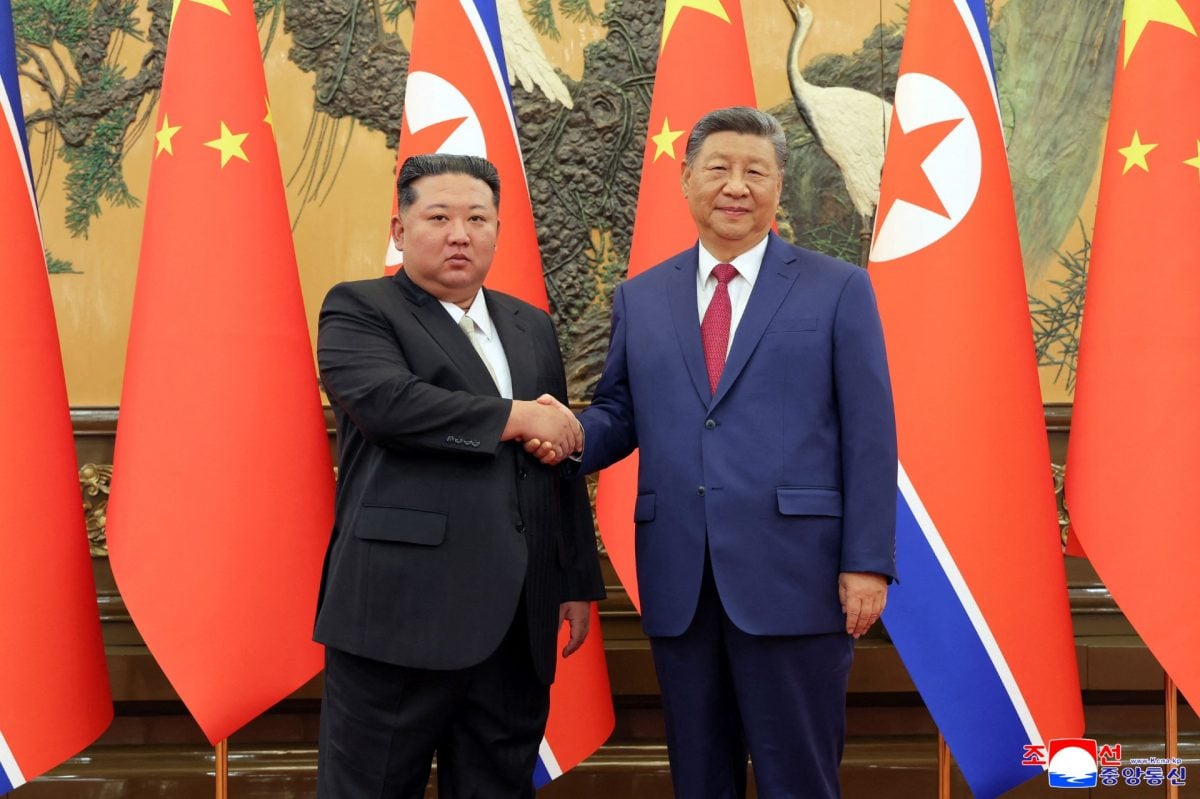
Why Xi Jinping visits North Korea — and what's at stake in the dispute with Russia
⚡ Quick Summary
For Chinese leader Xi Jinping, North Korea is a neighbor that China cannot fully control, but it also cannot afford to lose.
For Chinese leader Xi Jinping, North Korea is a neighbor that China cannot fully control, but it also cannot afford to lose.
The two countries usually define their relationship as a bond "sealed in blood", in reference to their joint participation in the Korean War (1950-1953).
But in recent years distrust has eroded this partnership. Now, China seeks to regain influence over a strategically important ally known for its unpredictability.
China wants to maintain stability on its border and preserve its influence in North Korea, without being drawn into crises caused by North Korean nuclear ambitions.
Therefore, Xi's visit to the country this week tends to have less to do with friendship and more with political strategy.
Authorities in Seoul, South Korea, assess that Xi may try to present China as a mediator between North Korea and the United States, but the Chinese government may have other interests.
Western diplomatic sources told the BBC report that China is following the rapprochement between North Korea and Russia with concern.
After meeting last week with Russian President Vladimir Putin, Xi may want to ensure that he also maintains influence over North Korean leader Kim Jong-un, especially as China expands its presence on the international stage.
Rapprochement after years of wear and tear
The cooling of relations between China and North Korea was noticeable, albeit discreetly.
The two countries practically did not celebrate the 75th anniversary of their diplomatic relations, in October 2024. Public demonstrations were contained.
The previous month, the Chinese ambassador did not participate in celebrations marking the anniversary of the founding of North Korea. Throughout the year, there were also no high-level meetings, a clear contrast with the increasing rapprochement between North Korea and Russia.
This growing rapprochement with Russia began to worry China.
Since Russia's invasion of Ukraine, North Korea has expanded its military cooperation with Russian President Vladimir Putin. The movement culminated in the signing of a mutual defense pact during Putin's visit to Pyongyang, the capital of North Korea, in 2024.
According to a BBC investigation, around 2,300 North Korean soldiers died fighting alongside Russian forces against Ukraine.
North Korea is also accused of supplying munitions to the Russian war effort in exchange for oil and economic aid, a move that has alarmed the United States and its allies and raised concern in China, albeit in a less public way.
"China wants to ensure that its interests in relation to North Korea are preserved at a time of rapid rapprochement between Russia and North Korea," says Ankit Panda, a nuclear policy expert at the think tank (research and debate center) Carnegie Endowment for International Peace, in the USA.
China only maintains one formal defense treaty, and that is with North Korea.
Therefore, China would hardly welcome a scenario in which Russia became the main force of influence over North Korea. A more autonomous Kim who is less dependent on China would mean a reduction in China's ability to pressure the North Korean regime.
China's response has been to try to rebuild the relationship. At the end of last year, the Chinese president invited the North Korean leader to a military parade in Beijing, placing him in a prominent position alongside Russian President Vladimir Putin.
It was the first formal summit between Xi and Kim in six years. At the time, Xi described the two countries as "good neighbors, good friends and good comrades united by a common destiny" and defended greater strategic coordination between them. Attention was drawn to the absence of any mention of the North Korean nuclear arsenal in the public statements released after the meeting. China has "mixed feelings" regarding the growing rapprochement between North Korea and Russia, says Lee Seong-hyon, a visiting researcher at the Harvard University Asia Center in the US.
On the one hand, according to Lee, this approach diverts US attention and makes American strategy more complex on different fronts, which indirectly benefits China.
On the other hand, deepening military cooperation between Russia and North Korea could encourage a more robust response from the US, Japan and South Korea, a scenario that worries China.
This is also one of the reasons why China avoids openly supporting the North Korean nuclear program, as this would expand the American presence in the region and strengthen its local alliances.
At the same time, China avoids a direct confrontation on the issue. In 2022, China and Russia vetoed a resolution presented by the US at the UN Security Council that provided for new sanctions on North Korea in response to missile tests carried out by the regime.
If China takes a tougher stance against North Korea's nuclear program, "it will only push North Korea further into Putin's arms," says Victor Cha, chairman of the foreign policy department at the US-based Center for Strategic and International Studies.
The pragmatic partner
But Kim also cannot afford to walk away from his main source of economic aid.
Chinese exports to North Korea jumped to around US$2.3 billion last year, the highest level in six years. Earlier this year, passenger rail service between the capitals Beijing and Pyongyang resumed after a six-year interruption.
According to analysts, these measures are also part of a calculated effort by China to bring North Korea back into its sphere of influence.
For Kim Jong-un, this is a pragmatic choice. If the war in Ukraine comes to an end, Russia's need for North Korean support may diminish. And, unlike an internationally isolated Putin, Chinese leader Xi Jinping has received world leaders in Beijing.
Therefore, Kim needs to avoid becoming dependent on a losing partner.
But this relationship was already marked by tensions.
Upon assuming power, Kim adopted different priorities than his father. While Kim Jong-il visited China frequently and depended on China's support, his son rapidly accelerated the North Korean nuclear program.
In his first six years in power, Kim oversaw some 90 ballistic missile tests and four nuclear explosions, more than his father and grandfather had carried out combined.
The advancement of the nuclear program alarmed the Chinese leadership. Then, the execution of his uncle, Jang Song Thaek, seen by China as a moderating figure within the regime, further deepened the tension between the two countries.
Xi responded with unusual diplomatic signs of dissatisfaction. In 2014, he visited South Korea before even meeting Kim, a gesture widely interpreted as an affront to the North Korean leader.
North Korea's reaction was harsh. The state press even referred to China as a “traitor” and “enemy”.
It was only in 2018, when sanctions imposed on the North Korean nuclear program began to have more severe effects, that Kim made his first known international trip since taking power. That year, Kim made his first known international trip since taking power. In his armored train, he headed to Beijing.
The meeting marked the beginning of a cautious rapprochement.
In the following years, Kim met with US and South Korean leaders, but always after consulting China. The message was clear: North Korea would not negotiate without China's support.
Today, North Korea represents both a strategic protection and a permanent source of concern for China. The North Korean regime helps keep American forces further away from the Chinese border, but its weapons tests contribute to regional instability.
Kim, in turn, seeks protection from China without accepting political tutelage.
Neither side fully trusts the other. Still, both consider the partnership necessary and, for now, this is enough to keep the dialogue open.
Additional reporting by Kelly Ng
China and Russia together: what really keeps the two countries together
How the meeting between Trump and Xi Jinping in China ended, more symbolic than practical
The monument in North Korea that could reveal how many of the country's soldiers died in the war between Russia and Ukraine
🗞️ 4 sources covered this story


📰 Related Articles
/https://i.s3.glbimg.com/v1/AUTH_59edd422c0c84a879bd37670ae4f538a/internal_photos/bs/2026/X/W/8hAIUBQFCb4RaVMTrGFA/montagem-horizontal-1200px-3-.jpg)
Stool and blood tests join colonoscopy as options for colorectal cancer screening
G1 Globo
Study shows that Amazonas loses enough treated water daily to fill 178 Olympic swimming pools
G1 Globo
Councilor presents project to ban rodeos after videos of alleged mistreatment of horses in Canoas
G1 Globo
BMW involved in accident that killed five people in Imbé de Minas was speeding, according to witnesses
G1 Globo
Palmas will have a week marked by partially cloudy skies and low humidity
CNN Brasil