Quermesse X Festa Junina: find out what the differences are between traditional events in Brazil
⚡ Quick Summary
Festival X Festa Junina: find out what the differences are between traditional events Fair, June festival, São João...
Festival X Festa Junina: find out what the differences are between traditional events
Fair, June festival, São João... The terms seem to refer to the same celebration, just with the difference in months, but the truth is that each event has its own particularity.
To better understand the differences between popular events at this time of year, g1 spoke with religious representatives from the Catholic Church of Presidente Prudente, in the interior of São Paulo.
📲 Join the g1 Presidente Prudente e Região channel on WhatsApp
Father Éverton Aparecido da Silva, from the Nossa Senhora Mãe da Igreja de Prudente Parish, states that: “The difference is the name that that specific region gives to the event at the time it is held.”
While the fairs have a more charitable purpose, the June festivals celebrate religious tradition. According to the Michaelis dictionary, kermesse means "parish festival or annual fair celebrated in the Netherlands with great festivities."
The meaning is "public fair with stalls that promote raffles, gift auctions and games, generally for charitable purposes". Festa Junina does not appear in the dictionary. Understand more about the difference in this report.
Events like these are important for the Catholic Church and the community, as they build faith in everyday life, beyond the church, according to the priest. “A June festival, a celebration of Saint John, is an opportunity to build bonds, celebrate meetings among the community in general.”
“It is witnessing life, the joy of encountering God, of those moments in which faith is lived... Faith is not just within four walls, it is like the mandate of Jesus, which goes beyond, to relationships, at home, in the family, in society”, continues the priest.
READ ALSO:
Typical foods, square dances and fairs: check out the 'arraiás' of Oeste Paulista
Law that authorizes the installation of leisure spaces in vehicle spaces comes into effect in Presidente Prudente
Forró, popcorn and little flags: Brazilian teacher in the USA brings June festival tradition to American children
June Festival of the Nossa Senhora Aparecida Sanctuary, in 2022, in Vila Marcondes, in Presidente Prudente (SP)
Pascom Our Lady of Aparecida Sanctuary
Is it a festival or June festival?
Sister Penha Barros, from Paróquia Santa Rita, also in Prudente, provides more details on the subject; the nun was in charge of the “arraiá” — another term that is often used to refer to parties — at a daycare center in the city.
According to Sister Penha, the difference between the nomenclatures is that:
🌽 Quermesse: is a party organized by the community, generally linked to the parish, with the aim of promoting coexistence, joy and fundraising for Church activities and social projects.
🎉 June and July festivities: these are celebrations in honor of popular saints, such as Saint Anthony (June 13), Saint John the Baptist (June 24) and Saint Peter (June 29).
🙏 Saint John: is the festival celebrated on June 24th, specifically in honor of Saint John the Baptist, the prophet who prepared the way for Jesus Christ.
For the Catholic Church, these festivities are opportunities for evangelization, integration and strengthening community ties, according to the nun. “Behind each party there is the dedicated work of many volunteers who collaborate in the organization, food preparation, decoration, reception and various other activities.”
“They bring families and friends together in moments of celebration, valuing culture, faith and popular traditions”, he states.
In particular, Sister Penha states that participating in parties like these helps the church continue its mission of welcoming, evangelizing and serving.
“Celebrating parties is an invitation to thank God for the gift of joy that we all have, but that, in a world so full of relational complications, joy is lacking. ”
Regardless of the term used, traditional events become an opportunity for communion, according to the sister's report. “It is an invitation for everyone to participate with joy in the festivities, rescuing this important gift from the Lord in our lives and in our history.”
“To participate is to be infected, to relate, it is to live with intensity. It's about loving and doing good with claps, twirls, smiles and shouts, songs and lots of delicious delicacies. Our God is the God of celebration and joy”, adds the nun.
Father Éverton highlights: “When we participate in moments like these, strong now, in the month of June and July, we witness the joy of the God who lives in us and who leads us to meet our brothers and sisters.”
FIND OUT MORE:
'Help me, Saint Anthony'? Devotion to the saint 'matchmaker' goes beyond the search for a romantic partner; understand
'Matchmaker' and charitable: who was Saint Anthony and how the tradition of asking for love emerged
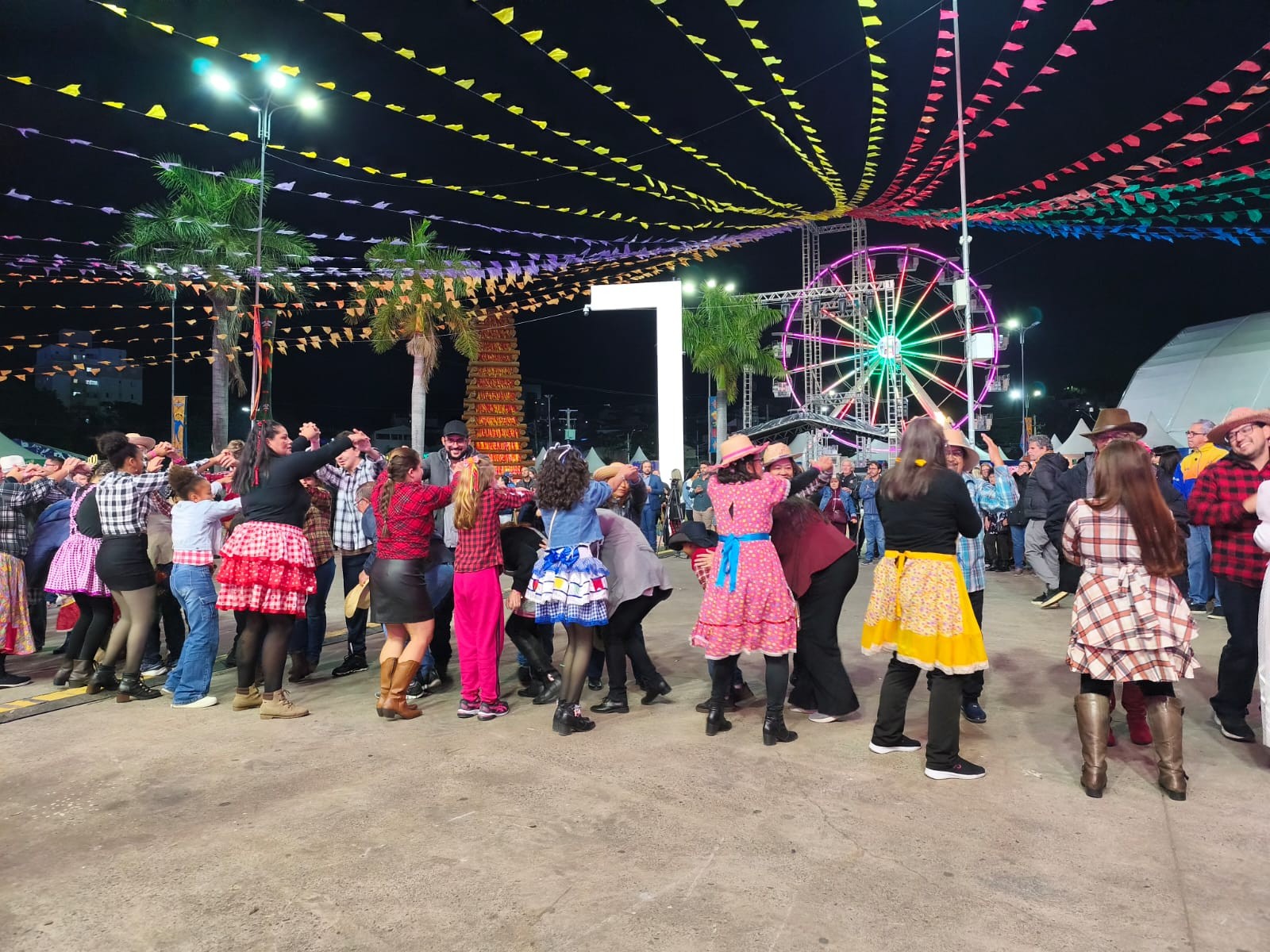
Residents have fun at an amusement park on the first day of Festa Junina in Votorantim
Ana Carolina Cirullo/g1
Origin of the word quermesse
According to the Holy Virgin Parish, fairs appeared in the Middle Ages, in Belgium and Holland. The origin of the word “quermesse” comes from the Flemish (or Dutch/Dutch) language, kerkmisse or kerkmis (kerk = church, messe = fair, mass).
Still as announced by the parish, the events mixed the pagan traditions of harvest and summer festivities with the rituals and celebrations of the Catholic Church, generally in honor of the patron saint or the festival of a saint, took place outdoors and had mass participation by the population.
The fairs spread throughout the Netherlands and other European regions and arrived in Brazil from the Portuguese colonizers, who also brought devotions to Saint Anthony, Saint Peter and Saint John.
From this, it strengthened the fairs and Festas Juninas, mainly in the Northeast region of the country, with the São João festivities.
Traditional gang excited the public at Festa Junina in Votorantim
Ana Carolina Cirullo/g1
June festivities
The Portuguese colonizers adapted the June festivities to the Brazilian context, incorporating elements of indigenous and African culture present in the country, according to the Federal University of Recôncavo da Bahia (UFRB).
The bonfire represents the power of the sun and the celebration of fertility, harvest and the cycle of life, in which pagans celebrated the summer solstice. With the Christianization of pagan festivities, the bonfire began to have a new meaning in June festivities, being associated with the light of Christ and spiritual purification.
And the music? Forró, baixão, xote and drag-pé are the most common musical styles for June festivals, according to the UFRB. These styles are influenced by both Portuguese music and indigenous and African musical elements, creating a unique and infectious sound.
The lyrics of the songs during June festivities often deal with themes related to country life, love, festivities and June traditions. The songs are usually happy, lively and invite people to dance and have fun, according to the university.
The dance has its origins in the 19th century, during the Brazilian colonial period, from the influence of European ballroom dances, especially contradança, which was adapted over the years and gave rise to the June dance.
In the case of typical food, corn becomes the main ingredient and has a remote origin to indigenous peoples, who cultivated and consumed the grain for thousands of years before the arrival of European colonizers, according to the university.
Corn is a representation of the cycles of life, renewal and gratitude for the earth and its fruits. Among typical corn-based foods, cake, hominy, tamale, curau, popcorn and green corn are the most consumed.
Other foods also “joined the dance” and incorporated into the June menu, such as cornmeal and peanuts. Initial plugin text
See more news on g1 Presidente Prudente and Region
VIDEOS: watch TV TEM reports