Without dialogue with Lula, Alcolumbre blocks the government's agenda and advances bomb agendas in the Senate
⚡ Quick Summary
The week of concentrated effort in the Senate did not bring any news to the priority agendas of the government of President Luiz Inácio Lula da Silva (PT).
The week of concentrated effort in the Senate did not bring any news to the priority agendas of the government of President Luiz Inácio Lula da Silva (PT).
This is the case with the proposed amendments to the Constitution (PECs) at the end of the 6x1 scale and public security.
The scenario reinforced the distance between Davi Alcolumbre (União Brasil-AP), president of the House, with the Executive facing the advancement of projects with an estimated impact of more than R$150 billion.
The government's expectation was that the Senate would make some progress in processing the PEC, which reduces the working day from 44 hours to 40 hours per week within up to 14 months and allows the end of the 6x1 scale, approved more than two weeks ago in the Chamber of Deputies.
Understand what 'bomb agendas' are, which put pressure on the government's budget in an election year
A meeting between Alcolumbre and senator Otto Alencar (PSD-BA), president of the Constitution and Justice Commission (CCJ), where the PEC is expected to be processed, was scheduled for last Tuesday (9), but was canceled by the president of the Senate at the last minute, when Alencar was on his way to his official residence.
"I arrived early from Bahia to discuss this issue [PEC da 6x1], but at the last minute he canceled the appointment with me. There is nothing new [about 6x1]", stated the senator.
In addition to the PEC that ends the 6x1 scale, Otto Alencar, a first-time ally of the government, awaits Alcolumbre's order on two other proposals of interest to the Executive:
the Public Security PEC; and
the project that creates the National Critical and Strategic Minerals Policy (PNMCE).
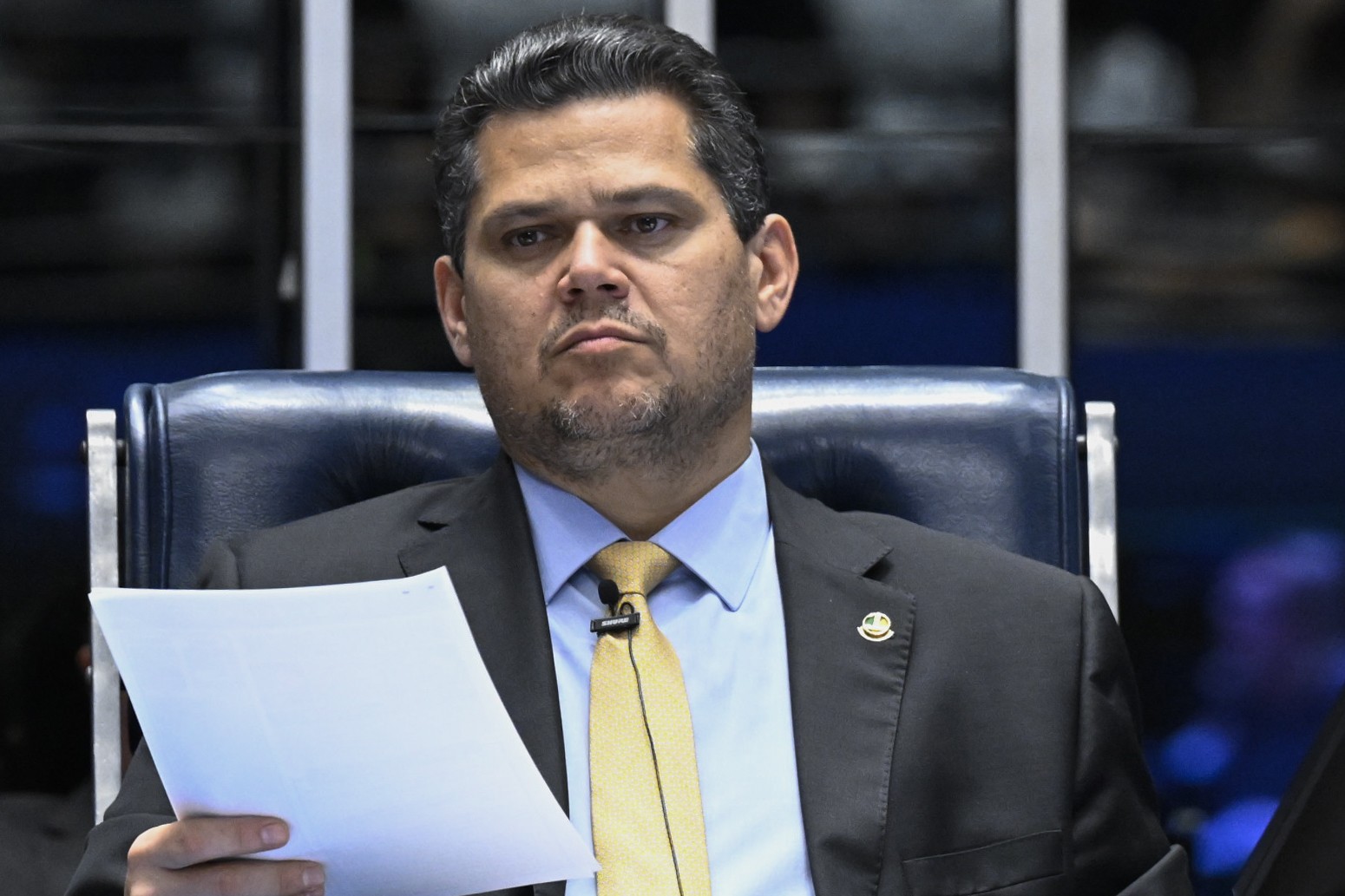
President of the Federal Senate, senator Davi Alcolumbre (União-AP).
Carlos Moura/Agência Senado
New meeting
Next week, the Senate will hold semi-presential sessions, but Otto Alencar stated that he will come to Brasília if Alcolumbre schedules a meeting to discuss the progress of the agenda. The senator, however, said that the president of the Senate “did not give any signal” for the meeting.
"Maybe I'll go with [Jaques] Wagner to see if we can talk, but it depends on Davi. If by chance he calls me, as he already called me and scored. He unmarked and so did I, having a great relationship with him, I'm not going to this confrontation because it won't solve anything", pointed out Otto Alencar.
Alcolumbre has already informed Lula that the government's priority agendas will only move forward after a meeting between the two to forward the matters.
Interlocutors on both sides are trying to make the agenda viable, but at the moment it is considered unlikely.
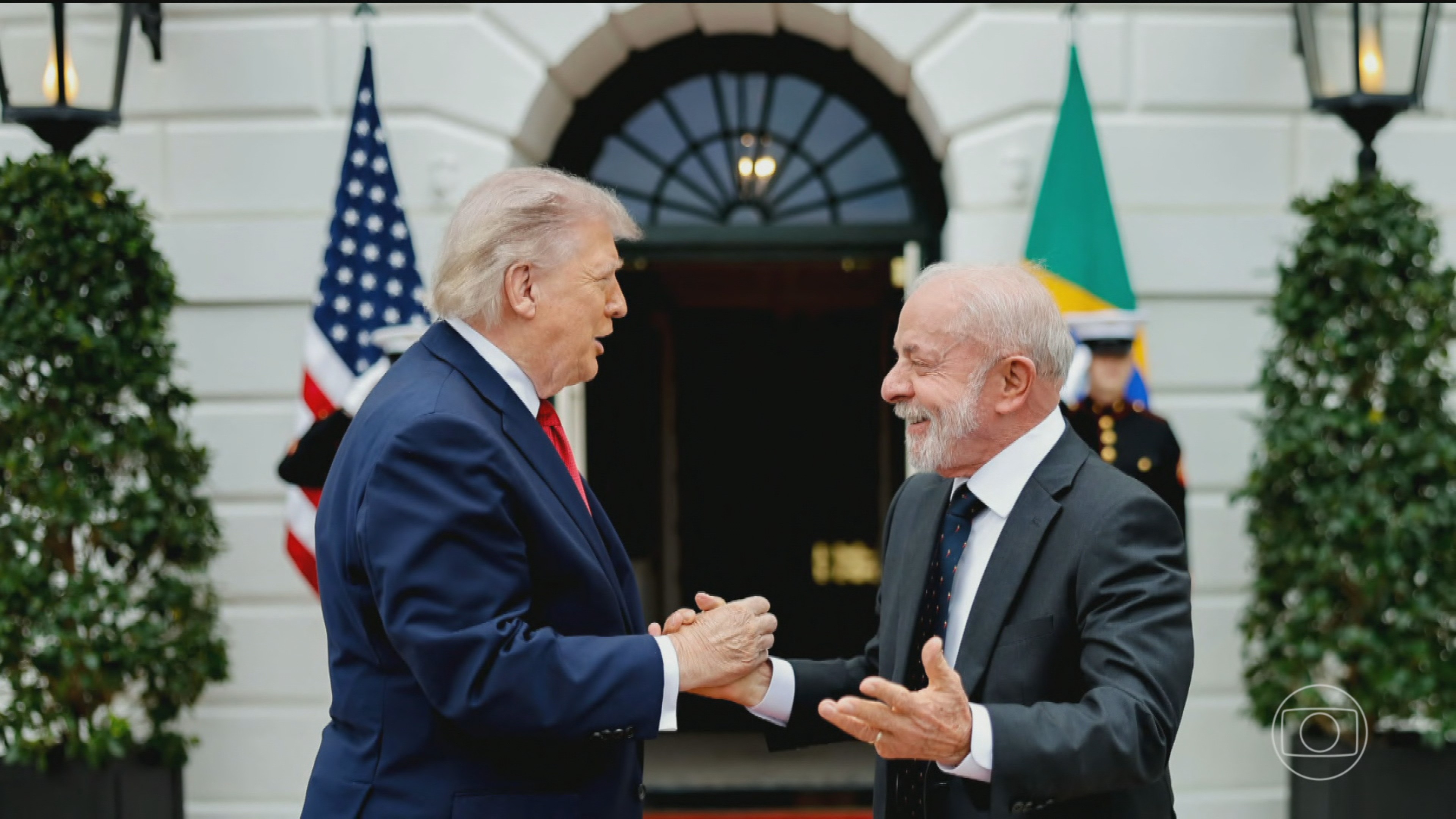
The relationship between Lula and Alcolumbre, which had already been strained, became strained once and for all with the rejection of the nomination of the Union's attorney general, Jorge Messias, to the Federal Supreme Court (STF), articulated by the president of the Senate.
If on the one hand the government's priority agendas remain in Alcolumbre's drawer, on the other the president of the Senate accelerated the processing of the so-called "bomb agendas" — projects with the potential to increase public spending or reduce revenue (see video above).
On the same Tuesday that he canceled the meeting with Otto Alencar, Alcolumbre received ministers José Guimarães (Secretariat of Institutional Relations) and Dario Durigan (Finance) at the Senate's official residence, who precisely asked the Senate president to hold the bomb agendas.
Among them was the proposal that creates a special line of rural credit for renegotiating producer debts.
The ministers asked for the text to be removed from the agenda and were confident that this would happen — which did not happen.
The project, in the Treasury's accounts, could generate a cost of R$140 billion for the National Treasury in the coming years. This financial expense ends up further increasing the country's public debt.
On the same day, Alcolumbre's interlocutors spent the day reinforcing the ministers' vision, stating that the project would be removed from the agenda. After pressure from the agribusiness bench and the rapporteur, senator Renan Calheiros (MDB-AL), Alcolumbre announced in the Senate plenary that he would put the project on the agenda and await a meeting of parliamentarians with Durigan before voting.
Even though they were reluctant to go to the Treasury, as they did not want to negotiate any further point of the proposal, some senators were at the ministry as a gesture of Durigan and Alcolumbre's good relationship.
Even before the meeting ended, Alcolumbre announced in the plenary that he had spoken to Durigan and that the minister announced that there was no agreement. Even so, he reinforced that the matter would be voted on.
Despite the public opposing position, parliamentarians from the government base did not act decisively to block the project, which was approved in a symbolic vote, without individual recording of each parliamentarian's votes.
In addition to the rural debt renegotiation project, the Senate's CCJ approved, also in a symbolic vote, a PEC that provides for full retirement and parity for health workers and those fighting endemic diseases.
The economic team estimates that the project will increase the financial insufficiency of social security systems by R$3 billion per year. According to calculations by the Ministry of Social Security, the impact is R$99 billion, considering the Union, states, Federal District and Municipalities.
At the end of last month, the Social Affairs Committee (CAS) also approved the bill that increases the salary minimum for doctors and dental surgeons to R$13,600 for a 20-hour work week.
The estimate is for an increase in Union spending of R$8.4 billion per year, not counting states, municipalities and the Ebserh network.
The text was approved on a final basis and goes directly to the Chamber of Deputies, if there is not a request signed by at least nine senators to take the matter to the plenary.
Impact on the Chamber
The pressure imposed by the Senate on the government is already generating repercussions in the Chamber.
The approval of the "bomb agendas" and the uncertainty regarding the progress of the PEC 6x1, already approved by deputies, led the government to maintain pressure on Congress to establish a position.
The path found was to maintain the constitutional urgency of the project sent by the Executive that deals with the reduction of working hours and which is blocking the Chamber's agenda.
The measure displeased the president of the Chamber, Hugo Motta (Republicanos-PB), with whom President Lula had strengthened relations in recent weeks.
In an agreement reached in May, the idea was that the government project would deal with reducing working hours for specific careers, such as security professionals, health professionals, among others.
But with the progress of the bombshell agenda of renegotiating rural debts, the government's assessment was that the strength of the ruralist bench would also pressure Motta to approve the measure in the House. Therefore, the assessment was that it is better to keep the agenda locked.
However, faced with the government's refusal to withdraw the urgency, Motta decided to adopt his own maneuver to get out of the ropes:
The strategy is to vote on the project that currently holds the agenda, but adapting the text to the content of the PEC already approved by deputies.
The objective is to unlock the votes and try to enable analysis of texts such as the Legal Framework for Artificial Intelligence and the increase in the Invoicing limit for Individual Microentrepreneurs
Therefore, Motta placed the project sent by the government and which is being held for votes in the Chamber as the only item on the House's agenda for next week.
Voting will be in hybrid sessions, since deputies are already mobilized in their bases for the elections and the June festivities, which are very strong in the Northeast.
Allies believe that Motta is trying to maintain visibility before the recess. The expectation is for an empty second semester, which would be made impossible by a plenary session with a locked agenda and no votes.
🗞️ 4 sources covered this story
Three people are arrested for the death of a young woman thrown without a rope in a 40-meter jump in SP
Correio do PovoSee the moment of the arrest of suspects in the death of a young man in a jump without a rope
CNN Brasil
Without beer, see press area prices at the World Cup
CNN Brasil
Who was the young woman killed after being thrown from a rope jump without a rope in SP
CNN Brasil📰 Related Articles

Days out and Leão is scared: Portugal trains with the community
Observador
Popular among young people, vape use can affect organs and accelerate aging, shows animal research
G1 Globo
The armada will never be alone as long as Andy lives the dream
Observador
Election in Switzerland decides whether country will be the first in the world to impose population limits
G1 Globo
Flávio Bolsonaro loses support among evangelicals, women, young people and in the Southeast, shows Quaest
G1 Globo