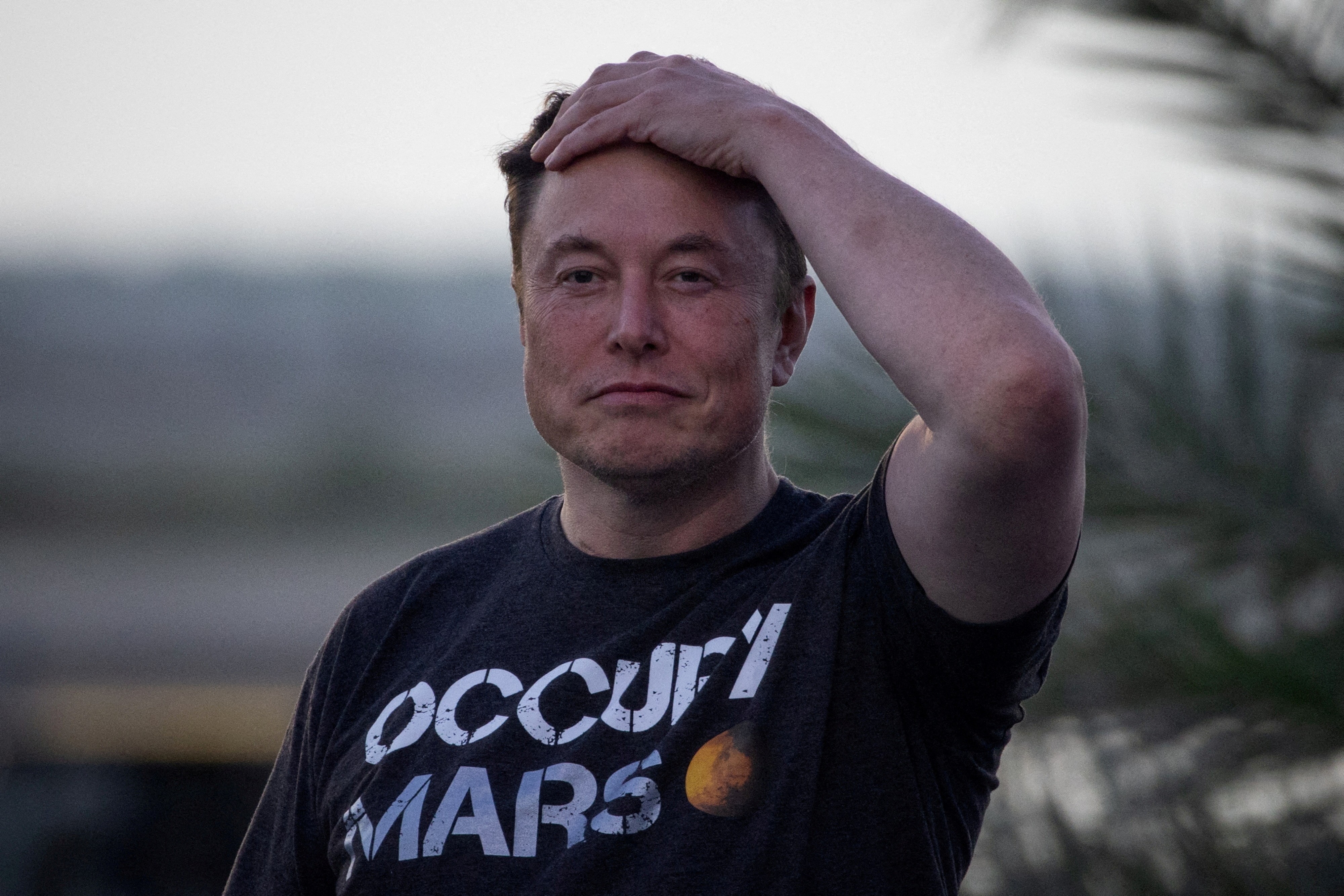
Can the Moon turn into an economy? The bet behind SpaceX's trillions of dollars
⚡ Quick Summary
More than half a century after the first human step on the Moon, SpaceX is trying to convince investors that the next big leap will be economic.
More than half a century after the first human step on the Moon, SpaceX is trying to convince investors that the next big leap will be economic.
Although there are still no mines, factories or data processing centers operating outside of Earth, part of the valuation of US$1.75 trillion (R$8.93 trillion) attributed to the company — which debuts on the stock exchange this Friday (12) — reflects the expectation that activities of this type will become economically viable in the coming decades.
🗒️ Do you have any reporting suggestions? Send it to g1
This view appears explicitly in the documents presented to the Securities and Exchange Commission (SEC), the United States capital market regulatory body equivalent to the Securities and Exchange Commission (CVM) in Brazil.
In them, Elon Musk's company defines space as "the greatest economic frontier in human history" and argues that falling launch costs are paving the way for a new phase of productive expansion beyond Earth.
🌐 Among the projects mentioned are solar energy generation systems on the lunar surface, the extraction of ice for fuel production, the use of mineral resources and the construction of factories capable of producing satellites and electronic components.
🚀 The plans also include an electromagnetic launch system from the natural satellite, in a type of "giant catapult" designed to send cargo into space without the need for rockets.
As futuristic as they may seem — worthy of a science fiction film — these initiatives reflect a review of the company's ambitions and a reorientation of its strategy for the coming years.
This is because, for years, the South African businessman presented Mars as the great objective of human expansion in space and the final destination of SpaceX's plans. Now, however, the Moon is gaining prominence as a priority stage in the strategy in its most immediate plans.
“Musk’s justification is technical, [as] launch windows from the Moon are every ten days, instead of 26 months from Mars”, explains Álvaro Machado Dias, professor at the Federal University of São Paulo (Unifesp).
According to the professor, the change also guaranteed a kind of adherence to the “institutional investor calendar”, since the Moon can allow testing technologies, building an operational base and accumulating advances more quickly, compatible with the return horizons expected by investors.
The rocket that needs to work… for everything else to happen
There is, however, one element that connects practically all of SpaceX's ambitions for the Moon: none of them exist without Starship, a rocket developed by the company.
Not surprisingly, the vehicle appears in the company's plans less as a commercial product and more as what the company defines as infrastructure capable of supporting a future space economy.
According to SpaceX itself, the project was designed to transport large volumes of cargo and crew on a recurring and economically viable basis. There is also a focus on in-orbit refueling capacity, considered a key piece for longer missions and the expansion of activities beyond Earth.
In the assessment of Franco Granda, senior research analyst at PitchBook, Starship represents a structural change in the way space can be explored economically.
For him, the rocket inaugurates a new stage in SpaceX's trajectory, in which space missions no longer function as one-off initiatives and begin to approach an industrial logic based on scale, frequency and reuse.
SpaceX capsule arrives at the International Station
REUTERS/NASA
➡️ The sector's main historical obstacle has always been the cost of putting people and equipment into orbit. Musk's company's proposal is to invert this equation: transforming access to space into a more predictable and routine activity. The consultancy's expectation is that the combination of reuse and greater load capacity will drastically reduce launch costs over time. If this happens, projects that today seem economically unfeasible could gain scale and enable a more permanent presence outside Earth.
"It's not just about getting to the Moon. It's about creating the infrastructure necessary to stay there and operate at scale," notes Granda.
What would be gained by producing things in space?
If the lunar economy still sounds like a distant concept, Jan-Erik Asplund, co-founder of Sacra, a research and market intelligence company focused on startups, seeks to answer the question that usually separates business vision from science fiction: where would the financial return be from all this?
According to the consultancy, the drop in costs of accessing space could pave the way for productive activities that currently remain unviable. Part of this opportunity would be precisely producing outside of Earth.
In some cases, the vacuum and microgravity environment would not only be an alternative production site, but an advantage.
➡️ Earth's gravity can generate impurities and deformations in sensitive materials. In orbit, these effects tend to be reduced, making it possible to manufacture products with characteristics that are difficult to reproduce on the ground.
Among the examples cited by Asplund are medicines produced in microgravity, special optical fibers used in telecommunications and lasers, as well as silicon wafers — sheets that serve as the basis for the manufacture of semiconductors.
💊 The consultancy's estimate is that the market for medicines produced under these conditions alone could generate US$ 10 billion (R$ 51 billion) by 2030.
🔬 In the case of ZBLAN-type optical fibers, whose manufacturing is favored by the absence of gravity, the market potential in this period is estimated at US$ 12 billion (R$ 61.2 billion), while the global silicon wafer segment exceeds US$ 150 billion (R$ 765.2 billion).
🚀 In space tourism, the reuse of vehicles like Starship is expected to gradually reduce the costs of accessing orbit, expanding a market that Sacra projects at almost US$4 billion (R$20.4 billion) by 2032.
"People often think of space as just a place to launch satellites. But the logic of the next step is to use the space environment to manufacture products that would be more difficult or more expensive to produce on Earth," says Asplund.
Another segment highlighted by the expert involves future private space stations. With the International Space Station (ISS) approaching the end of its useful life, the expectation is that part of the resources currently allocated to its maintenance will be directed to commercial platforms in orbit.
According to Sacra, this transition could pave the way for a new generation of laboratories, factories and research centers operated by private companies.
For SpaceX, however, the potential of space is not limited to manufacturing.
In documents presented to the SEC, the company states that it sees space not only as a place to manufacture products, but also as a future base to support the expansion of artificial intelligence.
➡️ The company argues that the growth of artificial intelligence requires increasingly greater volumes of energy and processing, putting pressure on terrestrial infrastructure. In response, it plans to develop a network of satellites capable of functioning as data processing centers in orbit, powered by solar energy.
According to the company, this architecture would reduce part of the costs associated with large terrestrial data centers. In orbit, heat from equipment could be dissipated directly into space, reducing the need for conventional refrigeration structures. "Space offers the potential for access to a virtually unlimited power supply and an operating environment capable of sustaining high-density computing on an ongoing basis. This includes structural advantages for power generation, equipment cooling, and uninterrupted operations as capacity increases," the company states in its IPO prospectus.
SpaceX says it intends to start implementing this structure from 2028. Once again, Starship appears as the centerpiece, as the company considers the rocket indispensable for transporting the equipment necessary to support this network into space.
In Asplund's calculations, the movement also represents an attempt to compete for a share of the global cloud services market, estimated at US$200 billion (R$1.02 trillion). He points out that the company is in talks with Google to evaluate the possibility of jointly hosting data processing centers in orbit.
“If it progresses, the partnership would serve as a validation of corporate demand for space computing infrastructure and could help guarantee the first revenues from the satellite constellation program focused on artificial intelligence”, he states.
Musk at SpaceX Star Base in Brownsville, Texas
REUTERS/Adrees Latif/File photo
How much is an economy that doesn't exist yet worth?
Although Franco Granda projects that the global space economy could reach US$1.8 trillion (R$9.18 trillion) by 2035, he takes a cautious stance when analyzing some of SpaceX's most ambitious initiatives.
Projects such as orbital data centers and a future industrial base on the Moon appear in the analysis as long-term possibilities — not as concrete sources of revenue for the coming years, the realization of which still depends on a series of technological, operational and economic advances.
"The idea is not to say that these projects are impossible. The point is that they are far beyond any short-term planning horizon", assesses the senior analyst at PitchBook.
🌙 He considers proposals such as Moonbase Alpha — a lunar settlement focused on industrial production — conceptually plausible, but aggressive in schedule. The assessment is that building a permanent structure on the Moon would be a project measured in decades, not years.
Therefore, Granda attributes virtually zero revenue to initiatives such as lunar bases and orbital computing in its current financial models.
“SpaceX will be presented [to investors] with Starlink as a cash generation engine, complemented by several future valuation bets, such as the scale provided by Starship, direct connectivity for mobile devices and orbital computing”, he states.
But for SpaceX itself, the lunar economy doesn't seem to be the end point of this story either.
In documents presented to the SEC, the company itself describes the natural satellite as an intermediate step towards even broader objectives, including the concept of a Kardashev Type II civilization (understand more below).
From lunar economy to solar-powered civilization
Art/g1
📰 Related Articles
The Senate's bomb agenda in an election year - The Issue #1738
G1 Globo
NGO buys area of Atlantic Forest for South American ecological corridor
CNN Brasil
What will Valentine's Day be like in RS? Weather forecast indicates rain and cold; check it out
G1 Globo
City Hall will expand pediatric ICUs in Montes Claros
G1 Globo
Rio das Ostras hosts the “Festival da Gente” Project
G1 Globo