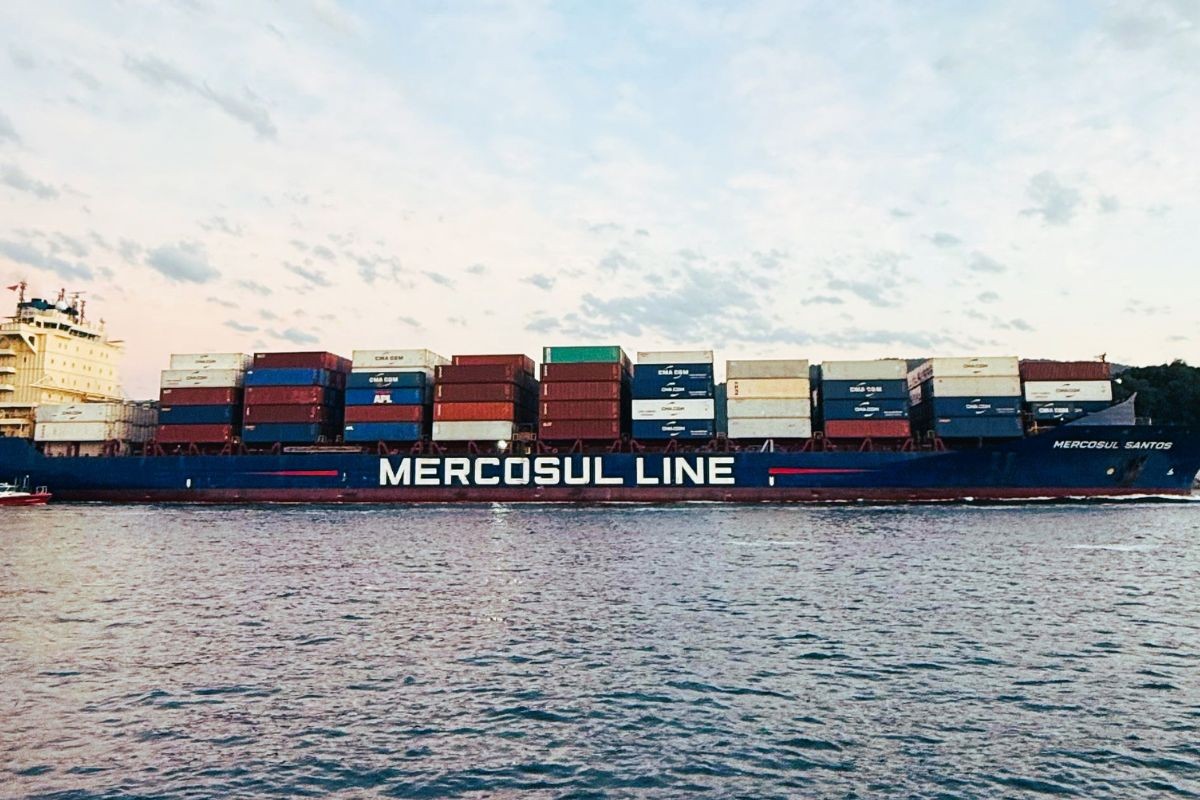
Transport of TVs via cabotage grows before the World Cup; Port of Santos is the main destination
⚡ Quick Summary
Transport of TVs via cabotage grows 25% before the World Cup Mercosul Line, a company that transports products by sea via cabotage, recorded a 25% increase in the volume of televisions moved since the second half of January, compared to December 2025.
Transport of TVs via cabotage grows 25% before the World Cup
Mercosul Line, a company that transports products by sea via cabotage, recorded a 25% increase in the volume of televisions moved since the second half of January, compared to December 2025. According to the company, the increase reflects the heating up of the market for the World Cup and the Port of Santos, on the coast of São Paulo, is the main destination for electronics.
🔍 Cabotage is a type of maritime transport carried out between ports in the same country, without the need to cross international routes. In Brazil, the system is used to move cargo over long distances along the coast, connecting production regions to distribution centers.
✅ Click here to follow the new g1 Santos channel on WhatsApp.
According to the company, the devices are produced at the Manaus Industrial Complex (PIM) and distributed to different regions of the country. The Port of Santos concentrates 80% of the volume transported and functions as a strategic center for the distribution of major electronics brands.
In a note, Mercosul Line informed that, in addition to Santos, the route that departs from Manaus also serves the ports of Pecém (CE), Suape (PE) and Itapoá (SC).
Mercosul Line records a 25% increase in the volume of television transportation via cabotage.
Disclosure/Mercosul Line
Advantages of cabotage
According to the company's commercial director, Alexandre Souza, cabotage transport stands out for presenting lower costs over long distances and greater security for high-value-added goods. “The mode offers a significantly lower rate of theft and damage, a critical factor for high-value cargo,” he said in a note.
Another aspect highlighted by the company is sustainability. The company stated, based on a study by the National Confederation of Industry (CNI), that the transport of containers via cabotage can reduce net carbon dioxide (CO₂) emissions from the cargo transport sector in Brazil by up to 8.2%.
Port of Santos concentrates 80% of the volume of cargo transported.
Disclosure/Mercosul Line
Planning
The commercial director added that periods of high demand, such as the World Cup, require advance logistical planning. “Our expertise and weekly departures from Manaus allow us to offer the flexibility that the market needs, but advance planning is essential for the success of the operation,” he stated.
Finally, the company stated that the recommendation for busy seasonal dates is that the service be contracted at least two weeks in advance.
VIDEOS: g1 in 1 minute Santos
🗞️ 4 sources covered this story

Portugal x Nigeria: time and where to watch the pre-World Cup friendly
CNN Brasil
World Bank will support Mozambique's economic recovery
Observador
Neymar takes luxury watches in his luggage for the World Cup; see values
CNN Brasil
Discover the story of the Brazilian who won the World Cup before Brazil
esportes.r7.com📰 Related Articles

Demonstrations against racism in Lisbon and Porto
Observador
Leo XIV pays homage to Gaudí on a visit to Barcelona
Observador
Rio PM launches financial education course to combat debt among police officers
G1 Globo
Second hottest May ever in the world was in 2026
Observador
Pilot made hundreds of commercial flights without a license in Canada
Observador