Extortionate prices, swelling, visas and Trump: the many controversies of the 2026 World Cup
⚡ Quick Summary
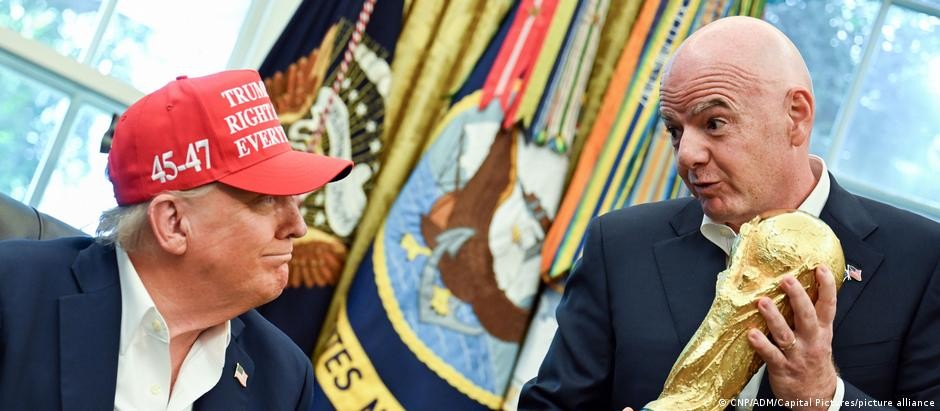
"The World Cup trophy is for the winners; that's why you can hold it," FIFA president Gianni Infantino told Donald Trump.
"The World Cup trophy is for the winners; that's why you can hold it," FIFA president Gianni Infantino told Donald Trump.
CNP/ADM/Capital Pictures/picture alliance via DW
The football World Cup hasn't even started yet, but it is already gathering controversy involving the Trump administration, one of the host countries along with Mexico and Canada, and FIFA, the organizer of the competition.
In this report, you will see the following controversies:
Shouldn't FIFA be politically neutral?
Shouldn't all fans be able to watch their team play?
Should a ticket really be able to cost US$690,000 (about R$3.6 million)?
Shouldn't only the best teams play in the World Cup?
Shouldn't the tournament be climate sustainable?
Why did Iran have to move its base to Mexico?
1. Shouldn't FIFA be politically neutral?
In the months leading up to the 2026 World Cup, there was much criticism that the International Football Federation (FIFA), under the presidency of Gianni Infantino, demonstrated unusual closeness to Donald Trump. Infantino appeared several times alongside the US president.
Among other episodes, he participated in the launch of Trump's Peace Council wearing a red cap and acting like a fan of the former president on stage, in addition to handing Trump the FIFA Peace Prize during the World Cup draw. The award, created especially for the occasion, was seen as a kind of compensation for the fact that Trump had not received the Nobel Peace Prize – a recognition for which he himself considered himself the most suitable candidate.
Now on g1
According to the entity's own statutes, FIFA should be politically neutral. However, Infantino has interpreted his role in an increasingly political way, giving the impression of deliberately connecting international sports politics to state interests.
Tensions are further heightened by the fact that the United States is in conflict with Iran. To date, there has never been a World Cup host country involved in a military conflict with one of the participating teams.
2. Shouldn't all fans be able to watch their team play?
The rules for entry into the United States also generate strong criticism: due to the tightening of visa rules, fans from several participating countries were, in practice, excluded from the tournament. For Iran and Haiti, there is a total entry ban for spectators – only teams and coaching staffs can enter the country.
Fans from Senegal and Côte d'Ivoire also have very little chance of gaining entry, as tourist visas for those countries have been largely suspended, among other reasons because many travelers from those places stayed in the US beyond the permitted period.
For some time, the American government even demanded a deposit of up to US$15,000 (R$77,800) from visitors from certain countries, an amount that would only be returned after leaving the country. Although this measure was removed for many ticket holders shortly before the start of the tournament, it clearly shows how security and immigration policies influence this World Cup.
Furthermore, the aggressive US immigration policy and possible actions by the immigration agency ICE generate insecurity. The American government did not want to rule out in advance the possibility of controls or arrests around the games. Human rights organizations therefore warn of an "intimidating effect", especially for fans of nationalities that form large immigrant communities in the USA – many of them have said they prefer not to travel to the World Cup out of fear.
3. Should a ticket really be able to cost US$690,000 (about R$3.6 million)?
Ticket sales for the 2026 World Cup are considered extremely commercialized. At the official launch, prices were very high: several thousand dollars were charged for many seats, while premium tickets for the final originally cost around US$11,000 (R$57,000).
However, FIFA introduced for the first time so-called "dynamic pricing", which causes prices to vary strongly according to demand. Thus, even within the same sales phase, fans pay different amounts for identical seats.
Reports have also emerged of buyers who selected a certain category or position in the stadium, but ended up receiving seats in worse sectors. Fan organizations and consumer protection entities accuse FIFA of abusive prices, lack of transparency and unfair sales – even filing complaints with the European Union. The attorneys general of New Jersey and New York announced investigations into FIFA ticket sales.
Even just a few weeks before the tournament began, most games were not yet sold out. On May 28, the cheapest ticket for the final cost US$8,625 (R$44,700) on the FIFA website. Anyone who needed an accessible place for wheelchair users would have to pay at least US$10,350 (R$53,700). The last seat available in the first row of a corner block, close to the corner flag, was advertised for US$690,000 (R$3.6 million).
In addition to the official sale, FIFA also operates its own resale platform, profiting from 30% of each transaction. Critics claim that financial interests are clearly at the forefront and that many fans end up excluded from the World Cup due to high prices.
4. Shouldn't only the best teams play in the World Cup?
For the first time, the 2026 World Cup will feature 48 teams instead of 32. As a result, the number of matches increases from 64 to 104. Experts and many fans criticize the expansion, arguing that it could harm the technical quality of the tournament, as more lower-level teams will participate.
At the same time, it has become easier to reach the knockout stage, as not only the top two from the 12 groups advance, but also the eight best third-placed teams.
As 32 teams – instead of 16 – will now progress from the group stage, there will be a round of 32 stage for the first time. This increases the physical burden on players and also costs for fans. At the same time, the expansion offers FIFA new opportunities to generate even more revenue.
Some observers consider the reform a politically motivated decision: those who benefit most from the additional places are smaller federations, whose votes carry great weight within the FIFA structure. This raises doubts about whether sporting criteria really were a priority or whether FIFA president, Gianni Infantino, promoted the expansion of the tournament mainly to strengthen his power base within the entity.
5. Shouldn't the tournament be climate sustainable?
Although FIFA claims to defend sustainability and climate protection, the 2026 World Cup has been heavily criticized for its environmental impacts. Studies estimate that the tournament could generate more than nine million tons of CO₂, mainly due to the large distances between the host cities and the high number of flights.
This practically corresponds to the amount of CO₂ emitted in an entire year by the Mediterranean island of Cyprus, which has around 1.25 million inhabitants and more than 4 million annual tourists. Environmental organizations are already talking about possibly the "most damaging World Cup to the climate" in history.
The problem also continues locally: many stadiums are located outside urban centers and have little connection to public transport. Where transport is available, prices have skyrocketed. For a short train journey to the MetLife Stadium, near New York, up to US$150 (R$778) was charged, instead of the approximately US$13 (R$67.4) normally charged.
After intense protests from fans, the organizers partially backed down and set a "more reasonable" fee of US$98 (R$508.3). The bus that takes you to the stadium should now cost US$20 (R$103.7) instead of the US$80 (R$415) previously expected.
Those who go by car also face high costs: parking costs between US$75 and US$300 (R$389 to R$1,500), depending on the game. At least in most stadiums there is some cheaper public alternative, with the exception of Boston.
Critics see this as a contradiction: despite climate promises, the structure of the tournament forces many fans to take polluting trips and also makes these trips more expensive.
6. Why did Iran have to move its base to Mexico?
Iran Football Federation accuses US of suspending tickets for Iranian fans
Amid tensions generated by the war between the USA and Israel against Iran, the US government delayed the granting of entry visas to the players and coaching staff of the Iranian team, which will play the three group stage games in American territory.
In March, Trump tried to discourage Iranians from participating in the World Cup, saying he did not think the country's presence in the competition was "appropriate" and raising concerns about the "life and safety" of the players. The Iranian team reacted, stating that no one could exclude them from the competition, after having ranked 1st in their group in the Asian qualifiers.
PHOTOS: Iran players wear brooch referring to those killed in US attack on school
In April, according to a report in the Financial Times newspaper, a senior Trump envoy had asked FIFA to replace Iran with Italy in the World Cup. The Italian team failed, for the third time in a row, to qualify for the World Cup. The request, however, was not fulfilled by the entity.
The Iran Football Federation continued to insist that all players and coaching staff receive visas, including those who served in the Islamic Revolutionary Guard Corps.
Given the delay, Iran negotiated, at the last minute, the move of the team's base from Arizona to Tijuana, Mexico. He also tried to negotiate the transfer of games, without success.
After confirming the visas for the players, the Iranian federation stated that 14 members of the commission had been denied entry visas by the US. The organization states that the non-issuance of visas "effectively denied the Iranian team the opportunity to compete on equal terms and in a competition free of discrimination."
Iran will play its first two matches in Inglewood, California against New Zealand and Belgium and then head to Seattle to face Egypt.
The Iranian and US teams could meet in the knockout stages of the World Cup if both teams finish second in their groups.
📰 Related Articles
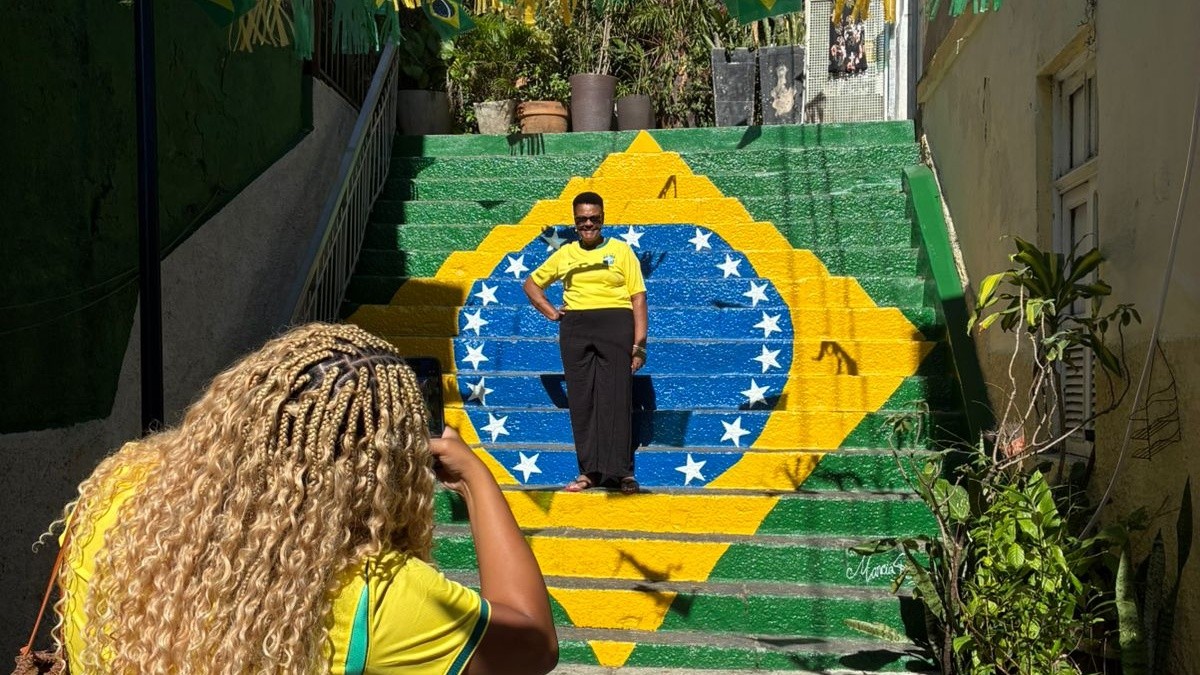
Staircase with Brazilian flag goes viral, attracts tourists and artists and changes the routine of village residents in the center of Rio
G1 Globo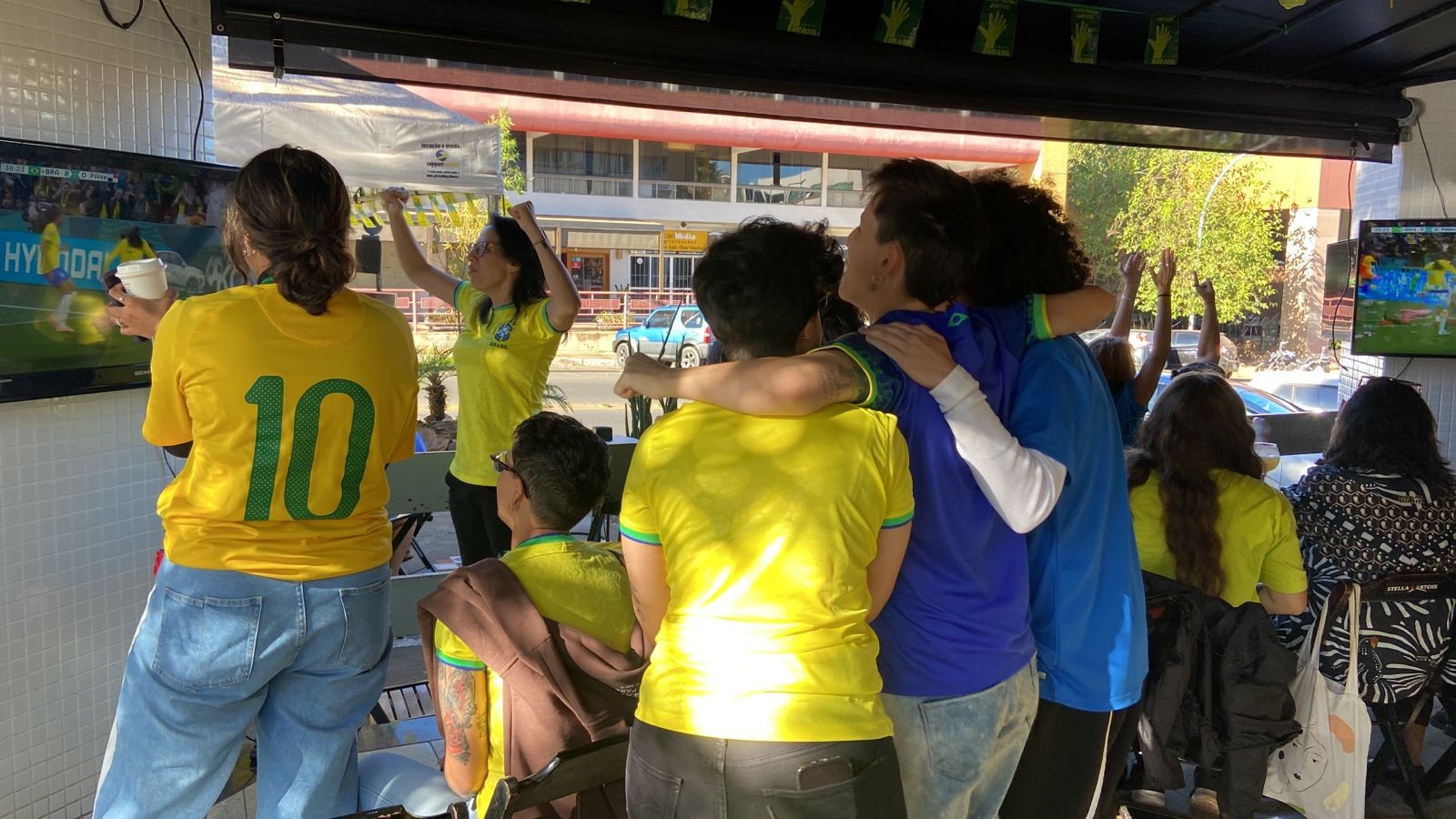
Heading to the hexa! Find out where to watch Brazil's World Cup games in the Piracicaba region
G1 Globo
Ruan Vaqueirinho celebrates solo show schedule at São João and promises partnership with Mestrinho
G1 Globo
Find out the schedules of Globo soap operas in the first week of the World Cup
CNN Brasil
Iran launches attacks on Kuwait, Bahrain and Jordan
Observador