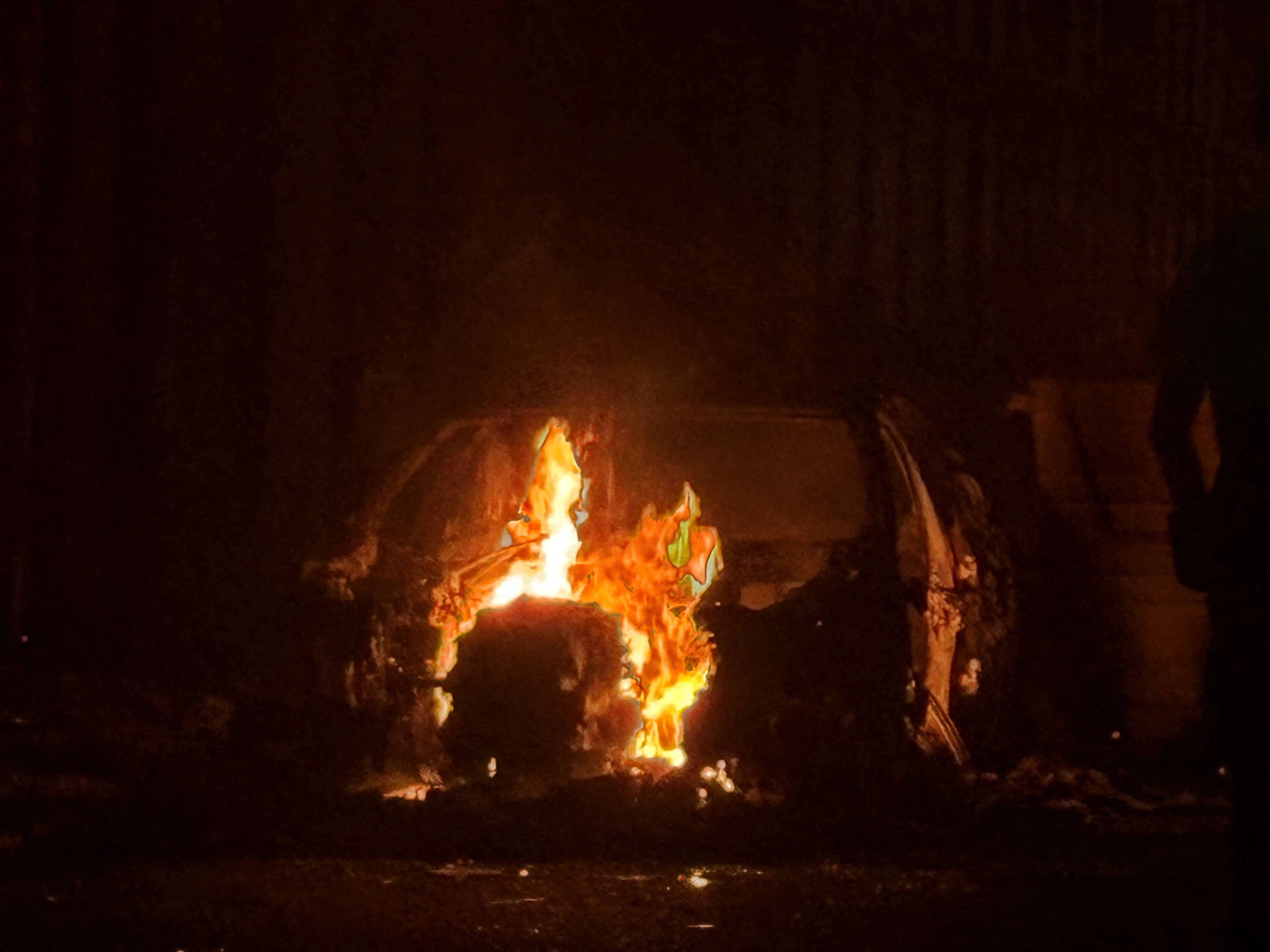
Protesters set fire to houses and cars in anti-immigration protests in Northern Ireland
⚡ Quick Summary
Protesters set fire to houses and cars in anti-immigration protests in Northern Ireland Masked men drove families from their homes by setting them on fire in Belfast in a wave of anti-immigration violence on Tuesday night after a Sudanese man was charged in a stabbing attack, Northern Ireland First Minister Michelle O'Neill said.
Protesters set fire to houses and cars in anti-immigration protests in Northern Ireland
Masked men drove families from their homes by setting them on fire in Belfast in a wave of anti-immigration violence on Tuesday night after a Sudanese man was charged in a stabbing attack, Northern Ireland First Minister Michelle O'Neill said.
Hundreds of protesters, many with their faces covered, attacked police and torched vehicles in several locations across Northern Ireland after video of the knife attack, which left one person with serious neck and head injuries, went viral.
Several houses could be seen burning in the city on Tuesday night. Video broadcast by the BBC showed police helping a family escape a burning house.
“There can be no excuse or justification for these attacks tonight,” O’Neill said in a statement. "Groups of masked men driving families from their homes by fire is nothing short of disgusting cowardice."
A car on fire in east Belfast, during a protest following a knife attack on 8 June that left a man seriously injured and led to police declaring him in critical condition, in Belfast, Northern Ireland
Isabel Infantes / Reuters
'Revolting' knife attack sparks violence
British Prime Minister Keir Starmer described the initial knife attack, which took place in north Belfast late on Monday night, as "sickening".
The attack, which is not currently being treated as terrorism, comes at a time of heightened tensions in the UK following the murder of a student who was handcuffed by police as he agonized from stab wounds after his killer, a Sikh man, falsely claimed he had suffered a racist attack.
The episode also follows repeated protests over immigration, with populist parties claiming that the UK's asylum policy has allowed dangerous men into the country. There were anti-immigration riots in Northern Ireland last year amid outrage over an alleged sexual assault.
Protesters gather in Parliament Square following a knife attack in Belfast, on 8 June, which left one man seriously injured and led police to declare a critical incident, in London
Chris J. Ratcliffe/Reuters
Vehicles set on fire across the city
Masked youths gathered in various parts of Belfast early on Tuesday evening, with police responding by deploying armored vehicles. Protesters set fire to several vehicles across the city, including a bus in east Belfast.
The BBC reported that a mob of 100 men broke down doors and smashed windows of houses on a street in east Belfast.
"They are being kicked out just for being black," pastor Jack McKee told the BBC after attacks on homes in the north of the city.
The suspect in the stabbing, a 30-year-old Sudanese citizen, was charged on Tuesday night with attempted murder, possession of a sharp or piercing object in a public place and threatening to kill.
He is due to appear at Belfast Magistrates Court on Wednesday.
The victim, a man in his 40s, suffered significant injuries to his eyes and cuts to his face and back during the "brutal" attack, with a kitchen knife found at the scene, Northern Ireland Deputy Chief Constable Ryan Henderson said.
Footage showed several members of the public trying to fend off the attacker before police arrived, and they were credited by senior officers with saving the man's life.
The leaders of Northern Ireland's main political parties jointly condemned the attack, calling it "horrific", and also called for calm, saying the riots would only harm their own communities.
🗞️ 2 sources covered this story


📰 Related Articles
Staircase with Brazilian flag goes viral, attracts tourists and artists and changes the routine of village residents in the center of Rio
G1 Globo
Find out the schedules of Globo soap operas in the first week of the World Cup
CNN Brasil
Iran launches attacks on Kuwait, Bahrain and Jordan
Observador
Prevented from entering the USA, president of the Iranian Football Federation joined the Revolutionary Guard
G1 Globo
Makeup artist who confused pregnancy with gas says she 'fought' with AI for 'error' in diagnosis
G1 Globo