The Union had asked for a bridge to be blocked before the death of a young man in a jump
⚡ Quick Summary
The Union Heritage Secretariat (SPU), of the Ministry of Management and Innovation in Public Services (MGI), had already asked the city of Limeira (SP) to block people's access to the Skeletor Bridge.
The Union Heritage Secretariat (SPU), of the Ministry of Management and Innovation in Public Services (MGI), had already asked the city of Limeira (SP) to block people's access to the Skeletor Bridge. This weekend, 21-year-old Maria Eduarda Rodrigues de Freitas died at the scene, after being thrown, without ropes, from a height of around 40 meters (the equivalent of a 12-story building) in a rope jump.
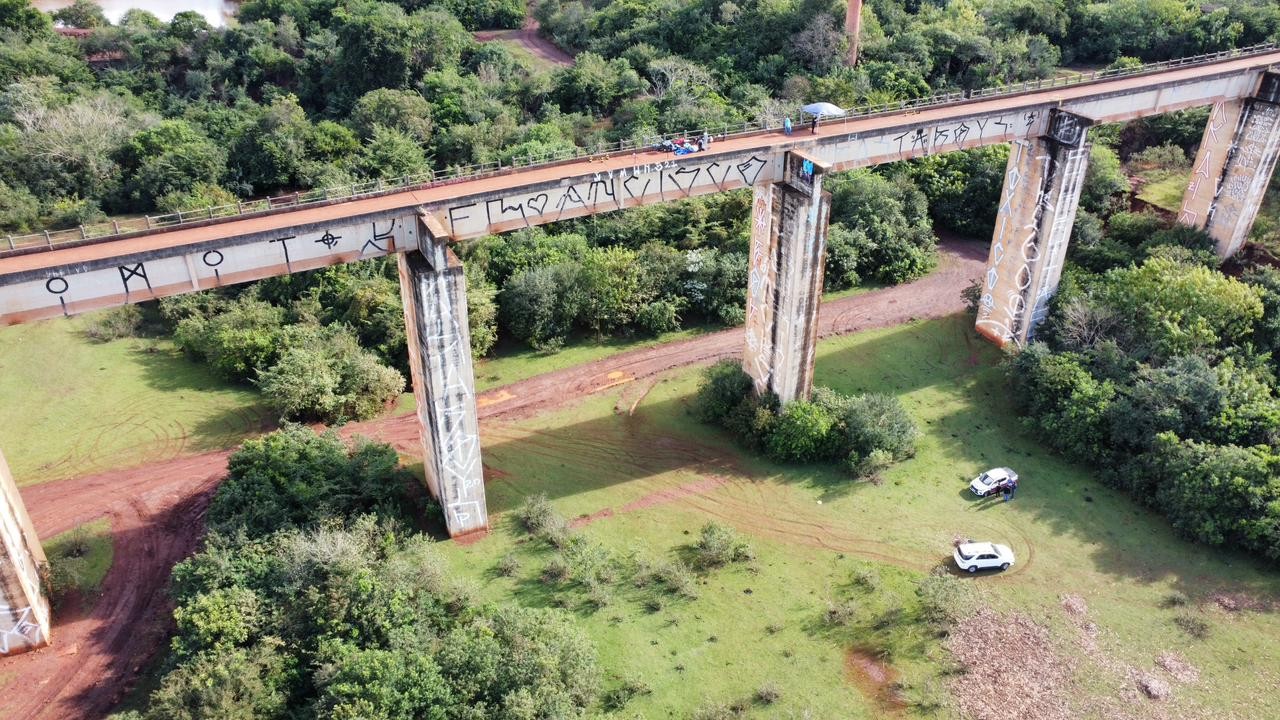
Located on the border between the municipalities of Limeira and Cordeirópolis, in the interior of São Paulo, Ponte do Esqueleto is a road structure of the old Federal Railway Network (RFFSA) that was never completed and has been deactivated for years, serving as an informal tourist spot. The place is used for extreme sports.
Related news:
Adventure tourism: association defends monitoring of safe practices.
According to the SPU, in 2024, when another fatal accident occurred at the site involving a cyclist, local city halls were asked to block access to the Skeletor Bridge. "In 2024, due to this partnership, the bridge was blocked for a few months. Subsequently, the reopening was discussed and defended by local businesspeople in a session at the Limeira City Council", says the organization's note.
Maria Eduarda Rodrigues de Freitas, resident of Jandira, died last Saturday (13) after being thrown from Ponte do Esqueleto without being attached to a safety rope. The jump was part of an extreme sport activity called rope jumping, in which the practitioner jumps from high places such as bridges, viaducts or cliffs, attached to ropes.
>> Follow the Agência Brasil channel on WhatsApp
This sport was created by Dan Osman, who died in 1998 after the safety rope failed while he was practicing rope jumping in Yosemite National Park, in the United States.
On the day of the accident with Maria Eduarda, the city of Limeira announced that it would sue the federal government for failure to act. In a note, the city hall informed that, since 2025, it had been demanding action from the federal agencies that are responsible for the Skeletor Bridge.
"This Saturday's tragedy (13), which resulted in the death of a 21-year-old girl, makes the continuation of this omission unsustainable and unacceptable. Responsibility for inspection, maintenance and access control to Ponte do Esqueleto lies exclusively with the Federal Government. The municipal administration and the City Council, on the initiative of councilor Bruna Magalhães, had already sent letters to the responsible bodies demanding security measures. No concrete measures were adopted", says the note from the municipal administration.
For the Union Heritage Secretariat (SPU), public authorities need to decide, jointly, the future of the Skeletor Bridge. “We understand that public authorities at all levels need to immediately join forces to definitively prevent access to the Esqueleto Bridge and curb illegal activities,” says the federal government note.
The death
According to the Public Security Secretariat of the State of São Paulo, Maria Eduarda's death occurred during a rope jumping activity promoted by a private company, which did not tie the rope to the young woman before the jump. The Mobile Emergency Care Service (Samu) was called and confirmed the death at the scene. The body was sent to the Legal Medical Institute.
After the death, the Military Police arrested three men for murder with possible intent.
Who should supervise
In an interview with TV Brasil, lawyer Arthur Rollo, former national secretary of Consumer Protection at the Ministry of Justice, said that access to the Skeletor Bridge is the responsibility of the Union, but that the municipality should control and authorize leisure activities there. Therefore, this responsibility should be shared between the federative entities and the service provider company, which did not even have the qualifications or preparation to carry out this activity. "The responsibility, in this case, is joint, that is, simultaneously with the Union and the city of Limeira because the area is federal and, being federal, it would be up to the Union to manage it. And, on the other hand, it would also be up to the city of Limeira to inspect companies and professionals that operate in that area and do not have a license to operate and do not have a license or technical qualification to operate. So, the responsibility in this case lies with the Union, which should have looked after that area and prevented access, and also with the city council of Limeira. Limeira already knows that that area is used for adventure activities and should have monitored this”, he said.
According to Arthur Rollo, what happened in Limeira should also serve as a warning for other regions of the country. “This is a warning to all public authorities and adventure service providers to take steps to prevent further deaths because, unfortunately, such deaths in adventure activities are not uncommon.”
🗞️ 4 sources covered this story
City Hall accuses the federal government, but may also be held responsible after the death of a young man on a bridge; understand
G1 GloboErika Hilton calls for PF action against posts about young man's death in rope jump
CNN Brasil
Gym where young woman killed in rope jumping worked in Greater SP cancels birthday party and pays tribute
G1 Globo
Death in 'rope jump' in the interior of SP: what is known about the case
BBC Brasil📰 Related Articles
Man becomes first defendant for vicaricide in RS, accused of killing stepdaughter and setting fire to home
G1 Globo
Tools are stolen from the site where the Janaúba stadium is being built
G1 Globo
Almenara, Divisa Alegre and São Sebastião do Anta gain Civil Police Identification Posts
G1 Globo
Babysitter charged with death of 2-year-old girl taken to health unit after being beaten
G1 Globo