STF gives big techs 60 days to comply with rules defined by the Court
⚡ Quick Summary
The Federal Supreme Court (STF) decided this Thursday (11) to set a deadline of 60 days for big techs to implement the measures determined by the Court to increase civil liability for illegal content.
The Federal Supreme Court (STF) decided this Thursday (11) to set a deadline of 60 days for big techs to implement the measures determined by the Court to increase civil liability for illegal content.
The deadline was determined during the trial of appeals filed by the platforms to clarify the decision in which the Supreme Court recognized, in June last year, the platforms' responsibility for illegal posts made by their users.
Related news:
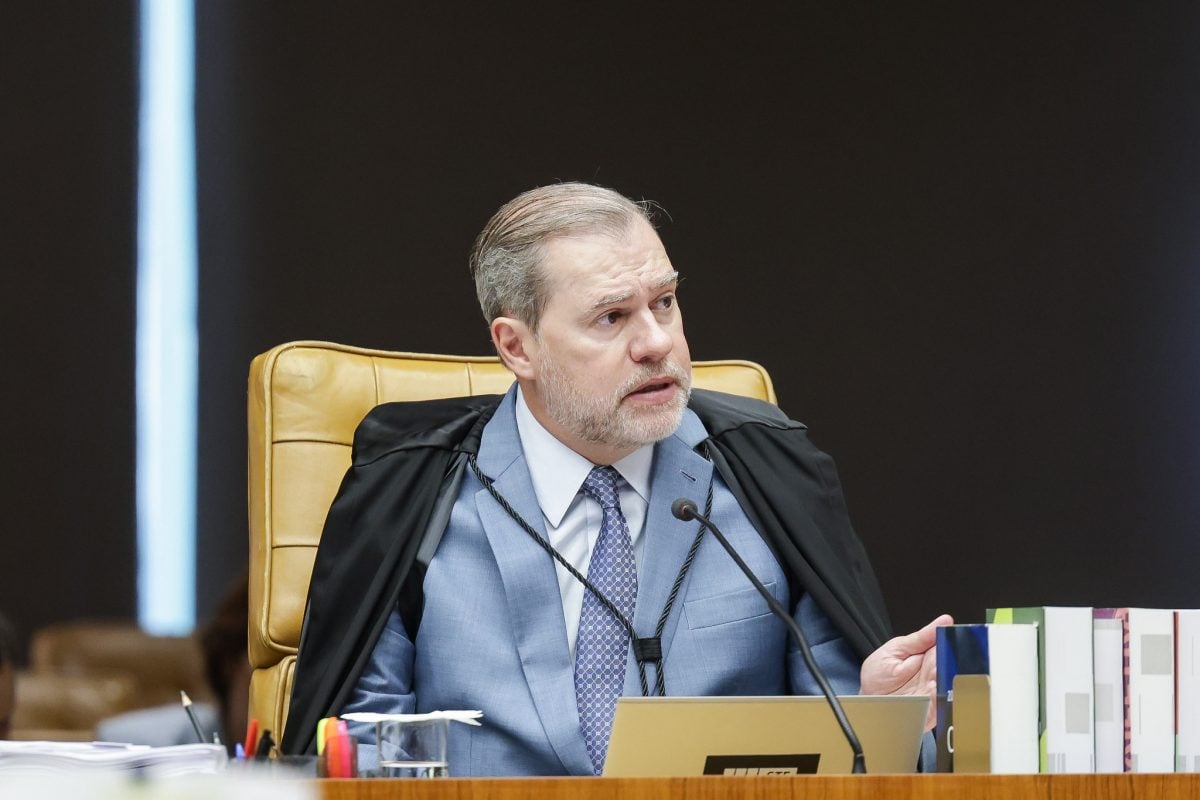
Toffoli votes to grant 60 days for big techs to implement rules.
Among the measures, companies must prohibit users' access to videos with sexual exploitation and abuse, physical violence and induction into behavior that leads to harm to the physical or mental health of children or adolescents. Furthermore, platforms are required to maintain a legal representative in the country to receive subpoenas from the courts.
The Court also set a time frame for the application of accountability rules in cases before the Court. According to the decision, the measures are valid from June 27, 2025, when the trial minutes were published.
The final thesis of the trial must be approved in a session scheduled for next Wednesday (17). The text will guide the resolution of actions that deal with the removal of content on networks and are underway across the country.
Votes
The result of the trial was obtained based on the vote of the rapporteur, Minister Dias Toffoli.
The rapporteur's understanding was followed with reservations by ministers Cristiano Zanin, Flávio Dino, André Mendonça, Nunes Marques, Luiz Fux, Alexandre de Moraes, Cármen Lúcia, Gilmar Mendes and Edson Fachin.
Minister Alexandre de Moraes said that big techs are not neutral and transparent. The minister cited the encyclical in which Pope Leo XIV defended the "disarmament of Artificial Intelligence".
"They [networks] have a political and economic position. Therefore, they must have the same control as anyone who exaggerates and commits crimes," he stated.
André Mendonça expressed concern about the impact of the rules on users' right to freedom of expression.
"We are generating an inhibitory effect on society's free expression, through outsourcing to platforms. That is what is happening", he commented.
Then, Flávio Dino disagreed with Mendonça's speech about the "inhibiting effect" of the measures.
"If Your Excellency opens social media, you will find 50 crimes. It has no inhibitory effect. I would even like it," he replied.
Accountability
In June last year, the STF ruled that Article 19 of the Marco Civil da Internet (Law 12,965/2014) was partially unconstitutional, a rule that established the rights and duties for using the internet in Brazil.
The provision established that, "in order to ensure freedom of expression and prevent censorship", platforms could only be held responsible for their users' posts if, after a court order, they did not take measures to remove illegal content.
Therefore, before the STF's decision, big techs did not respond civilly for illegal content, such as anti-democratic posts, messages containing hate speech and personal insults, among others.
The final text of the decision defined that Article 19 does not protect fundamental rights and democracy. Furthermore, until a new law is approved on the issue, providers will be subject to civil liability for user posts.
According to the decision, platforms must remove the following types of illegal content after extrajudicial notification:
Undemocratic acts;
Terrorism;
Induction to suicide and self-harm;
Incitement to discrimination based on race, religion, gender identity, homophobic and transphobic conduct;
Crimes against women and content that propagates hatred against women;
Child pornography;
Human trafficking. In case of non-compliance, the platforms must be held responsible for moral and material damages caused by users to third parties.
🗞️ 3 sources covered this story
Toffoli votes to grant 60 days for big techs to implement rules
CartaCapitalTrump: negotiations with Iran are at an advanced stage; agreement should come out in the next few days
InfoMoney
Police Station Complex in Maceió has been without public service for six days after the theft of electrical wires
G1 Globo📰 Related Articles
American climate agency warns of serious effects of El Niño
G1 Globo
“Dai Dai” was chosen as the best song of the World Cups, says Billboard
CNN Brasil
PT goes to court against SP City Hall to expropriate idle properties
CNN Brasil
Luan Santana does a strange feat with Ricky Martin in a version of the 1995 hit
G1 Globo
Radioagência takes 3rd place in the Dom Phillips and Bruno Pereira award
Agência Brasil