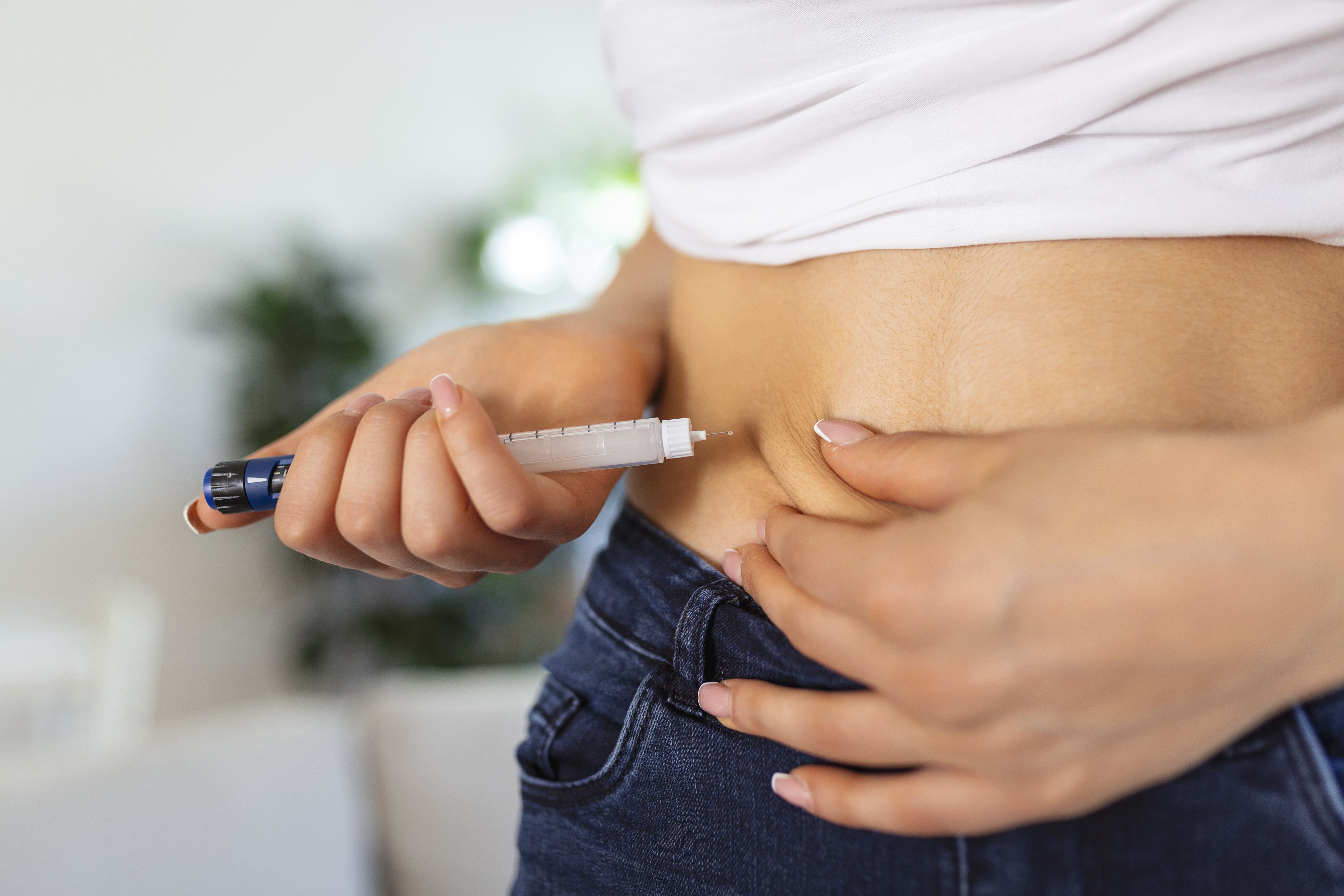
Survodutida reduces liver fat in almost 60% of patients and marks a turning point in the dispute over obesity pens
⚡ Quick Summary
Slimming pen: those who stop gaining weight 4 times faster than those who diet For years, weight-loss pens chased just one number: who, in addition to controlling diabetes, made the scales drop further.
Slimming pen: those who stop gaining weight 4 times faster than those who diet
For years, weight-loss pens chased just one number: who, in addition to controlling diabetes, made the scales drop further. Semaglutide paved the way, tirzepatide raised the stakes, retatrutida pushed weight loss to levels that border on exaggeration. The logic seemed simple: whoever lost the most kilos would win.
Survodutida arrived proposing another dispute. At the annual meeting of the American Diabetes Association (ADA), in New Orleans, the experimental molecule from Boehringer Ingelheim drew attention not only for its weight loss, but for an effect that is difficult to see: the reduction of fat accumulated inside the liver.
Director of the Brazilian Society of Endocrinology and Metabology (SBEM), Clayton Macedo says that the highlight is part of a change that occurred at the congress. Faced with an arsenal of medications capable of producing double-digit weight loss, the question is no longer just how much weight each person loses, but what they do beyond that.
The trump card is hidden
The numbers that caught the attention of doctors came from a phase 3 study (the final stage before an eventual application for approval) published in the journal Nature Medicine.
Among 216 adults with obesity and fatty liver, survodutide reduced this accumulation by almost 60%. More than that: 84% of patients had a drop of at least 30% in liver fat, compared to 24% of those who took placebo, and six out of ten ended the study with their liver within the normal range. Markers of inflammation and organ damage, such as the ALT enzyme, also declined.
Fat in the liver is usually treated as a detail of a routine exam: it appears on the ultrasound, the doctor mentions it, and life goes on. Macedo is keen to break this impression.
“Fat in the liver is not just a little fat,” he says.
This, he explains, is a marker of ectopic fat: that which settles where it shouldn't, is metabolically active, inflamed, and is associated with a higher risk of diabetes, heart disease and death.
In the liver, when it advances, it leads to inflammation, fibrosis and, ultimately, cirrhosis. The condition has an updated name: steatotic liver disease associated with metabolic dysfunction (MASLD), which in its inflamed form becomes steatohepatitis associated with metabolic dysfunction (MASH). It also increases the chances of developing cancer.
It is this silent fat that survoductide seems to reach — but this is also where experts interviewed by g1 urge caution. Just because she showed these liver gains doesn't mean her competitors don't have them; it means no one looked at these metrics when studying them.
Slimming pens
Freepik
A second hormone comes into play
The pens that have become famous act on GLP-1, the peptide that regulates appetite and satiety. Survodutide does this and one more thing: it activates, at the same time, the glucagon receptor — a hormone that functions as a manager of energy stored in the body and acts directly on the liver and fat metabolism.
“Glucagon is a new actor in this story”, summarizes Macedo.
It is what gives the molecule its own signature: while GLP-1 affects eating behavior, glucagon affects the burning of fat, including that hidden in the viscera and liver.
Coordinator of the Diabetes Education Department of the Brazilian Diabetes Society (SBD), Fernando Valente assesses that the results suggest an effect that goes beyond weight loss alone. According to him, part of the improvement observed in the liver is certainly a consequence of weight loss, but glucagon seems to add its own action on the fat accumulated in the organ.
"The liver has many receptors for glucagon. In addition to helping with satiety, this hormone stimulates the use of liver fat as a source of energy and increases energy expenditure", he explains.
The reading gained strength because the researchers did not estimate fat indirectly. In another study, this one published in the New England Journal of Medicine with 725 adults with obesity and without diabetes, a subgroup underwent magnetic resonance imaging — a method that separates, compartment by compartment, each type of fat in the body.
"It's the most accurate test there is: it distinguishes what is fat in the liver, what is fat in the viscera and what is muscle", says Macedo.
In this reading, survodutide reduced visceral fat — which accumulates between the organs — by around 34%, compared to 12% for the placebo, reduced liver fat by 63% and preserved lean mass: most of the weight lost came from fat, not muscle. For the doctor, this was a symbolic point.
“It was the first molecule to remove the stigma of losing lean mass, by demonstrating that it is small,” he says.
In the same study, weight loss reached 16.6% in 76 weeks among those who followed the treatment to the end — below what competitors such as tirzepatide deliver, but accompanied by this redistribution of fat and improvement in blood pressure, triglycerides and abdominal circumference.
Promise with reservations
Even where the numbers appear, the litmus test is missing: no study has pitted the molecules head-to-head, measuring the same outcomes by the same method.
Valente remembers that comparisons with semaglutide and tirzepatide remain indirect. The studies involved different populations, with varying degrees of obesity, diabetes and liver impairment, in addition to using different criteria to evaluate the disease.
"Semaglutide, for example, had histological analysis with liver biopsy, something that did not happen in this study. Therefore, it is not possible to say that one molecule is superior to the other", he states.
The side effects, however, follow the class standard: nausea in around 60% of participants, vomiting in more than 40%, almost always mild to moderate and concentrated at the beginning, when the dose increases.
Macedo recalls that the study protocol was rigid and required reaching the maximum dose, without the office's flexibility to adjust — which helps explain the frequency. Serious events were slightly more common with the drug than with placebo, and there were no deaths.
Trials also have limits: relatively short duration, not very diverse populations and, in the case of the liver, the majority of patients in the early stages of the disease. The effects on advanced frames will still be tested in another program.
Obesity at the center of the board
Behind the dispute, there is a change in mentality that endocrinologists present at the congress saw consolidated at the congress. For decades, obesity was treated as an adjuvant: diabetes was studied and, as a bonus, it was noticed that the patient lost weight. Now, the order has reversed.
"Before, obesity was seen as a consequence. Today, it is the center: it is what causes other diseases", says Macedo.
The medicines are already tested for outcomes on the liver, joints and sleep apnea. It is no coincidence that a congress historically focused on diabetes brought together thousands of people discussing, above all, obesity and a set of molecules that combine different hormones to attack several aspects of the disease at the same time.
If the first generation of pens won the scale battle, the next one seems to be competing for something more ambitious: proving that losing weight is just part of the story. The new race takes place inside the organs — and the liver may have been the first to show this.