


China releases global governance document defending the UN, voice to the Global South and criticizing unilateralism
⚡ Quick Summary
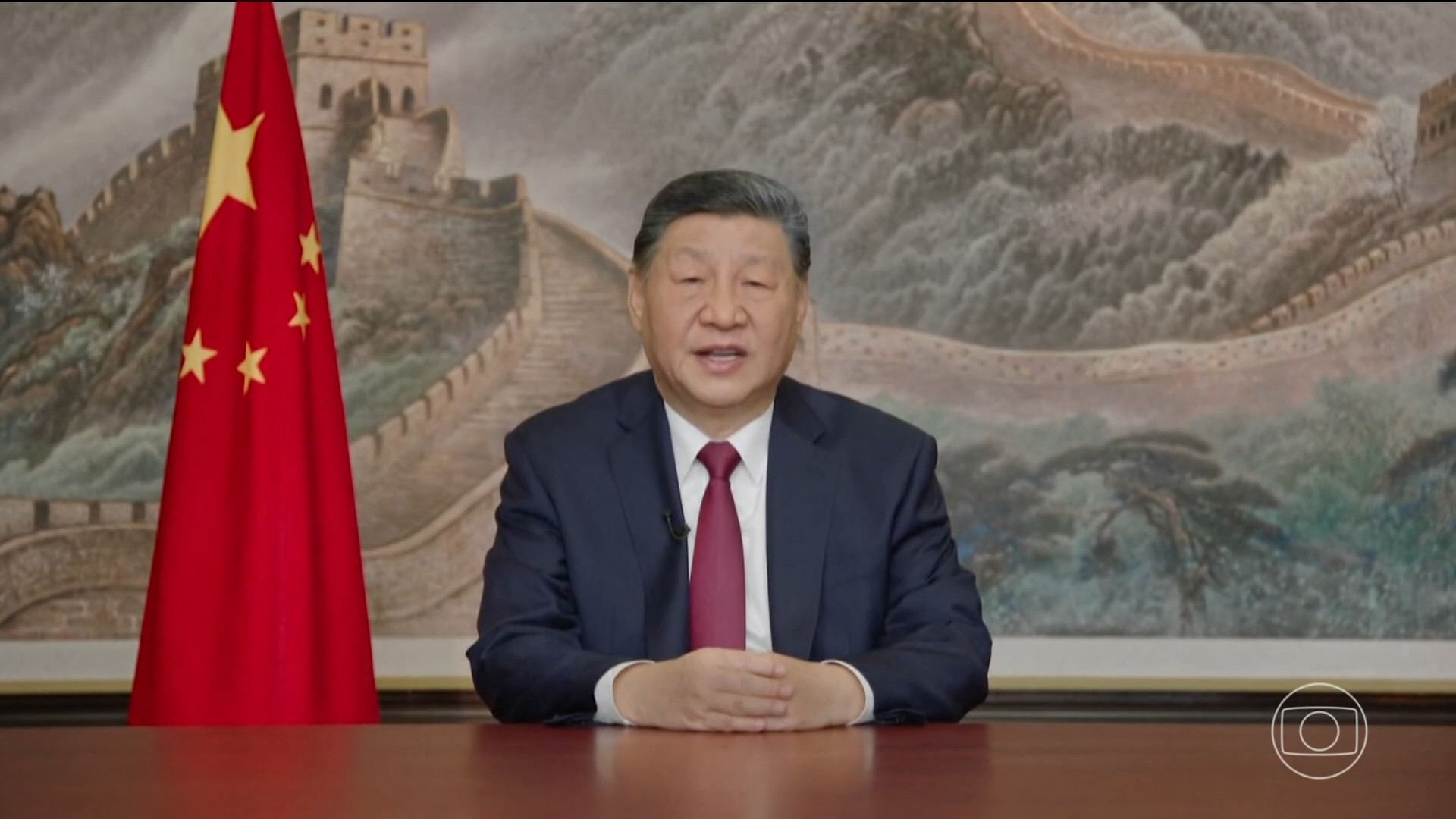
Analysts see Xi Jinping's changes in Chinese military high command as a threat to Taiwan National Newspaper/ Reproduction China's State Council Information Office officially published this Wednesday (17) a document titled "Building a Fairer and Reasonable Global Governance System: Concepts, Principles and Actions".
Analysts see Xi Jinping's changes in Chinese military high command as a threat to Taiwan
National Newspaper/ Reproduction
China's State Council Information Office officially published this Wednesday (17) a document titled "Building a Fairer and Reasonable Global Governance System: Concepts, Principles and Actions". The text presents the Chinese diagnosis of the international situation and details Beijing's guidelines for reform of the United Nations (UN).
According to the text, the current scenario is critical and requires immediate changes. The manifesto states categorically that "the vessel of human civilization has entered dangerous waters, full of reefs and storms."
✅ Click here to follow the g1 international news channel on WhatsApp
Given this scenario, he points out that the world needs to revitalize multilateralism, safeguard international rules and increase the effectiveness of governance. Despite the tone of challenge to economic barriers and the conduct of Western powers, China's document does not mention the United States by name.
According to the document, in 2025 the number of armed conflicts reached the highest record since the end of the Second World War, with more than 50 countries directly involved. Faced with the expansion of global military spending and what it calls the "resurgence of the scum of militarism", the manifesto warns of the risks of proliferation and "nuclear sharing" at a time of fragile international security.
Now on g1
UN Defense
At the center of the proposals released this Wednesday is China's position in defense of the central role of the United Nations (UN). The document reinforces that the international system plays an irreplaceable role, but that the current model presents points of mismatch and incompatibility.
The text attributes this institutional paralysis to the conduct of certain great powers, which frequently abandon treaties, cut funds and obstruct decisions in bodies such as the Security Council and the World Trade Organization (WTO).
Still, Beijing rejects a complete break with the UN.
"It is necessary to unswervingly defend the international system centered on the United Nations (...) instead of starting from scratch with another system."
The Chinese government argues that, although the current governance system is not perfect, the correct path is to reform and improve the model moving forward with time, correcting existing gaps.
The document points out that current injustices do not occur due to the obsolescence of the UN Charter, but due to a lack of effective implementation. The text emphasizes that international law must be applied in an equal and unified manner "and not adopted when it suits and discarded when it doesn't suit".
Strengthening the Global South
Another central pillar of the document is the reiteration of China's commitment to developing countries. Beijing argues that the monopolization of international affairs by a minority of countries has become unsustainable and that long-standing historical injustices need to be definitively corrected.
For the Chinese government, the Global South already brings new air to global governance through consolidated blocs and forums, highlighting the historic expansion of the BRICS, the territorial role of the Shanghai Cooperation Organization (SCO) and the activities of the G20.
🔎Global South is a term used to refer to emerging countries or countries whose economies are developing, and which are historically outside the axis of power of the great powers — such as the United States and Europe, for example. Some of the main countries that make up the Global South are: Brazil, Argentina, South Africa, India, China, Iran and Saudi Arabia, for example.
As a guide for this restructuring, the document proposes five central concepts: sovereign equality, respect for the international rule of law, practice of multilateralism, people-centeredness and focus on action. The text reinforces that nations must negotiate on equal terms, putting equal treatment and mutual respect first in global debates.
Criticism of protectionism
In manifesto format, China uses the document to criticize isolationist stances and trade barriers, denouncing the advance of protectionism and the arbitrary imposition of tariffs. The document accuses certain countries of generalizing the concept of national security to repress the technological development of other nations.
The text classifies unilateralism and hegemonism as sources of chaos that violate basic international norms.
"Isolated countries use size to intimidate the smallest and strength to oppress the weak (...) they practice the principle of 'my country first' and adopt double standards, defying international justice for selfish interests; they sew together small blocs and closed circles, repeating in the 21st century the old script of instigating division."
The manifesto also points out that private interests have blocked reforms of quotas and voting rights at the International Monetary Fund (IMF) and the World Bank, causing delays. Given this, the document introduces the urgency of regulating new frontiers of human cooperation — such as the deep sea, polar regions, outer space and the cyber environment —, arguing that these sectors are guided by principles of peace and sovereignty, becoming fields of cooperation rather than battle.
"The countries are not sailing separately in more than 190 small boats, but sharing a large ship with a shared destination." The text concludes by reinforcing that multilateralism is not a choice, but the only viable path for nations.
🗞️ 3 sources covered this story


📰 Related Articles
/https://i.s3.glbimg.com/v1/AUTH_59edd422c0c84a879bd37670ae4f538a/internal_photos/bs/2026/s/H/mkkQYQT7aSNX9IDlG8EA/edicao-imagens-g1-2026-06-12t191142.920.jpg)
IBGE opens two selections with almost a thousand vacancies for Agricultural and Homeless Population censuses in Bahia
G1 Globo
Less is More is the main attraction of São João 2026 in Campina Grande this Wednesday (17)
G1 Globo
The 14 points of the US-Iran memorandum released
Observador
Driver runs over pedestrians and flees after fight at event house in Juiz de Fora; VIDEO
G1 Globo
Crown Princess Mette-Marit of Norway receives lung transplant
G1 Globo