Collision course: why the G7 fears that imbalances in the global economy will end in crisis
⚡ Quick Summary
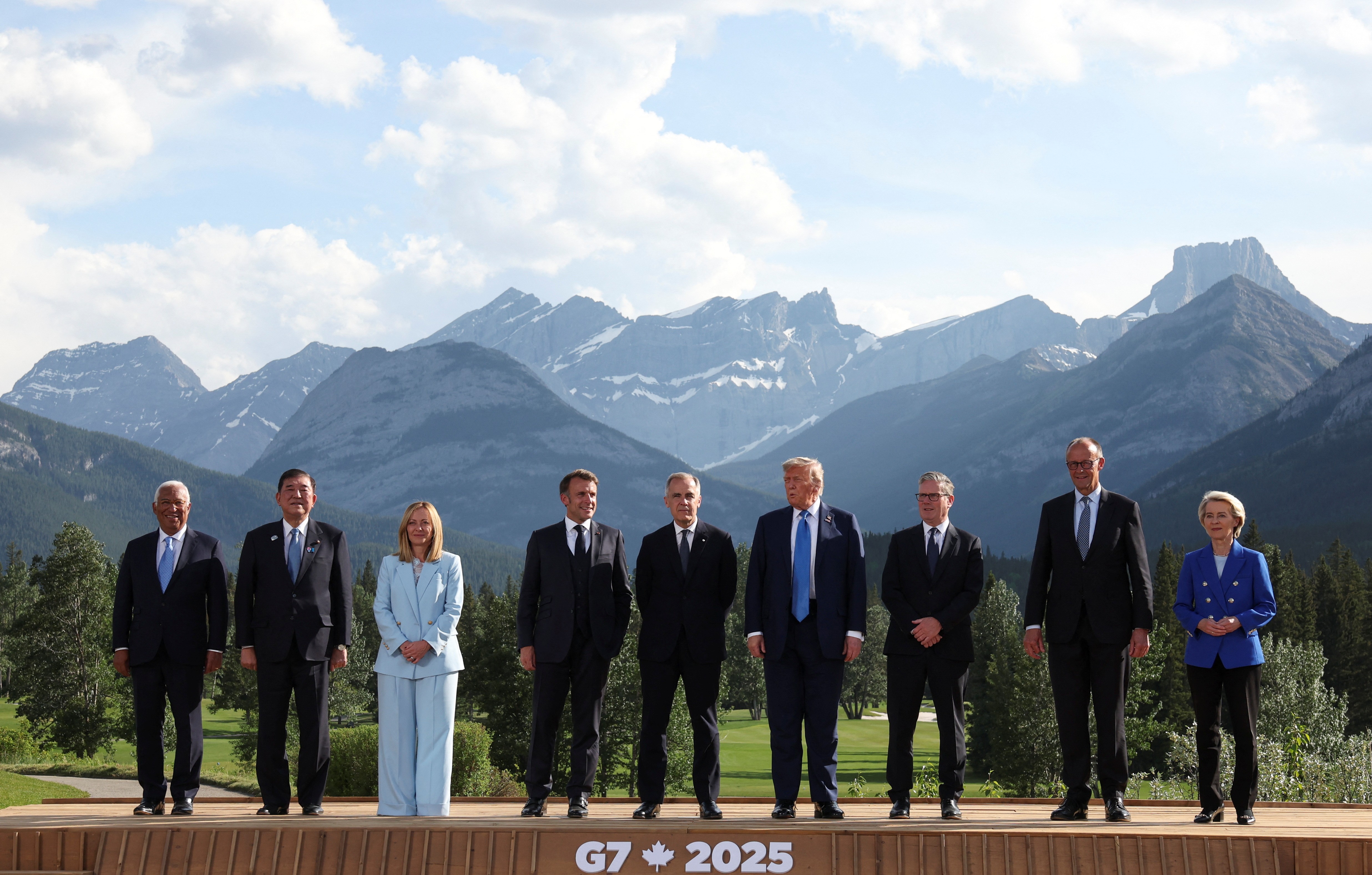
G7 countries call for de-escalation of the conflict between Israel and Iran REUTERS/Suzanne Plunkett/Pool The increase in China's exports, the deterioration of the United States' accounts and the low level of investment in Europe have worried the G7, a group that brings together the seven largest developed economies in the world.
G7 countries call for de-escalation of the conflict between Israel and Iran
REUTERS/Suzanne Plunkett/Pool
The increase in China's exports, the deterioration of the United States' accounts and the low level of investment in Europe have worried the G7, a group that brings together the seven largest developed economies in the world. The fear is that this scenario will increase trade tensions and leave the global economy more vulnerable to financial crises.
The issue has been one of France's priorities, which currently holds the group's presidency. According to French President Emmanuel Macron, imbalances between world trade and the circulation of capital between countries have reached "unsustainable" levels. The topic will be on the agenda of the leaders’ summit scheduled for this week.
🗒️ Do you have any reporting suggestions? Send it to g1
Last month, G7 finance ministers agreed that coordinated action is needed — something that has been difficult to achieve within the broader G20 group for years. They also warned that without a joint response, these imbalances could develop into a financial crisis.
Understand in this report what the main concerns of the world's largest economies are.
Now on g1
A world of savers and spenders
Current account balances, an indicator that measures the inflow and outflow of resources from a country — including imports, exports, investment income and foreign aid — show a growing imbalance since the Covid-19 pandemic.
After falling in the years following the global financial crisis of 2008 and 2009, China's surplus has returned to record levels.
At the same time, the eurozone has maintained its position as a creditor to the rest of the world, while the US remains dependent on foreign capital to finance its consumption.
In practice, this means that savings accumulated in some countries are being used to finance consumption in others — mainly in the USA, today the main destination for these resources.
China: surpluses generated because of overcapacity
China's growth model, based on exports, has been increasingly criticized. For critics, government incentives increased production to levels much higher than the country's domestic consumption.
China's position in international accounts has changed drastically in recent years. Since the pandemic, the current account surplus — when a country receives more resources than it spends abroad — has jumped to a record $735 billion, driven by strong export growth despite higher tariffs imposed by the US.
Weak domestic demand and strong growth in exports of industrialized products increased the Chinese surplus.
Critics, including US President Donald Trump, claim that a currency kept artificially devalued favors the country's exports. They also argue that Chinese companies receive subsidies on a scale greater than that seen in most developed economies.
In December, Macron said that if major economies do not rebalance through cooperation, Europe will have "no choice" but to adopt protectionist measures.
➡️ Protectionism is the set of policies that seek to favor national production and limit foreign competition. This can be done through import tariffs, subsidies to local companies or other measures to encourage the domestic economy.
Beijing rejects the criticism and claims that its companies are competitive. The Chinese government also says it will defend its interests in the face of any trade barrier.
Persistent US deficit
On the other hand, the USA continues to be the main driver of global consumption. The country spends more than it produces, a reflection of high family consumption and low savings rate.
This pattern was reinforced by policies of increased spending and tax cuts. Added to the stimuli adopted in times of crisis and pandemic expenses, these factors increased the federal deficit. This combination makes the US dependent on resources from abroad. In practice, the country uses savings accumulated by surplus economies to finance its internal spending.
While this dynamic helps sustain global growth, it also increases trade tensions. This is because American authorities have resorted to tariffs and industrial policies to try to reduce deficits that have been recurring for decades.
Europe: surplus driven by underinvestment
While China's surplus is linked to excess production, Europe's has another origin: the low level of investment within the bloc and the high rate of savings.
According to a report released in 2024 by the former president of the European Central Bank (ECB), Mario Draghi, European countries need to transform more of their family savings into productive investments — such as works, technology and company expansion. Otherwise, they risk falling further behind the US and China.
Since the start of the pandemic, investments in the euro zone have grown much less than in the US, especially in the technology area.
Economists claim that the low level of investment reduces economic activity within Europe. As a consequence, part of the savings ends up being invested in other countries in search of better returns, contributing to the surplus in the euro zone's external accounts.
🗞️ 3 sources covered this story


📰 Related Articles
Banned from the World Cup: fans of two teams are banned from entering the USA
G1 Globo
Qatari negotiators return to Iran to finalize agreement
Observador
Qatari negotiators travel to Tehran to finalize agreement between US and Iran
CNN Brasil
Increasingly anti-immigration, Europe will support children of immigrants at the World Cup
G1 Globo
Parintins Festival 2026: Commerce, economy and the impact of crafts on fashion and style
G1 Globo