DF placed federal transfers as collateral for the billion-dollar loan to save BRB; understand how they work
⚡ Quick Summary
Union and Government of DF close agreement to help BRB The government of the Federal District is preparing to assume a billion-dollar debt that should take more than 10 years to be paid off: a loan of R$6.6 billion to rebuild the assets of Banco de Brasília (BRB).
Union and Government of DF close agreement to help BRB
The government of the Federal District is preparing to assume a billion-dollar debt that should take more than 10 years to be paid off: a loan of R$6.6 billion to rebuild the assets of Banco de Brasília (BRB).
The money will come from the Credit Guarantee Fund (FGC) and the largest public and private banks in the country will act as guarantors. But, as a counter-guarantee, the government placed resources from the State Participation Fund (FPE) and the Municipal Participation Fund (FPM) on the line.
➡️The counter-guarantee is the good that can be obtained by the guarantor, when he is called to cover a default. In other words: the big banks would pay the bill, but they would use the FPE and FPM to recover the money.
The Federal District, due to its particularities, is the only entity in the Federation that receives both funds.
✅ Click here to follow the g1 DF channel on WhatsApp.
g1 contacted the Secretariat of Economy to find out, for example:
where the resources to pay the loan will come from;
what the interest rates and conditions of the contract will be;
what will be the impact of the operation on public accounts;
what will be the grace period, and what is the estimated value of the installments.
However, the ministry informed that the operation is still in the structuring and negotiation phase and that, for this reason, it is not possible to provide details.
But what are these funds?
The State Participation Fund (FPE) and the Municipal Participation Fund (FPM) are transfers from the Union to state and municipal governments, respectively.
The funds are supplied by federal taxes, such as Income Tax (IR) and the Tax on Industrialized Products (IPI).
A fixed part of them is automatically separated: around 21.5% goes to the States Participation Fund (FPE), which serves states and the Federal District, and 22.5% goes to the Municipal Participation Fund (FPM).
The FPE and FPM values also follow public budget rules. This means that a mandatory part of these resources needs to be allocated to areas such as education (25%) and health (15%).
These same transfers serve as counter-guarantee in the case of the loan to the FGC. If there is default, the Union can directly deduct the amounts owed.
Photo from November 19, 2025 shows the facade of the Banco de Brasília (BRB) building
Joédson Alves/Agência Brasil
Understand:
➡️ Brazil adopts a model of fiscal federalism in which the Union collects the majority of taxes, but is obliged to pass on part of these resources to states and municipalities.
➡️ This system balances the collection capacity concentrated in the federal government with the need to finance public services at the local level.
What are the resources for?
Municipalities, states and the Federal District use funds from the FPE and FPM to finance the construction and operation of schools, health centers, basic sanitation and essential services for the population.
For the National Treasury, the funds represent a fundamental mechanism for alleviating regional inequalities, in the quest to promote socioeconomic balance between States and Municipalities.
According to the Secretariat of Economy, the values of the FPE and FPM are not exclusively destined for a specific area, but contribute to the general financing of public expenses in the Federal District.
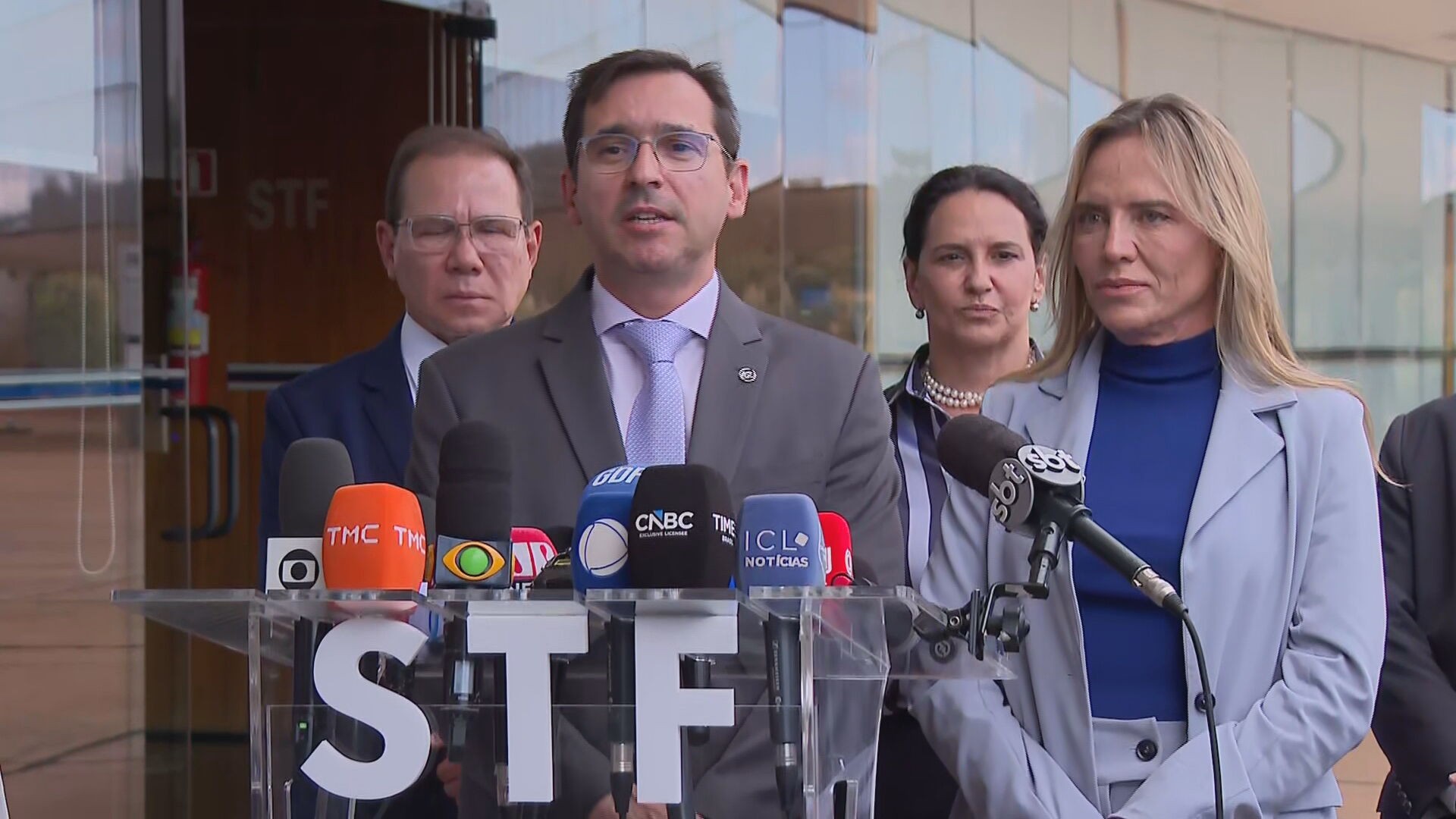
President of the BRB, Nelson Souza, attorney general of the Union, Flávio Roman, and governor of the DF, Celina Leão; GDF and the Union close an agreement to enable billion-dollar bailouts for BRB
TV Globo
Is the value the same for all states and municipalities?
No, the division of these resources is not random and does not pass on the same exact value to each entity. The calculation is defined by the Federal Constitution and applied by the Federal Audit Court (TCU).
The so-called Individual Participation Coefficients determine the share that each state and municipality receives from the funds. In 2026, for example, the Federal District has a coefficient of 1.7% in the FPM, in the capital portion (in the case of Brasília), and 0.25% in the FPE.
Currently, according to Economy, FPE and FPM transfers represent less than 5% of the DF's fiscal budget.
In numbers...
BRB President explains loan modeling that could save the bank
According to data from the Transparency Portal, the DF received, until June 8, 2026, R$524 million in transfers from the State Participation Fund (FPE) and R$138 million from the Municipal Participation Fund (FPM).
National Treasury projections indicate that, throughout the year, these amounts should be higher: the estimate is that the DF will receive around R$1.2 billion via the FPE and R$373 million through the FPM in 2026.
In other words, just over half of the resources planned for the FPE had already been transferred by the beginning of June, while, in the case of the FPM, the transfers are still below half of the total estimated for the year.
The Economy Secretariat clarified to g1 that the resources from the State Participation Fund (FPE) and the Municipal Participation Fund (FPM) allocated to the DF currently total approximately R$2 billion per year.
Evolution of transfers to the DF (FPE and FPM) - Values in millions
The data shows that the transfers of participation funds to the Federal District have grown significantly in recent years, with different variations between the FPE and the FPM.
In the case of the FPM, the DF received R$198 million in 2021, an amount that rose to R$252 million in 2022 (an increase of 27.3%).
In 2023, the amount reached R$265 million (5.2% growth), and there was a jump in 2024, when it reached R$386 million (45.7% increase). In 2025, there was a drop to R$342 million (down 11.4% compared to the previous year).
In the FPE, transfers went from R$687 million in 2021 to R$854 million in 2022, an increase of 24.3%.
The value reached R$881 million in 2023 (up 3.2%), and in 2024 it reached around R$1 billion, growth of approximately 13.5%. In 2025, the amount remained at around R$1 billion, indicating stability.
National Treasury projections indicate that transfers of funds such as the FPE and FPM tend to grow in the coming years, following the expansion of federal revenue.
However, the pace of this increase will depend on the performance of the economy and the balance of public accounts.
And what does this mean in practice?
In practice, the use of funds works as a “security lock”.
If the DF government pays the BRB loan normally, nothing changes: the transfers continue to enter the government's cash flow.
However, if the DF delays or fails to pay the debt, the Union can act and retain part of these resources, using the amounts to automatically pay off the late installments.
READ MORE:
BRB: What is already known and what is still uncertain about the R$6.6 billion loan to save the bank
CRISIS IN BRB: President details R$ 8.8 billion shortfall in Senate hearing
Read more news about the region on g1 DF.
📰 Related Articles

Massive Attack: music and manifesto at Primavera
Observador
Collision course: why the G7 fears that imbalances in the global economy will end in crisis
G1 Globo
Claude x ChatGPT: which company will come out ahead in the trillion-dollar AI race?
G1 Globo
Historic Center of São Luís, a UNESCO heritage site, has 87 mansions at risk of collapsing
G1 Globo
Israel is experiencing a scenario of isolation and internal pressure, says Danny Zahreddine
CNN Brasil