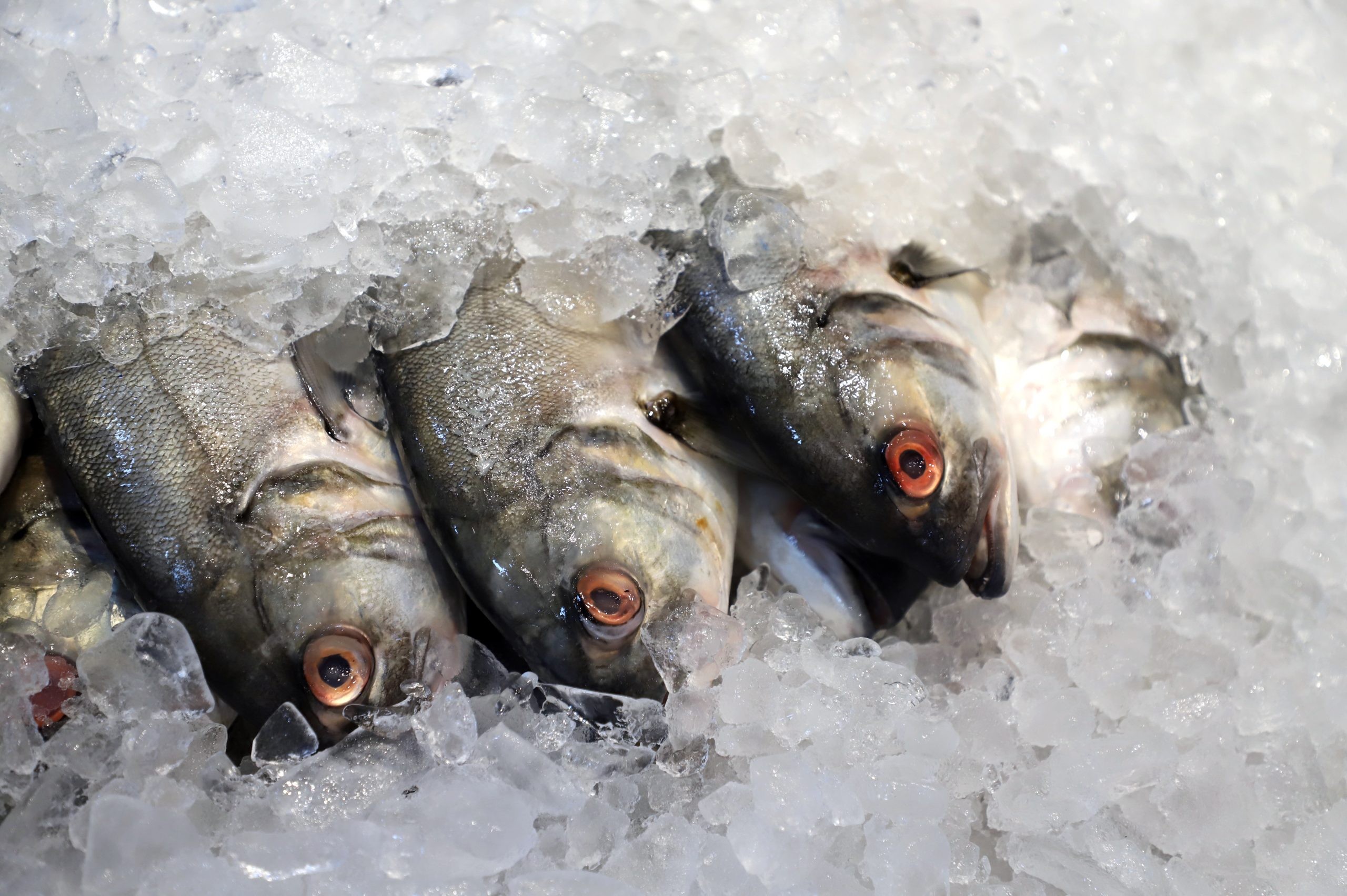
EU considers reopening its market for Brazilian fish
⚡ Quick Summary
Disclosure/Decon The Brazilian fishing sector is experiencing a decisive moment.
Fish.
Disclosure/Decon
The Brazilian fishing sector is experiencing a decisive moment. This June, auditors from the European Union (EU) have scheduled visits to Brazil to assess the conditions of national production, targeting the country's exports that have been barred from the bloc since 2017.
A positive approval could revive a market for products such as lobster, tuna and tilapia, in a segment that continues to face challenges from illegal fishing and also sees a growing threat from climate conditions.
🗒️ Do you have any reporting suggestions? Send it to g1
To DW Brasil, a representative of the European Commission reaffirmed that, currently, there are no Brazilian establishments approved and authorized to export fishery products to the EU.
The audit will be carried out between June 8th and 19th in a number of states to assess the control systems in place that govern the production of fishery products destined for export to the bloc. The Commission pointed out that it cannot anticipate audit results, such as future steps towards a possible positive endorsement.
Now on g1
In 2017, the bloc asked questions about the Brazilian fishing process, especially related to the conditions of the vessels. Anticipating a ban on national fish exports, the Brazilian government anticipated and decided to suspend shipments that year. In May 2018, the EU confirmed the complete ban, which is still in effect today.
Until then, the bloc had significant imports of fish such as tilapia, whose skin is used in the cosmetic industry, and, mainly, lobster and tuna. Until then, 14% of Brazilian fish exports were destined for the EU.
Brazilian fish exports showed a concentration of shipments to the United States and an increase in Asian countries in the wake of the decision. Last year, President Donald Trump's tariff stance raised fears in the sector, which seeks to diversify partners.
Echoes of the "Lobster Wars"
Disputes between Brazil and Europeans over lobster fishing have been going on since the 1960s. At that time, the illegal capture of these crustaceans by French vessels off the coast of Rio Grande do Norte (RN) resulted in intense naval mobilization and military tensions between the two parties, in an episode of diplomatic tension that was dubbed the "Lobster War", and which lasted between 1961 and 1963.
Since then, predatory fishing for the animal has intensified in the Northeast region, which has led to the variation known as red lobster losing more than 80% of its population, according to estimates made in 2019 by the NGO Oceana.
Measures regarding the size of animals that can be captured, aiming to maintain their reproductive capacity, and limits on the period in which fishing can occur, the so-called closed season, which prohibits the activity in certain months, were taken. Furthermore, since 2023, there have been annual quotas for the amount of crustacean that can be caught.
At the time, the NGO Oceana described the measure as a "victory in one of the most valuable fisheries in the country", which involves 15 thousand fishing families. "After decades of efforts, this achievement is the result of studies and debates, which is now considered the first step towards ensuring a promising future for fishing", he published.
In turn, challenges persist. "We still have a lot of precariousness, the boats in the region are basically artisanal. There is little traceability, including temperature and handling", says Caroline Vieira Feitosa, professor at Labomar at the Federal University of Ceará (UFC). In his view, there is now a closed season for "Englishmen to see" in capture, which contributes to certifications, but maintains the threat.
In 2025, Ibama carried out the largest seizure of lobster traps ever carried out in the national territory, in Ceará. The materials popularly known as marambaias were ready to be thrown into the sea before the end of the closed season. It was estimated that around 300 tons of lobster would no longer be caught illegally with traps in 2025 alone. According to Professor Feitosa, in many cases, the industry only absorbs the most desirable animals, and within the required parameters, which guarantees certification for shipments. In this way, irregular fishing of lobsters that have not yet met reduced expectations persists, threatening the stock.
With middlemen and businessmen, the profit from catching an animal that can be worth hundreds of reais in dishes in capitals in the Southeast and even more abroad is little returned to local fishermen, points out Feitosa. "Fishing today survives due to the rarity of lobsters, as this makes the animal more expensive", he points out.
Tuna and associates
In the case of tuna, sold for sushi and shasimi, which is widely produced in the EU, professor Humberto Hazin from the Federal Rural University of Semiarido (Ufersa) sees a scenario with other variables. “The EU is strong in this fishery and aims to protect its production”, he points out. Furthermore, for the animal to arrive fresh, the distance to be covered to send it to the block may appear as another factor that reduces the competitiveness of the Brazilian product.
According to him, a longer travel time tends to worsen the quality in which the fish reaches its final destination, which ends up reducing its appreciation in the market. In the case of shipments to the United States, Hazin points out that planes are mobilized shortly after vessels with tuna arrive from the sea to guarantee shorter delivery times.
Tuna fishing is controlled by the International Commission for the Conservation of Tunas and Tunas in the Atlantic (ICCAT), of which Brazil is a member. In turn, the activity in its irregular form is linked to the so-called associate fishing, which means that, in the midst of catching tuna, other animals can be removed from the sea.
In December 2025, Ibama carried out the so-called Tuna operation in RN. Among the species threatened by the activities were 36 species of sharks, as well as birds and turtles, covering a total of 52 species affected by tuna capture. The seizures totaled more than two tons.
Tilapia farming in Minas Gerais. The Brazilian fish farming sector has been questioning the scope of the export ban since 2018
Maurício Frighetto/DW
"We are looking further"
In recent years, with the presence of the El Niño phenomenon, the impact of rising temperatures on sea fishing has been observed with concern. In 2026, with forecasts pointing to a "Super El Niño" with the potential to raise temperatures in the Equatorial Pacific by up to 3 degrees, the warning is even greater.
"With a 0.5 degree increase in temperature, there can already be changes in the migratory routes of fish", says Hazin. According to the professor, recent fishing expeditions brought an early return and with much less fish than used to be collected. "They came back with almost nothing and earlier than planned", he points out.
In the case of lobsters, although there is no major migration in the event of temperature changes, ocean warming can lead to important effects on the ecosystem in which these animals live. "There was great mortality on the reefs during the last heat waves", points out Feitosa.
According to her, a common perception among fishing circles is that the crustacean populations are not recovering, but that fishermen "are looking further and further away" for the animals. In his view, it is possible that there is already some impact from climate differences in this configuration.
Out of the seas
The Brazilian fish farming sector has been questioning the scope of the export ban since 2018. There is an assessment that the restrictions should apply to irregularities in fishing, and not to the production of animals such as tilapia and shrimp. Therefore, there are expectations that there will be favorable signs for the segment, even in the case of only a partial release. Furthermore, the reduction in tariffs for the sector due to the Mercosur-EU agreement is seen as another opportunity. "We are prepared for the EU mission", says the president of the Brazilian Fish Farming Association (PEIXE BR), Francisco Medeiros.
He recalls that dozens of countries follow the bloc's protocols, and that a positive signal can expand new markets for production that has been growing, especially in the case of tilapia, of which the country is today the fourth largest producer in the world.
In this case, Feitosa recalls other traceability issues beyond fishing that can be raised by the EU. The use of pesticides in locations with the potential to affect crops would be one of these other concerns.
📰 Related Articles

Police arrest suspects of torturing family and joining faction in Vale do Mucuri
G1 Globo/https://i.s3.glbimg.com/v1/AUTH_59edd422c0c84a879bd37670ae4f538a/internal_photos/bs/2026/y/s/jlze6BSBuZdb53D5j5YQ/afp-20260611-b6qj9qp-v2-highres-uspoliticsufcmma.jpg)
White House unveils UFC fighting ring for Trump's 80th birthday
G1 Globo
AM entities and politicians echo the decision that ended Fiesp's action against Free Zone benefits
G1 Globo
VIDEO: Fisherman plays with baby shark after accidental capture in Boa Viagem
G1 GloboMexico starts World Cup amid passion, parties and protests
CNN Brasil