UK will ban children under 16 from social media and consider restricting artificial intelligence chats
⚡ Quick Summary
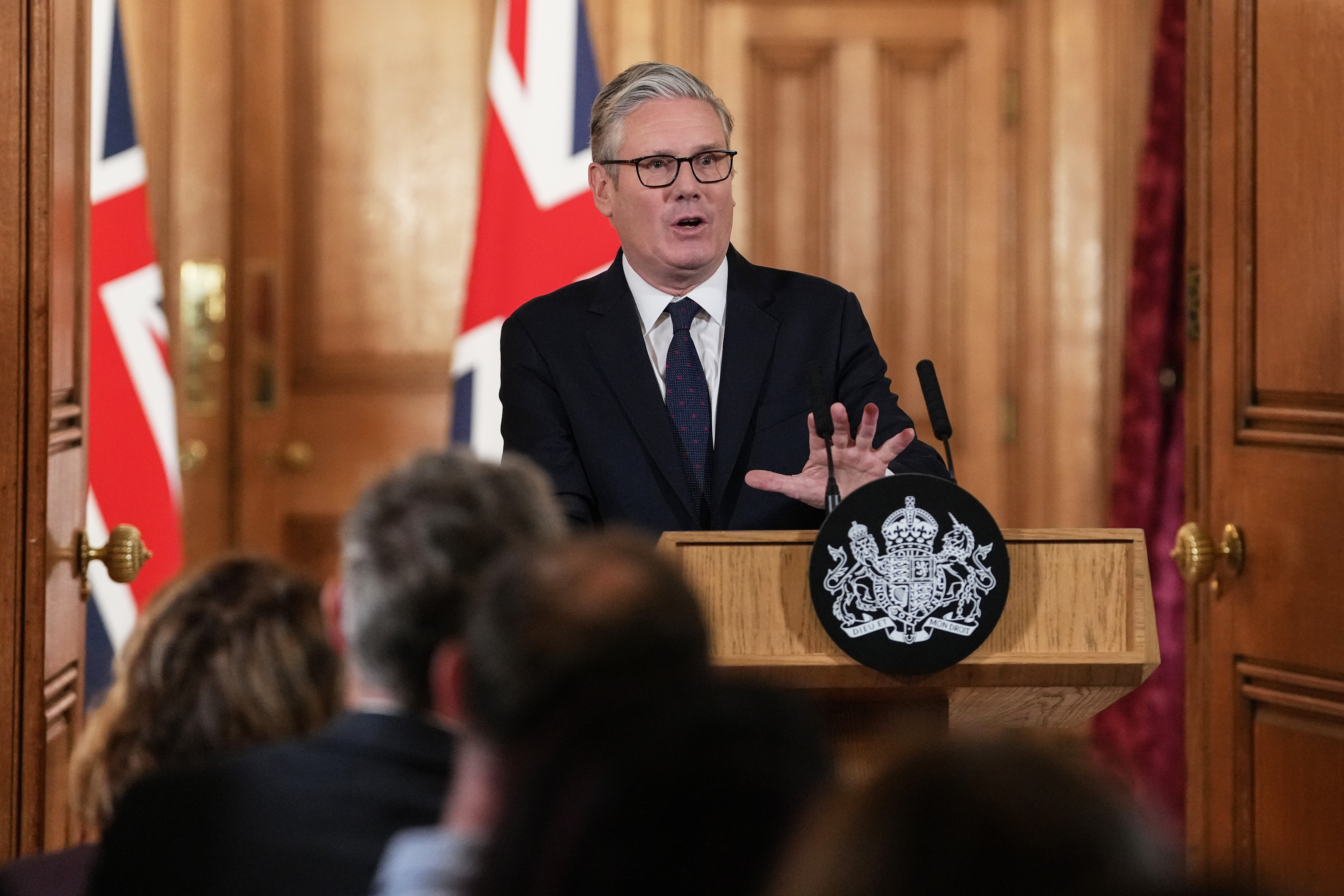
Keir Starmer Carlos Jasso/ Pool Photo via AP The Prime Minister of the United Kingdom, Keir Starmer, announced this Monday (15/6) that he will ban children under 16 from using the main social media platforms, including TikTok, Facebook, Instagram and X, the former Twitter.
Keir Starmer
Carlos Jasso/ Pool Photo via AP
The Prime Minister of the United Kingdom, Keir Starmer, announced this Monday (15/6) that he will ban children under 16 from using the main social media platforms, including TikTok, Facebook, Instagram and X, the former Twitter. Messaging apps like WhatsApp will not be affected.
Children and some teenagers will also no longer be able to broadcast live or chat with strangers on gaming apps. The regulation should be implemented by Christmas, with practical effects scheduled for the beginning of 2027, according to the prime minister.
The British government also said it is evaluating the adoption of nighttime curfews to stop what it called "endless internet use." The measure could be applied not only to minors under 16, but also to teenagers up to 18 years old.
Authorities are also considering imposing restrictions on the use of artificial intelligence chatbots by this age group. More details are expected to be released in July.
In a press release, Starmer described children's online safety as "one of the biggest debates of our time". According to the British government, the decision was taken after conducting a survey in which around 90% of parents supported the minimum age of 16 for access to networks, while 85% stated that the risks outweigh the benefits.
"That's why we will end a system that is failing our children and take bold action to give every child the best possible start in life," said the Prime Minister.
He further stated that networks prevent children from doing homework, reading, playing with friends and going to bed at a suitable time. "This may not seem like much, but these are activities that help a child develop and become an adult," he said.
Starmer added that it "won't be easy" to implement the changes and that some technology companies want people to believe things are "immutable."
“Yes, it is difficult to legislate, regulate and monitor,” he said. But, according to the Prime Minister, that was precisely why the government "listened to the people" and learned from the experience of countries like Australia.
Australia implemented the world's first total ban on the use of networks by under-16s in December 2025, and British government interlocutors describe the UK's plan as "an improved version of the Australian model".
"We're not just proposing a ban," Starmer said, but "going further" with "pioneering actions" also targeting gaming services and live streaming platforms.
The changes will also cover platforms that allow strangers to contact any child "without any verification", he explained.
YouTube criticizes measure
YouTube criticized the proposal, saying it could push children and teenagers to "anonymous and less secure services".
"We've invested in age-appropriate, expert-guided experiences and standard protections for teens for over a decade, and we will continue to do so," said a company spokesperson.
"YouTube is a vital resource for young people, educators and parents. Blanket bans keep children away from these curated, supervised and beneficial experiences."
Starmer was asked by journalists about a possible reaction from United States President Donald Trump to the measure. In response, he stated that he is a "fan of technology and artificial intelligence" and rejected the idea that it is impossible to reconcile technological innovation and the protection of children and adolescents.
"Don't tell me it's impossible," he said, referring to companies' ability to develop protection mechanisms for minors. Technology companies "know very well" that they have a responsibility in this area, he added. Nigel Farage, leader of Reform UK, the main opposition party to Starmer's Labor, said the ban was "well-intentioned" but "unlikely to work" given the popularity of virtual private networks, known as VPNs.
VPNs allow private, secure connections to the internet and can be used to bypass age verification mechanisms by hiding the user's location and identity.
Farage also argued that age checks could lead to "the introduction of digital identity through indirect means". As an alternative, he advocated the use of devices aimed at children, with limited functionality.
How prohibition works in Australia
After the implementation of the ban in Australia, minors under 16 were no longer able to create new accounts, and existing profiles were deactivated.
Children and parents are not punished for breaking the rules. The penalties fall on companies responsible for social networks, which can be fined up to 49.5 million Australian dollars, equivalent to around R$177 million, in cases of serious or recurring violations.
According to Australian authorities, platforms must adopt "reasonable measures" to prevent access by minors, using different age verification technologies.
These technologies may include government-issued identity documents, facial or voice recognition, and "age inference" systems, which analyze a person's online behavior to estimate their age range.
Platforms cannot rely solely on users' declared ages nor accept confirmation from parents as proof of their children's ages.
How TikTok tracks what you do on the internet even if you don't use the app (and what to do to stop it)
What impact does the conviction of Meta and Google in the USA have on the future of big tech?
How TikTok and Meta ignored security to win battle for engagement, according to former employees
The situation in Brazil
President Luiz Inácio Lula da Silva (PT) has already declared that he is considering adopting measures similar to those implemented in Australia and those discussed in the United Kingdom, but, for now, there is no ban on the use of social networks by minors in force in the country.
"We are going to be increasingly tough because, if the State does not act, we will not control the so-called digital platforms, which, as far as social networks are concerned, have nothing. Little social and a lot of hate, a lot of promiscuity, a lot of sex, a lot of gambling and very little social", said the president on a visit to Barcelona, Spain two months ago.
Currently, accounts of users under 16 must be linked to their legal guardians, and the consent of parents or guardians is required.
The legislation also requires platforms to offer age-appropriate privacy settings and adopt measures to avoid mechanisms that encourage compulsive use of services.
These include random reward systems, such as loot boxes and profiling or personalization techniques aimed at increasing user engagement.
With this, Brazil became the first country in Latin America to approve specific legislation aimed at the online safety of children and adolescents.
🗞️ 4 sources covered this story

📰 Related Articles

Strike closes most pre-school and 1st cycle schools
Observador
The next poll of voting intentions for president, after Nexus shows Lula in 1st
CartaCapital
USA threatens to deport influencers with 'posts' about the World Cup
Observador
GNR arrests five drug trafficking suspects in Guimarães
ObservadorHeavy rain opens giant crater on the eve of the city's anniversary, in Três Lagoas; see VIDEO
G1 Globo