Love in the era of swiping: how apps changed dating in Brazil
⚡ Quick Summary
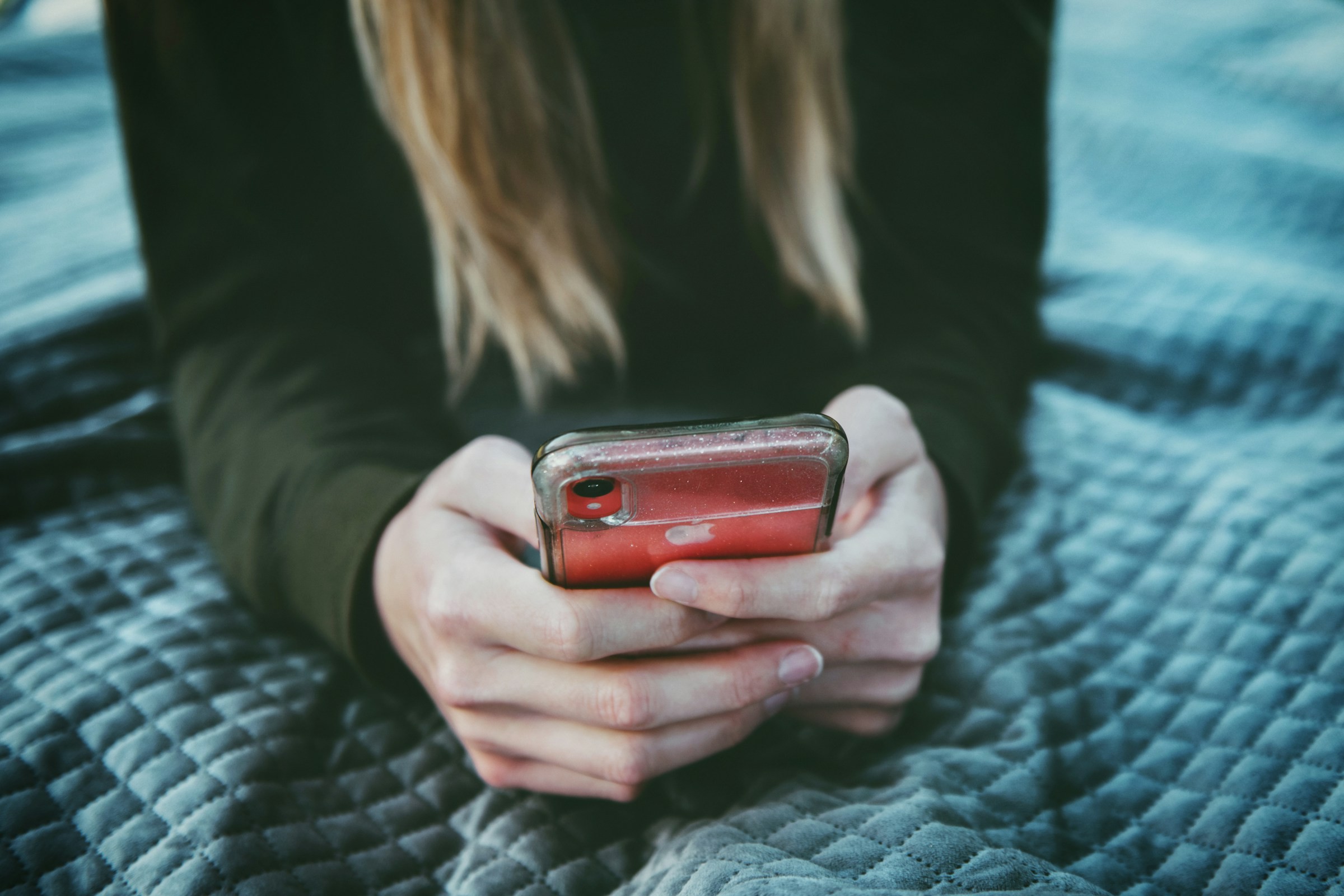
Around 23% of Brazilians with a smartphone have already met someone they met on a dating app Tim Mossholder/Unsplash When she was 23 years old, entrepreneur Erica Gonçalves Freire, now 33, installed a dating app on her cell phone for the first time.
Around 23% of Brazilians with a smartphone have already met someone they met on a dating app
Tim Mossholder/Unsplash
When she was 23 years old, entrepreneur Erica Gonçalves Freire, now 33, installed a dating app on her cell phone for the first time. The objective was clear: find a partner. Because she doesn't really like going out, she saw technology as an opportunity to meet people.
"I don't like parties, clubs and places with drinks. I installed the app at the encouragement of my sister and saw it as an opportunity to meet people without leaving home", says Freire.
🗒️ Do you have any reporting suggestions? Send it to g1
However, contrary to what she initially thought, the entrepreneur didn't like this type of tool and soon uninstalled the app.
"I used it for a few weeks and then uninstalled it and didn't use it for months. And then I installed it again. I got to talk to some guys, but I didn't meet them in person," he says.
Now on g1
It was then, in 2021, that is, five years after the first contact with this type of application, that Freire decided to try again and downloaded the tool again on his cell phone.
"I thought: since I'm looking for a serious relationship, there might be a man with the same thought. And I decided to try again", he says.
Persistence paid off. After exchanging matches and talking for a few weeks with a boy, Freire arranged a meeting.
The man, who lived in a city 150 kilometers away, went to visit her. On the same day they started dating and three months later they were already living together. In the same year they got married and the union is already 5 years old.
"He's also a homebody, he doesn't really like going out and going to clubs. I believe we would only get to know each other if it were through an app", says the entrepreneur.
Brazil is one of the countries that most use dating apps
There are no concrete numbers on how many Brazilians are registered on dating apps and companies in the sector avoid providing this type of statistical data, under the allegation of confidentiality.
However, a survey by Mobile Time and Opinion Box carried out last year showed that around 23% of Brazilians with a smartphone have already had a meeting with someone they know through dating apps.
Tinder, Bumble and Happn are among the most popular dating apps in Brazil
Nik/Unsplash
Among young people aged 16 to 29, this percentage reaches 29%. Among the group aged 30 to 49, this percentage is lower, reaching 25% and among those aged 50 or over it is only 14%.
Among the best-known dating apps in the country and which concentrate the majority of these users are: Tinder, Bumble and Happn.
According to the Happn platform, Brazil leads the ranking of users and has more than 33 million registered users, a total that exceeds the mark of 180 million users globally.
"Brazil is our largest audience worldwide. The platform's reception in the Brazilian market continues to be excellent and growing rapidly: in the last three years alone, we have registered an increase of 10 million users in the country", comments Karima Ben Abdelmalek, CEO and president of Happn.
Bumble and Tinder said they do not share data on the number of users registered on the platform, but stated that Brazil is one of their most strategic and active markets globally.
Social changes
Interest in dating apps accompanies social changes. Fast-paced life, long working hours, changes in family models and the digitalization of relationships have created a favorable environment for the growth of these platforms.
The logic of the applications is simple: profiles, photographs, short descriptions and algorithms that suggest possible matches. But the social effects go far beyond technology. Today, a person can chat simultaneously with dozens of strangers, meet someone from another neighborhood, city, state or even country and arrange a meeting without there being any prior connection between the two.
That's what happened to Brazilian entrepreneur Raellyn Ritter Vilela, 30 years old, who has lived in Asia since July 2025 and about seven months ago met her boyfriend Oleksandr through a dating app.
The boy is a Ukrainian who lives in England and, if it weren't for an app, their paths would hardly cross.
"I used the app for the first time in July, when I moved from Brazil. As I was traveling through Asian countries, I thought it was a way to meet new people. I met a lot of cool people and had a few dates until in November I 'matched' and arranged a meeting with Oleksandr, who was on a trip to Thailand", he says.
Although they both enjoyed the meeting, Vilela says that she had a trip scheduled to an island in the country for the following day and followed her itinerary.
The two continued exchanging messages and then started chatting via video call. Five months after the first date, the couple arranged a new meeting. This time they spent twelve days on vacation in Spain.
"We started dating and after a few months I spent 20 days at his house in England where we got to know each other better. He already had plans to move to Thailand, he was in a career transition, and we realized that there was a concrete possibility of us living together. In December we are going to Brazil to meet my family and next year we will live together", says Vilela.
The other side of the connection
But the success of the apps has not eliminated the challenges. Alongside love stories like Freire and Vilela's, there were reports of exhaustion, frustration and even a drop in self-esteem.
A survey by Forbes Health (2025) reveals that 78% of users have already felt emotionally exhausted with these platforms, indicating a search for more authentic and less automated relationships.
Women appear to be most affected by burnout with dating apps
Priscilla Du Preez/Unsplash
Among the main factors of this fatigue, the difficulty in establishing a real connection leads (40%), followed by disappointment with other people (35%) and rejection (27%).
Repetitive conversations with different people (24%), the constant habit of swiping profiles (22%) and time spent on apps (21%) also contribute.
The pressure to maintain an idealized image (20%) and the effort to manage multiple profiles (18%) still appear as relevant causes.
Women appear to be the most affected, with 80% of them reporting exhaustion, compared to 74% of men.
"The problem is not only the superficiality of the choice itself, but also what this model does to behavior afterwards. When you have unlimited access to new profiles, anything that goes wrong in a conversation becomes a reason to give up. There is no reason to invest when the next option is just a swipe away. This has created a generation of people who know how to initiate contact very well and commit very poorly. Entry has become too easy and exit has become the standard", explains Êdella Nicoletti, psychologist and specialist in Therapy Dialectical Behavioral (DBT).
Tinder
Good Faces Agency/Unsplash
Because it is an environment of quick choices, combined with the abundance of profiles and uncertainty about intentions, the experience is often transformed into an exhausting process. The feeling of being easily replaced also becomes common.
Experts point out that this excess of options creates a paradoxical sensation. Instead of facilitating choices, the abundance of profiles can make decisions more difficult and increase the feeling of dissatisfaction. "We have the issue of 'affective burnout', which is related to people having to deal with situations that constantly trigger suffering, such as ghosting, harassing responses, ending relationships, having to constantly update their profile on the app, excessive messaging, among others. And also satiation, when something rewarding is offered so many times that it loses its effect", adds Vinícius Dornelles, psychologist and specialist in Dialectical Behavior Therapy (DBT).
There is also the question of authenticity. Old photographs, inaccurate information and fake profiles continue to be frequent concerns for those who use this type of application. Furthermore, there is a need to try to "please" as many profiles as possible to receive a "match".
"There's a dimension that few people talk about: what these apps have done to self-esteem. You put your photo up to be judged by mass strangers, expect validation in the form of a match, and when it doesn't come you internalize it as rejection, even if the person on the other side hasn't even seen your profile. It's a model that structurally produces insecurity", adds Nicoletti.
The future of digital love
As users begin to fatigue and reduce their use of these apps, companies are trying to respond by creating new connection tools like more detailed profiles and features aimed at long-term relationships.
At the same time, there is a growing desire among some users to balance online and offline experiences. Parties, themed events, interest groups and in-person activities are once again gaining ground as alternatives or complements to digital platforms.
Still, according to experts, applications will hardly stop playing an important role in the emotional lives of Brazilians.
Just as previous generations had their love stories started at dances, squares or school corridors, the current generation collects stories that begin with a notification on the cell phone screen.
"What people seem to be looking for, increasingly, is what the apps themselves promised: genuine connection, authenticity and the experience of being seen beyond a photograph. Such aspects further reinforce the need for education in interacting with digital tools", adds Dornelles.