Chamber Committee approves reduction of the age of criminal responsibility to 16 years
⚡ Quick Summary
The Constitution, Justice and Citizenship Committee (CCJ) of the Chamber of Deputies approved, this Wednesday (10), the Proposed Amendment to the Constitution (PEC nº 32/15) that reduces the age of criminal responsibility from 18 to 16 years in Brazil.
The Constitution, Justice and Citizenship Committee (CCJ) of the Chamber of Deputies approved, this Wednesday (10), the Proposed Amendment to the Constitution (PEC nº 32/15) that reduces the age of criminal responsibility from 18 to 16 years in Brazil.
The PEC received 44 votes in favor and 18 against. The commission's approval represents the first step in processing the proposal, which will now be analyzed by a special commission before being voted on in two rounds, in the House Plenary.
Related news:
Senate approves protection for workers rescued from slave labor.
Act in SP calls for maintaining rules on abortion in cases of rape.
Voz do Brasil will publicize a support network for women victims of violence.
The approval of the favorable opinion of the rapporteur, deputy Coronel Assis (PL-MT), occurred after more than two hours of intense debate. For the rapporteur, the measure is legally viable and does not violate the so-called immutable clauses of the Federal Constitution, nor international treaties.
Assis's conclusion was refuted by deputies opposed to the initiative, who argue that the rights of children and youth are immutable clauses that cannot be changed except with a new constituent.
"This is an essential clause of the Constitution. In other words, it can only be modified with a new Constitution. And we are not talking here about a new Constitution, but rather about changing the current one, modifying a clause that cannot be changed", claimed deputy Tadeu Veneri (PT-PR), for whom the PEC, if approved in the National Congress, will be blocked in the STF.
"We cannot deceive the population that this will prosper. It won't. It will reach the STF and it will stop. And we will have had a great debate solely with an electoral nature", added Veneri.
Representative Sâmia Bonfim (PSOL-SP) endorsed the thesis that reducing the age of criminal responsibility is a populist, electoral response that will not solve the serious problems of public security.
"The assumption is that, with the entry of these young people into the penitentiary system, and no longer into the socio-educational system, we will have a more severe punishment commensurate with the infractions they committed. This is a lie. The re-entry rate into the socio-educational system is 23%. In the prison system it is 42%", stated Sâmia.
The parliamentarian argued that, according to official data, only 0.5% of infractions committed by teenagers are considered very serious crimes.
“We are proposing to change the entire treatment given to teenagers [in general] because of 0.5% [...] when this National Congress should be dedicating itself to identifying where we are failing so that there are so many young people committing crimes instead of sitting on school benches”, pondered Sâmia.
Defender of the proposal, deputy Mendonça Filho argued that the right thing to do would be to submit the topic to a popular referendum.
"No one can tolerate violence in Brazil anymore. We have 44 thousand homicides per year. We live in a pattern of civil war and we pretend that this reality does not exist", commented Filho, attributing the insecurity to "lax laws" and "impunity" which, according to him, facilitates the action of organized crime.
He admitted that reducing the age of criminal responsibility to 16 will not solve the problem of violence. But he argued that, together with other legal mechanisms, it will contribute to the fight against organized crime.
“Around 25% of the Brazilian population today lives under the direct influence of militias and criminal organizations that even entice minors under the age of 18 to commit crimes because, for them, the cost of doing so is cheap,” he said.
Representative Rodrigo de Castro (União-MG) also classified the approval of the PEC as a “clear signal” against impunity, but regretted that the discussion, which has been going on for years in the National Congress, has turned into a debate about ideological aspects that have nothing to do with public security. “It embarrasses me to see this debate become a debate of ideologies.” For Otoni de Paula (PSD-RJ), it is a mistake for the National Congress to discuss such an important and controversial project as reducing the age of criminal responsibility on the eve of an election.
"Why didn't we approve the reduction of the age of criminal responsibility during the four years of the Bolsonaro government since we had a basis for it? In the same way we didn't transform criminal factions into terrorist groups. We had four years and we didn't do this", he argued.
He stated that there is a risk that, with the reduction of the age of criminal responsibility, criminals will begin to attract even younger children and adolescents.
"What will happen to teenagers aged 15 years and 11 months who committed heinous crimes? Tomorrow, we will debate the reduction to 14 years? Then to 12? Because this problem is structural. And with the reduction of the age of criminal responsibility to 16 years, drug trafficking will recruit boys under 16", concluded de Paula.
*enlarged text at 2:28 pm
🗞️ 4 sources covered this story
Chamber Committee approves reduction of the age of criminal responsibility from 18 to 16 years old
O Globo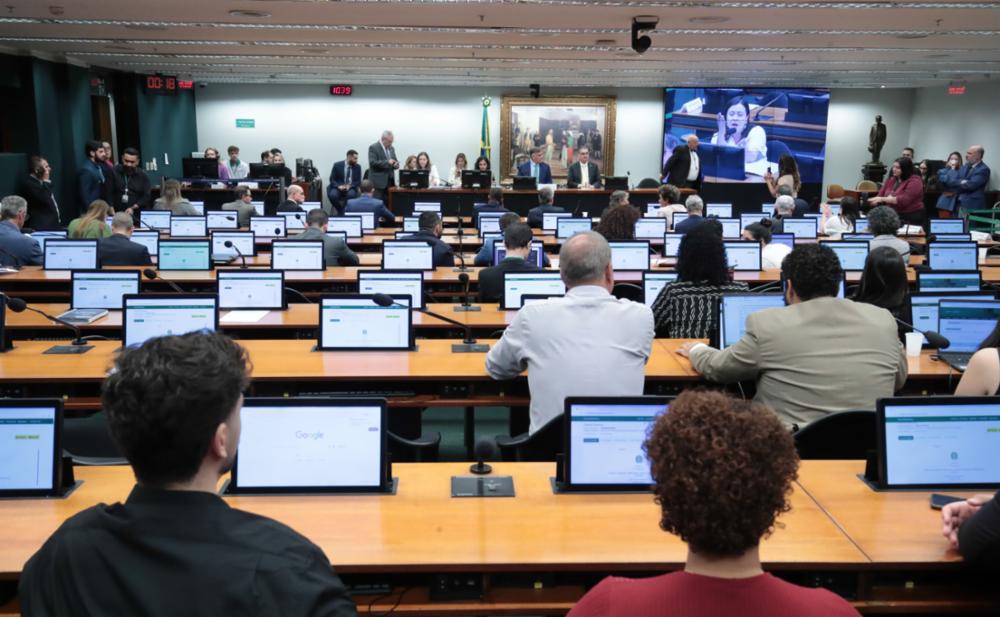
How each CCJ deputy voted on reducing the age of criminal responsibility
CartaCapital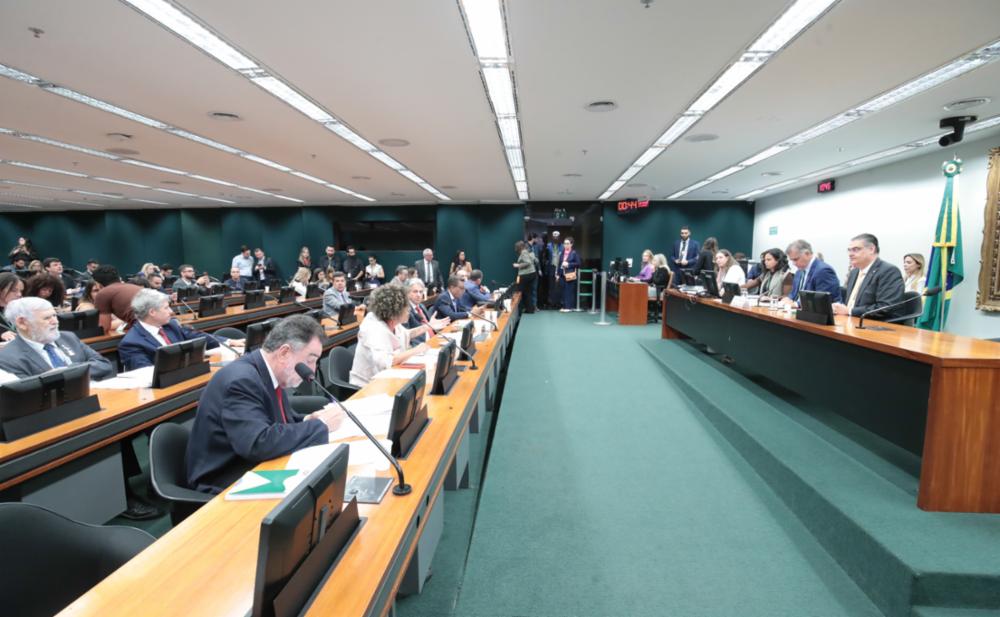
CCJ of the Chamber approves reduction in the age of criminal responsibility
CartaCapitalSenate Committee approves PEC for health agents with an impact of R$99 billion; text goes to plenary
Estadão📰 Related Articles

Zema says that voters are 'more connected to the World Cup than to the election' when commenting on the Quaest survey
G1 Globo
Porsche bets on younger audiences and invests in Toy Story
Observador
'X-Men' actor reveals breast cancer diagnosis: 'Super rare'
G1 Globo
Rio Innovation Week 2026 opens ticket sales; see attractions already confirmed for technology event
G1 GloboAI advances, but only 2 in 10 Brazilians have basic digital skills
Você RH