At the epicenter of Ebola, health professionals work with little pay and almost no rest
⚡ Quick Summary
Understand Ebola in 7 points Dr.
Understand Ebola in 7 points
Dr. Richard Lokudu, medical director of Mongbwalu General Referral Hospital, has received little or no compensation for his work on the front lines of one of the deadliest Ebola outbreaks ever recorded in Congo.
Lokudu and several of his colleagues spend the entire day at the hospital tending to an increasing flow of patients. Notifications of suspected cases arrive even late at night.
“I didn’t receive my stipend and what happened to other people could also happen to me,” Lokudu told the Associated Press. “Despite all the infection prevention and control measures we are implementing, we don’t know what could happen.”
Health authorities believe the outbreak, which caught eastern Congo by surprise after spreading silently for weeks undetected, began in the busy mining area of Mongbwalu in Ituri province.
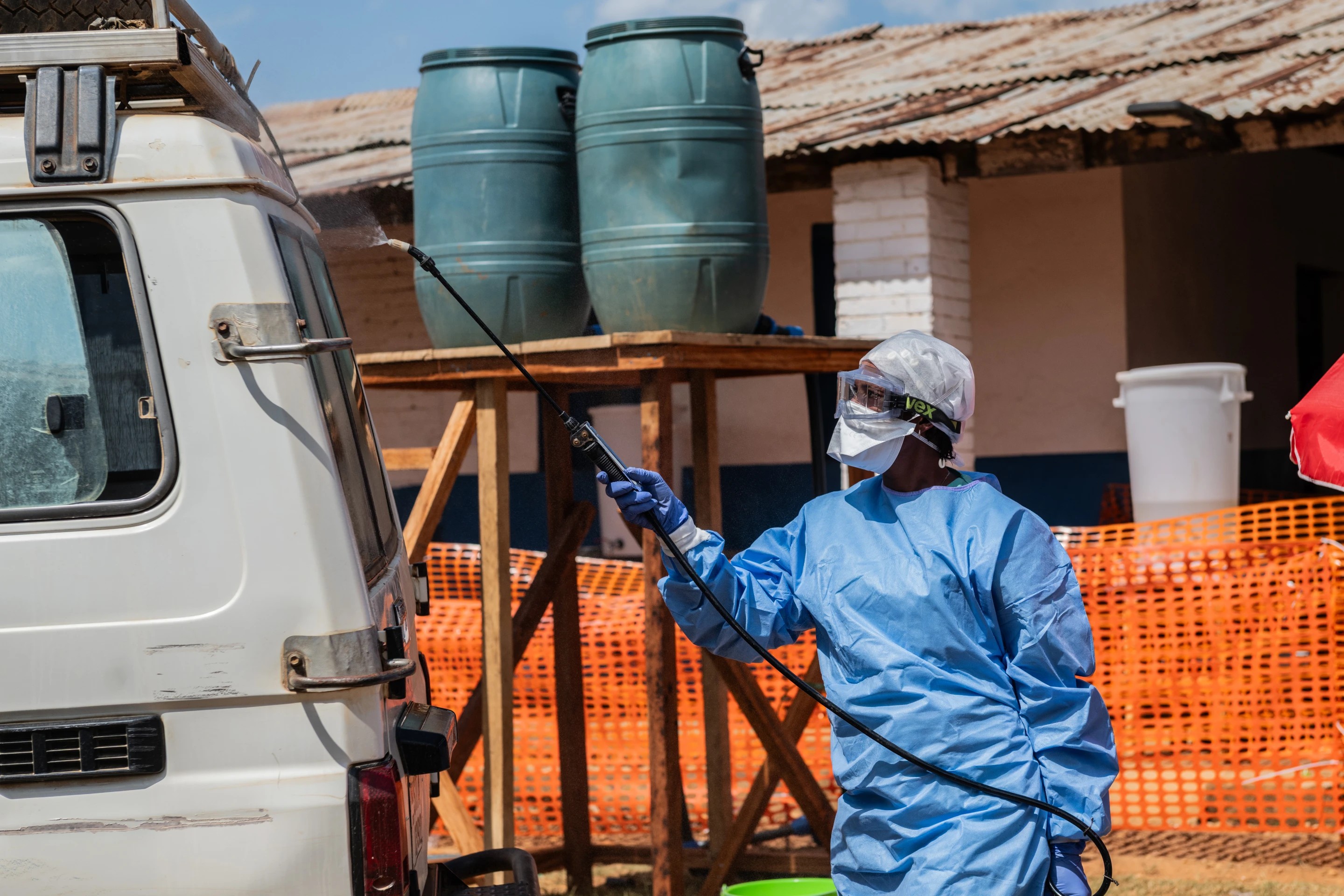
A healthcare worker disinfects an ambulance at the Mongbwalu treatment center that transported a suspected Ebola patient in Mongbwalu, Congo, on Friday, June 5, 2026.
AP/Moses Sawasawa
Mining favors the spread of the virus
Mongbwalu became the epicenter of the rare Bundibugyo variant of Ebola.
The city attracts a large number of workers who work in gold mines, surrounded by muddy pools, narrow galleries and caves. They live in low-income areas, including overcrowded camps, and have little access to adequate health protocols.
These conditions increase the possibility of transmitting the disease, which spreads through close contact with bodily fluids from sick or deceased people, such as sweat, blood, feces and vomit.
There is also widespread skepticism about the disease, which makes the work of Lokudu and his colleagues even more difficult. Some healthcare professionals and response teams have already died as a result of the infection.
“It’s one thing to be away and hear the statistics being released, it’s another to see what’s happening on the ground, which is huge,” Lokudu said. "People are sacrificing their rest and comfort for this cause. There must be recognition that they deserve to be paid. These workers should receive their salaries regularly."
The Congolese government did not respond to a request for comment from the AP.
Richard Lokudu (center), medical director of Mongbwalu General Hospital, talks with members of the UN peacekeeping mission in Mongbwalu, Congo, on Friday, June 5, 2026.
AP/Moses Sawasawa
Minimum available resources
Congolese authorities released new figures on Sunday, reporting that there were 488 confirmed cases and 86 deaths as of Friday (5). On Thursday, the country recorded 71 new cases in just one day, which, according to authorities, is a sign of “active community transmission”.
In neighboring Uganda, 19 cases and two deaths were confirmed.
The Bundibugyo variant has no vaccines or approved treatments, so health professionals have focused on treating the symptoms. The government reported that at least five people have recovered from the disease since the outbreak was officially confirmed by Congo's Ministry of Health on May 15.
According to the director general of the World Health Organization (WHO), Tedros Adhanom Ghebreyesus, the disease “had a great initial advantage”. Hospitals in the region were unable to properly test for the type of Ebola that had been circulating for several weeks before official confirmation.
Health workers are dealing with the disease with minimal resources, while humanitarian organizations race to bring aid to the region. Masks, gloves, boots and medicines were in short supply in the early stages of the outbreak.
“There has been a deterioration in the healthcare system,” said Heather Kerr. “There has not been enough investment in the health system, and this has been happening for years. ”
Healthcare workers prepare to start their shift at the Mongbwalu treatment center in Congo on Friday, June 5, 2026
AP/Moses Sawasawa
Conditions of healthcare professionals
“During the first week, we didn’t even have time to go home to eat. In the second week it was the same thing. We only eat once a day, the equivalent of breakfast, but at night,” said Alice Bamuhinga, a nurse at Mongbwalu hospital.
Even with widespread skepticism and non-compliance with health protocols, many city residents are beginning to realize the seriousness of the situation.
Asero Jeanne, 52 years old, had five children. Two of them died from the disease within a span of just two weeks. When her daughter fell ill, the family believed it was malaria, and neighbors advised them to avoid the hospital, saying that “anyone who went there would die immediately,” Jeanne reported.
The daughter died after three weeks alternating between hospitals and her own home. Days later, a son also died. Then Jeanne fell ill.
“I saw about 20 people die,” she said. “I saw them all being taken to the morgue, but God is allowing me to leave here alive. I am grateful to the doctors.”
UN presents combat plan
On Friday, Tedros launched a $518 million plan to combat the outbreak, saying that “containing Ebola depends on political commitment, sustainable financing and the trust and participation of communities.”
Efforts to contain the disease have also been hampered by the conflict between the Congolese government and the Rwandan-backed M23 rebel group, as well as attacks by Islamic militants.
For professionals working on the front lines of the outbreak, the work has become even more difficult as the disease spreads faster than current capacity to respond.
“Despite the alerts we received and the teams we have available, we do not have the means to travel to the field,” said Lokudu. “As a result, there are alerts that we are unable to investigate.”
🗞️ 2 sources covered this story

📰 Related Articles

Tuchel says Bellingham faces competition for England place
CNN Brasil
PRF warns of scammers who use the institution's name to promise to reduce fines on the driver's license
G1 Globo
With pampas and circumstance, the selection of the Flea belongs to Lionel
Observador
Mussolini's cup, the champion's boycott and the "oriundi"
Observador
Weather may interfere with the progress of World Cup matches; understand
G1 Globo