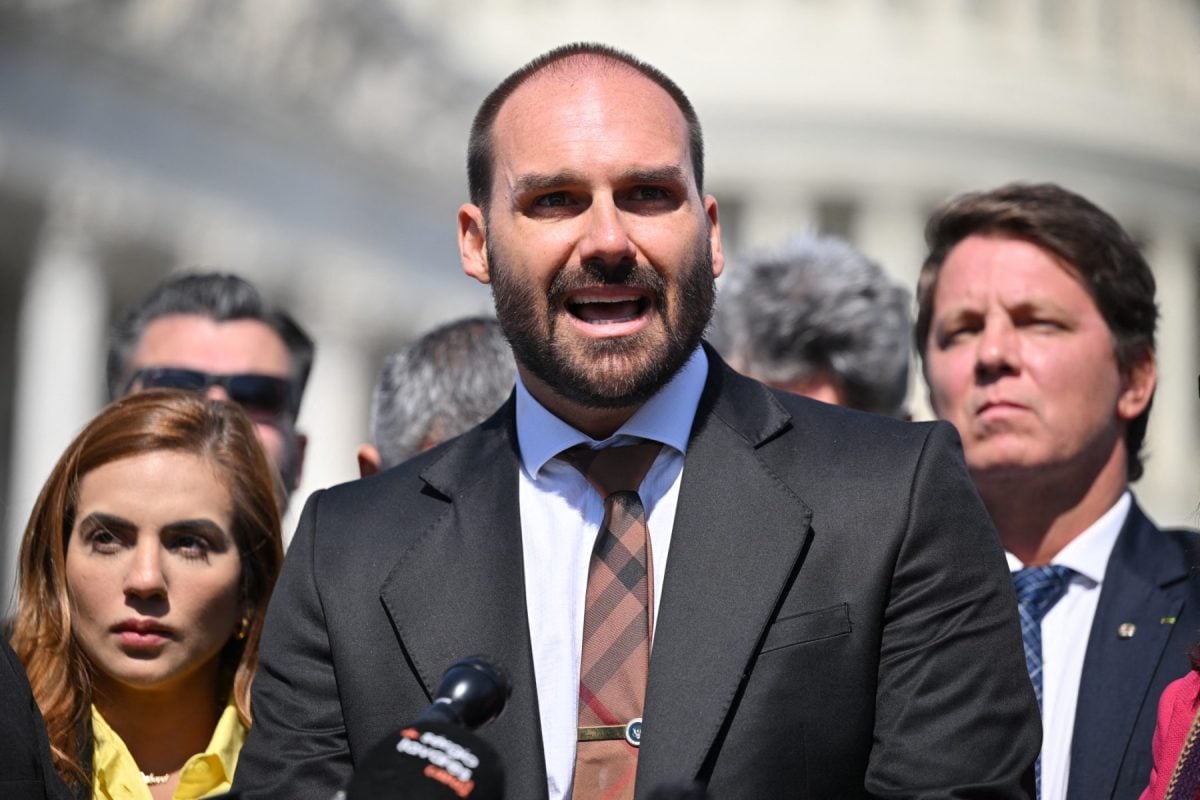
Brazil's World Cup rival, Haiti celebrates hope amid crisis
⚡ Quick Summary
The small Caribbean country will be Brazil's next opponent in Group C of the World Cup on Friday (19), at 9:30 pm (Brasília time), in Philadelphia (United States).
The small Caribbean country will be Brazil's next opponent in Group C of the World Cup on Friday (19), at 9:30 pm (Brasília time), in Philadelphia (United States). The Haitian team will take the field with a new uniform, without reference to the anti-colonial struggle, as required by FIFA. Off the field, Brazil and Haiti have relationships that go beyond football, including culture, humanitarian support and solidarity actions.
In the FIFA rankings, the two teams are at opposite ends, with Brazil in sixth place and Haiti at the bottom. Les Grenadiers (The Grenadiers), nickname of the Haitian team, return to the World Cup 50 years after their first participation, in 1974. A historic feat, in the midst of the serious political and humanitarian crisis in the country, worsened by natural disasters, such as the 2010 earthquake.
Related news:
Scotland beats Haiti and becomes leader of Brazil's group in the World Cup.
Haitian Revolution: the history vetoed by FIFA on a World Cup shirt.
Neymar goes to the field for the first time in training for the Brazilian team.
Proud of their trajectory in the qualifiers, the Grenadiers - a reference to soldiers who threw grenades - believe that football is capable of uniting and being a reason for celebration.
"I'm smiling because we need to keep thinking positive: we can compete at this level", said midfielder Jean-Ricner Bellegarde, in an interview with FIFA, after the debut against Scotland, last Saturday (13). The Haitian team was defeated 1-0, despite having dominated the match, spending almost half the game (47%) with the ball at their feet.
Yon rèv. Yon pèp. Yon ekip. 🇭🇹 pic.twitter.com/K3oprvPmyw
June 13, 2026
Within the four lines, the meeting between Brazil and Haiti also celebrates football as an instrument of a culture of peace. For years, Haiti was one of the countries where the Brazilian team won the most fans, who colored the streets and houses yellow-green at each World Cup.
>> Follow the Agência Brasil channel on WhatsApp
In one of the most emblematic moments, in 2004, at the invitation of President Luiz Inácio Lula da Silva, Brazil took stars such as Ronaldo Nazário and Ronaldinho Gaúcho to a friendly match in Port-au-Prince, the Haitian capital. The "Peace Game", as it was called, marked the beginning of a disarmament campaign in the country, after intense armed conflicts. The idea was to create a link between the United Nations Mission for the Stabilization of Haiti, led by Brazil, and the local population.
Coach of the Brazilian team at the time, Carlos Alberto Parreira remembers the scene before the match, during the journey of the team's train to the stadium. "There were people crowded on the streets, on both sides, in very poor areas, even favelas, but with smiles, waving," he said.
"They knew all the players, they called Ronaldo, Ronaldinho by name, they didn't stop. At that moment, in those hours, the country forgot the war", recalled the coach, world champion with Amarelinha in 1994.
With the historic classification for this edition of the World Cup, more than 20 years after the Peace Game, Haitians are now supporting their national heroes. Among them, center forward Duckens Nazon, Les Grenadiers' top scorer, with 44 goals in more than 80 games. At the end of last year, Nazon told FIFA that Haitians deserved joy and happiness and this justified his dedication to the team. Nazon, born in Europe, like other Haitian players, was decisive in the classification, scoring three goals in a single match.
Top scorer for the Haitian national team, Duckens Nazon was decisive in qualifying for the World Cup, scoring a hat-trick (three goals) in the 3-3 draw against Costa Rica, in the qualifiers - Reproduction Instagram/NAZON
Political situation in Haiti
Since independence, stability in Haiti has been incompatible with foreign interests represented by local elites and a destabilizing factor, said History professor Gabriel Léccas, who researches the Haitian revolution. The country is governed by Prime Minister Alix Didier Fils-Aimé, supported by the United States, and coexists with armed political groups that control the capital.
The situation reflects new colonial relations imposed by powers and their economic interests in the small country, added Léccas, who also has a master's degree in History from the State University of Rio de Janeiro (UERJ).
After a revolution led by enslaved people, Haiti gained independence in 1804, a fact that causes discomfort to this day, to the point that FIFA itself vetoed mention of the revolt on the Haitian team's shirt, which had to be replaced.
"The demand for the removal of the image, both by the International Olympic Committee [IOC}, at the Winter Games, and now, by FIFA, is associated with the silencing of the Haitian Revolution that has been going on for some time," explained the historian.
Léccas pointed out that this does not happen in other countries and sees discrimination in the decision.
"These positions make it clear who can or cannot have their history remembered," he said, referring to the United States' shirt, with red stripes, which are a symbol of the independence of the country hosting the World Cup.
Even after so long, according to the historian, a revolution led by black people is a threat to economic power and a questioning of racial hierarchies.
"In the 19th century, slave elites did not want the Haitian revolution to inspire other initiatives in America," recalled Léccas. "In the 20th and 21st centuries, Haiti became a symbol of resistance and rebellion of this diasporic black Afro-descendant community and this bothers groups that are interested in keeping racist structures functioning."
There has not been another game between Brazil and Haiti since 2004, but the countries maintained ties of solidarity that gained new contours after the earthquake that devastated the country in 2010. The natural disaster killed 200,000 people - including 18 Brazilian soldiers on a Peace Mission - and left 1.5 million homeless.
After the catastrophe, the Ministry of Justice and Public Security facilitated the entry of Haitians into Brazil. Between 2015 and 2024, the national territory received asylum requests from 175 countries. Haitians, preceded by Cubans and Venezuelans, lead the list.
As part of solidarity actions, Brazil also supports the creation of the Haitian National Police, through the training of agents, as one of the most important actions, after leaving the controversial United Nations Mission. When Brazil led UN troops, allegations of human rights violations, sexual abuse and cholera were reported in the country. General Augusto Heleno was the first commander of the mission.
📰 Related Articles
88-year-old woman dies after being attacked by a dog that was scared by fireworks during a Brazil game
G1 Globo
Three-year-old child dies after drowning in school swimming pool in RN
G1 Globo
11pm. Portugal is already in Houston for its World Cup debut
Observador
Cristiano Ronaldo: sleep and nutrition are key to an athlete's longevity
CartaCapital
France x Senegal: Mbappé shines, but FIFA chooses another best on the field
CNN Brasil