Do you want to plant a tree? See which species can (or cannot) be planted in the most forested capital in Brazil
⚡ Quick Summary
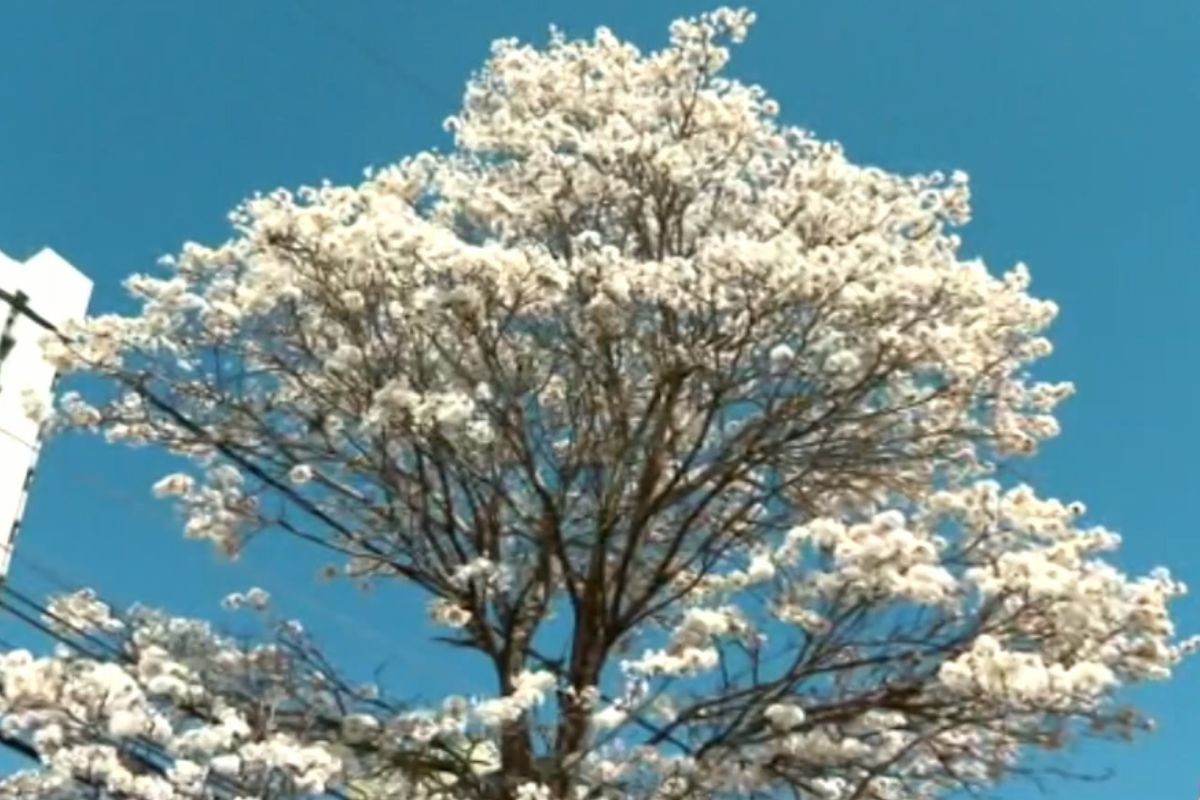
White ipe blooms in Campo Grande Marcus Vinnicius/TV Morena Campo Grande is recognized by the Brazilian Institute of Geography and Statistics (IBGE) as the most forested capital in Brazil.
White ipe blooms in Campo Grande
Marcus Vinnicius/TV Morena
Campo Grande is recognized by the Brazilian Institute of Geography and Statistics (IBGE) as the most forested capital in Brazil. To maintain this scenario and avoid problems such as damage to sidewalks and the electrical network, the city hall provides the Tree Identification Guide and the Urban Afforestation Manual.
The documents guide residents on which species can be planted in different spaces in the city and which should be avoided. They also provide information about trees prohibited by law and the care required during planting.
✅ Click here to follow the g1 MS channel on WhatsApp
🌱 Which trees are recommended?
Now on g1
According to the documents, the most recommended species are those that are compatible with the urban environment and that do not cause damage to infrastructure. In addition to offering shade, they help preserve biodiversity and contribute to environmental balance.
Among the recommended species are:
Yellow Ipe (Handroanthus chrysotrichus)
Pink Ipe (Handroanthus heptaphyllus)
Purple Ipe (Handroanthus impetiginosus)
Rosewood (Jacaranda cuspidifolia)
Sibipiruna (Cenostigma pluviosum)
Golden shower (Cassia fistula)
Quaresmeira (Pleroma granulosum)
📍See which species are recommended for each location
✅ Sidewalks
On sidewalks, the ideal is to plant small or medium-sized trees, with roots that do not harm the pavement. The use of palm trees is not recommended because of the difficulty in handling them.
Small size: Pata-de-vaca, Cascudo-yellow Ipê, Whitebark, Aroeira
Medium sized: Jacarandá, Cagaita, Pau-terra, Lixeira, Sucupira-branca
❗ On sidewalks less than two meters wide, planting trees is not recommended. In these cases, the guideline is to prioritize open areas.
✅ Squares and parks
Locations with more space allow for the planting of larger trees with broad canopies.
Jatobá-do-cerrado, Vinhático, Açoita-cavalo, Canafistula, Guabirobeira, Peroba-rosa, Carandá
✅Central beds
In these locations, the recommendation is to use trees with more vertical growth, so as not to impair visibility for pedestrians and drivers.
Sibipiruna, White Ipe, Rosewood, Golden Rain
🚫 Trees to avoid
Some species can cause problems in urban areas, such as damage to sidewalks and pipes, attraction of insects, large fruits, invasive roots, risk of falling or toxic potential.
See which ones are not recommended:
Mango tree (Mangifera indica)
Seriguela (Spondias purpurea)
Weeping (Schinus molle)
Figueirinha (Ficus benjamina)
Paineira (Ceiba speciosa)
Munguba (Pachira aquatica)
Neem (Azadirachta indica)
Cinnamon (Melia azedarach)
Mulberry (Morus nigra)
Guava (Psidium guajava)
Mango jasmine (Plumeria rubra)
Napoleon's Hat (Cascabela thevetia)
Privet (Ligustrum lucidum)
Citrus fruits, such as lemons and oranges (Citrus spp.)
Palm trees, such as bocaiúva, jerivá, phoenix palm and imperial palm
According to the manual, these species require more maintenance and can cause impacts to the urban structure and the environment.
🚷 Species prohibited by law
Two species cannot be planted in Campo Grande, after being prohibited by municipal law:
Myrtle (Murraya paniculata): hosts the insect that transmits greening, a disease that affects citrus plantations.
Leucena (Leucaena leucocephala): invasive species that threatens native vegetation.
🛠️ Care when planting
The Urban Afforestation Manual also provides guidance to ensure the healthy development of seedlings:
Keep the seedling neck visible and without accumulated soil;
Water with around four liters of water per day until set;
Avoid walls and shackles around the trunk;
Use firm stakes, without squeezing the stem.
This care helps the tree grow and contributes to the safety of public spaces.
To check out the complete guide, click here, and to check out the complete manual, click here.
Watch videos from Mato Grosso do Sul:
📰 Related Articles
Three people are arrested for raping a 13-year-old teenager in Amazonas; victim became pregnant after abuse
G1 Globo
Analysis: Leaders' strategy is to prevent Trump from leaving before the end of the G7
CNN Brasil
Valverde after draw in World Cup opener: “We will work three times as hard”
CNN Brasil
Canobbio reacts optimistically after Uruguay’s draw: “Glass half full”
CNN Brasil/https://i.s3.glbimg.com/v1/AUTH_59edd422c0c84a879bd37670ae4f538a/internal_photos/bs/2026/e/B/Ay9mEtQ2mhxsVaTDBaOA/image-79-.png)
Woman dies after accident between pickup truck and truck on BR-230, in Pará
G1 Globo