Unifap preserves Icomi's historical collection with more than 50 years of documents
⚡ Quick Summary
Unifap has a preservation center with several Icomi documents The Memory Center of the Federal University of Amapá (Unifap) stores more than 50 years of documents from Icomi, a company that explored manganese in Serra do Navio.
Unifap has a preservation center with several Icomi documents
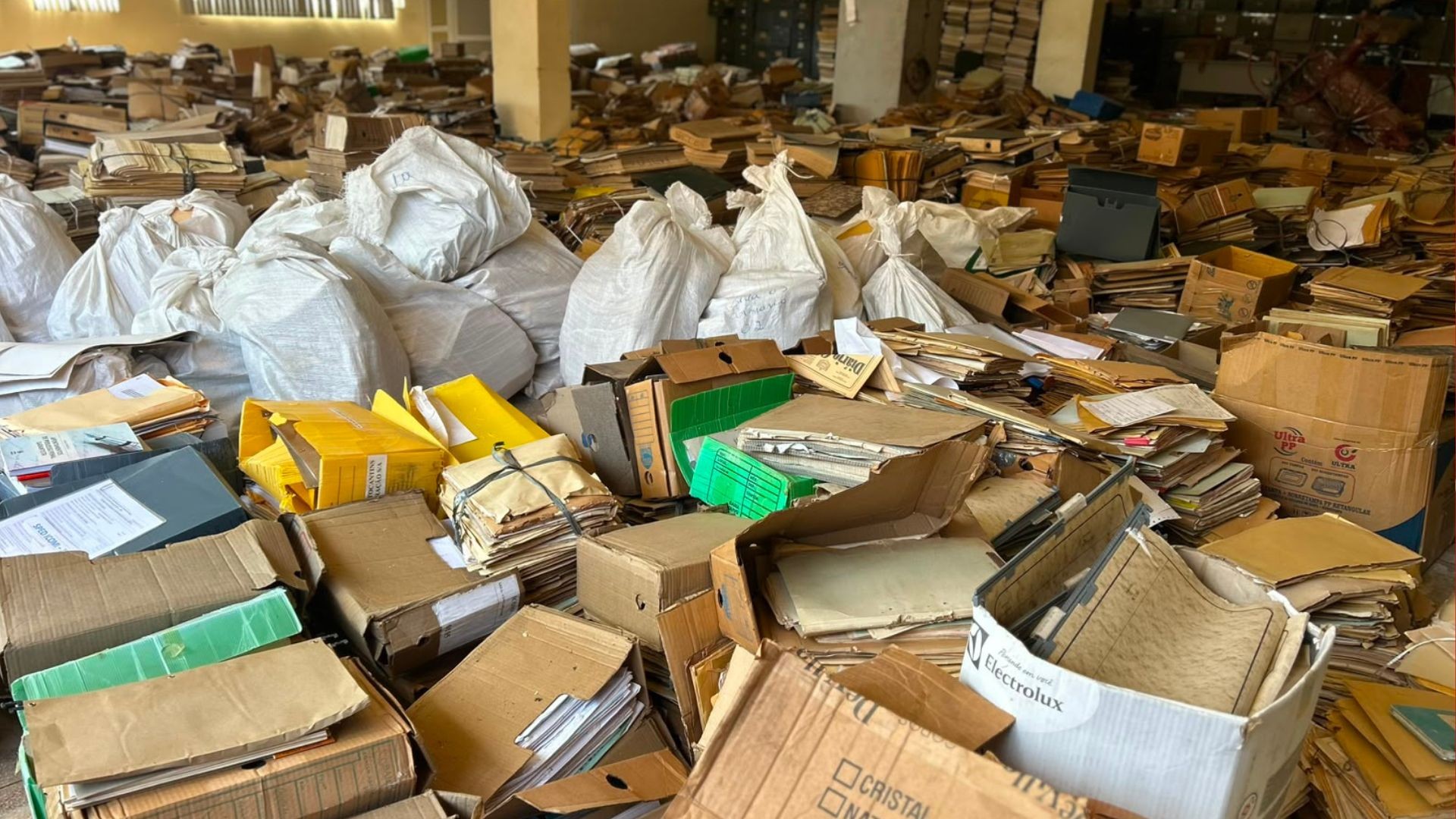
The Memory Center of the Federal University of Amapá (Unifap) stores more than 50 years of documents from Icomi, a company that explored manganese in Serra do Navio. The material shows how the mining company impacted the economy and social life of the State.
The documents were donated and transported in 12 trucks. The amount is equivalent to around 2 kilometers of stacked records.
Download the g1 app to see AP news in real time and for free
Previously, the collection was in Vila Amazonas, in Santana, a neighborhood created by Icomi to house workers.
Among the papers are medical records from hospitals in Vila Amazonas and Serra do Navio, accounting records and employee files. The collection brings together data from the first workers to the last hired.
According to researcher Antônio Neto, the objective is to provide public utility to the documents. In one case, the files helped a former employee obtain retirement.
"One of the reasons for this mass of documents to be kept is its potential in guaranteeing rights. One example was the case of a man who worked at the company and still had a few years left before he retired. With the information, he came to us, presented the demand and, together with a colleague who had worked in the company's archive at the time, managed to locate the document and guarantee retirement", he explained.
READ MORE:
Mutirão offers free services for the elderly in Macapá this Monday (15); see list
See how to authenticate your high school certificate in Amapá
Archives from Icomi’s more than 50 years of operations
Michele Ferreira/Rede Amazônica
At the Center, fellows and researchers clean, organize and describe documents. The boxes are changed to preserve the material, and professionals wear protective equipment.
For Alexandre Amaral, responsible for the Center, the documents show the social and political life of Amapá. They help to understand events that marked eras and influenced society.
"What many call a dead archive, for us is a very living documentary mass. It not only tells our story, but shows where we came from and where we want to go from the research", said Amaral.
The Memory Center operates on the top floor of Unifap's central library and has support from public and private bodies.
Did you see that? Unifap researchers catalog centuries-old court cases in Amapá
Memories Revealed: safeguarding the legal and cultural history of the state of Amapá
Amazon Network/Reproduction
Icomi and mining
The deposits were discovered in 1945. Exploration began in 1957, in partnership with the North American company Bethlehem Steel. The agreement provided for 51% Brazilian capital and 49% foreign capital.
The company created a complete structure: open-pit mine, 194-kilometer railway, Port of Santana and working-class villages such as Serra do Navio and Vila Amazonas.
Between 1957 and 1998, it was the largest mineral project in the Amazon. There were environmental impacts, such as deforestation and changes in water, but in specific areas.
Archives from Icomi’s more than 50 years of operations
Michele Ferreira/Rede Amazônica
Ore, manganese, stored, Amapá, Serra do Navio, Icomi
Fabiana Figueiredo/Archive g1
See the latest news from g1 Amapá
VIDEOS with news from Amapá:
🗞️ 4 sources covered this story

Agreement with Iran better than the one in 2015 is “unlikely”
Observador‘AI with Chinese characteristics’: why the population of China sees technology with more optimism
Brasil de Fato
Marilyn Monroe in more than 100 objects exhibited in Lisbon
Observador
Whale cemetery holds more than bones at the bottom of the sea
CNN Brasil📰 Related Articles

Who was Oliver Tree? American musician who died in Rio had 11 million listeners and collaborated with David Guetta
G1 Globo
Argentine YouTuber Gaspi and American singer Oliver Tree are among the victims of a helicopter accident in Rio; see list
G1 Globo
Outpatient clinic to support dengue and respiratory diseases has a new address in Divinópolis
G1 Globo
Owner of helicopter involved in accident in RJ was fined by Anac in 2025
G1 Globo
Agreement with Iran better than the one in 2015 is “unlikely”
Observador