Body of dead boy poisoned with pellets will be buried this Saturday in Baixada Fluminense
⚡ Quick Summary
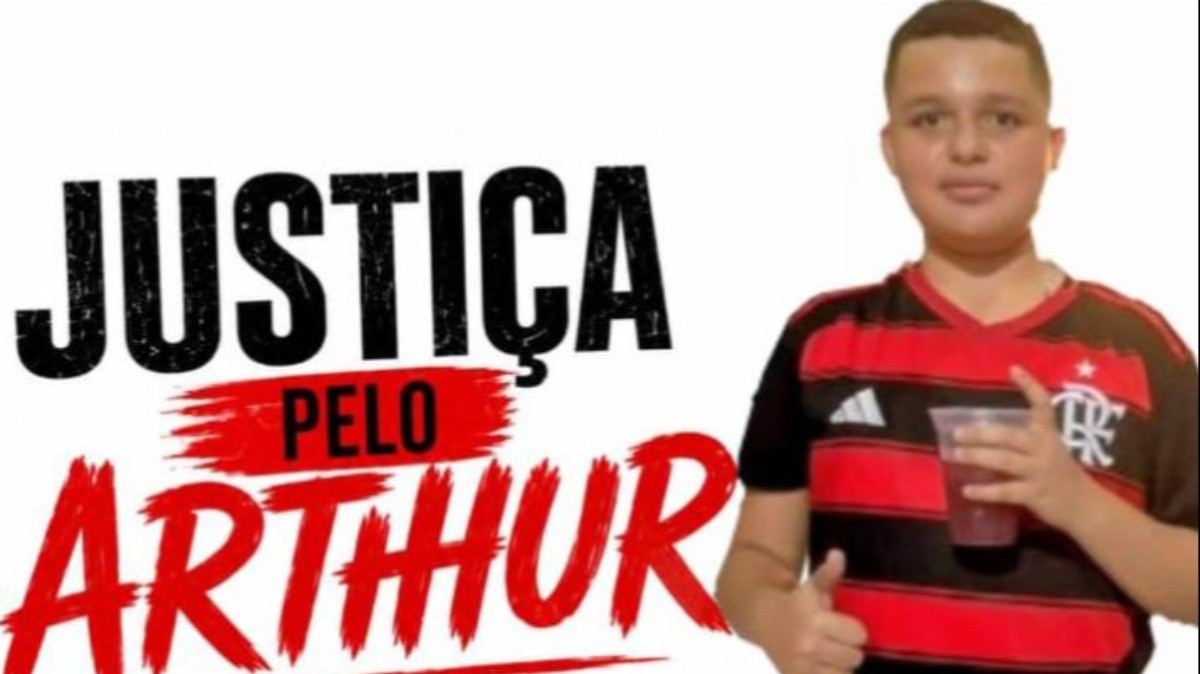
Family poster asking for justice in Arthur's case Reproduction/Personal Archive The body of the boy Arthur de Mello da Silva, aged 11, who died after being poisoned with pellets, will be buried in the Vila Rosali Cemetery, in São João de Meriti, this Saturday afternoon (13).
Family poster asking for justice in Arthur's case
Reproduction/Personal Archive
The body of the boy Arthur de Mello da Silva, aged 11, who died after being poisoned with pellets, will be buried in the Vila Rosali Cemetery, in São João de Meriti, this Saturday afternoon (13). The wake is scheduled to begin at 1pm and the burial at 4:30pm.
The result of the boy's toxicological examination report confirmed that he ingested terbufos-sulfoxide, popularly known as chumbinho. He died on Thursday night after more than a week in hospital.
As a result, the main line of investigation by the Baixada Fluminense Homicide Police Station (DHBF) is that the child may have been poisoned. The substance was detected in gastric lavage analyzed at the Legal Medical Institute (IML).
🟩g1 Rio is on GloboPop, Globo's new vertical short video app, available for free on your cell phone. On the app, you can follow the g1 Rio stage so you don't miss any episode. Download GloboPop.
In addition to the pellet, experts also found traces of lidocaine and midazolam in the material collected from the child, but the detection of the substances may be related to medical care at the hospital. According to relatives, on May 31, at a party held by his maternal grandmother, he ate a piece of cake and fell ill.
11-year-old boy hospitalized with suspected poisoning dies after eating cake
The incident had been registered on the 2nd at the 64th DP (São João de Meriti) by the boy's father, Ademir de Mello, who already suspected that his son had ingested pellets, a substance often sold illegally as rodenticide.
In recent days, the family reported that the child's health condition was delicate. According to his father, Arthur had severe brain swelling and responded to medication in a limited way.
The boy's mother, Lindiane da Silva, asked for the case to be clarified. “My son’s cure is Justice,” he said.
With the results of the toxicological report, intentional contamination becomes the main suspicion of the DHBF, which took over the case after Arthur's death. Witnesses must be heard and other steps are underway to identify what caused the child's clinical condition. Arthur's father has already given a statement.
🗞️ 4 sources covered this story

Electric cars will pay 35% tax from 2026; see how this affects prices
CartaCapitalIran says signing of provisional agreement with US will not be Sunday (14)
CNN BrasilIran says signing of provisional agreement with US will not be Sunday (14)
CNN Brasil
Report detects pellets in the body of a boy who died after eating cake in RJ
CNN Brasil📰 Related Articles
Electric cars will pay 35% tax from 2026; see how this affects prices
CartaCapital
Does freshly grinding coffee make a difference? See how to transform your drinking ritual at home
CartaCapital
Tela Brasil: free government streaming releases more than 500 national films
CartaCapital
APA president refuses to talk about umbrellas and concessions
ObservadorCompetition balloons land off course during race in the interior of SP
G1 Globo