


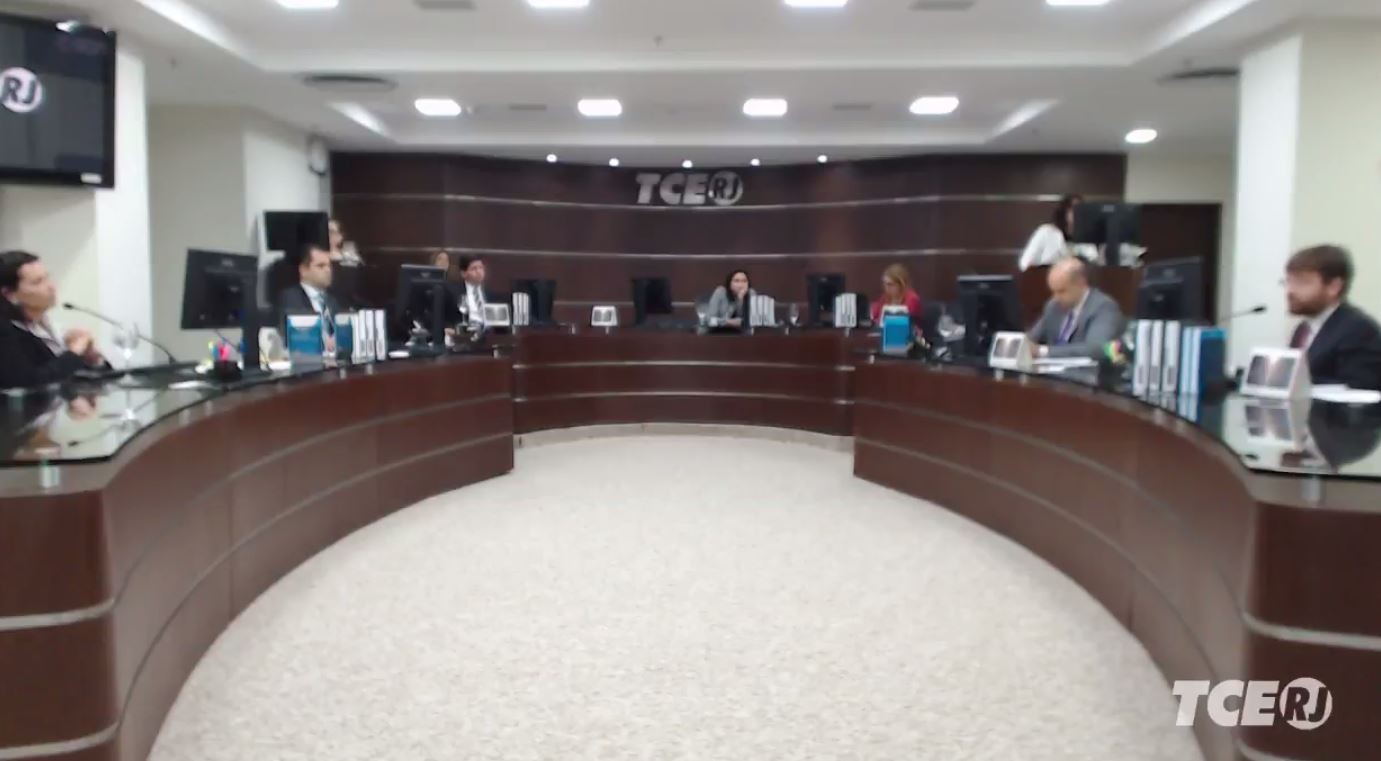
After creating new trinkets, three TCE-RJ prosecutors received R$4.2 million each in just one month
⚡ Quick Summary
With new trinkets, three TCE-RJ prosecutors earned R$4.2 million each in 1 month After revealing that a counselor at the Rio de Janeiro State Court of Auditors (TCE-RJ) received almost R$3 million in a single month, a survey by RJ2 identified even larger payments within the court.
With new trinkets, three TCE-RJ prosecutors earned R$4.2 million each in 1 month
After revealing that a counselor at the Rio de Janeiro State Court of Auditors (TCE-RJ) received almost R$3 million in a single month, a survey by RJ2 identified even larger payments within the court.
According to the analysis of paychecks issued from October 2025 onwards, three attorneys each received R$4.2 million net in a single month. The amounts were paid to the TCE's attorney general, Vittorio Constantino Provenza, to the deputy attorney general Sergio Paulo de Abreu Martins Teixeira and to the former attorney general Henrique Cunha de Lima.
The payments are part of a set of extraordinary remunerations identified by RJ2 after the regulation of new benefits in court.
The survey also showed that ten senior TCE officials together received more than R$26 million net in just one month. According to the report, part of the amounts correspond to compensation amounts accumulated over ten and even twenty years and paid in one lump sum.
📱Download the g1 app to see news from RJ in real time and for free
The analysis of the paychecks identified two resolutions signed by the president of the TCE-RJ, Márcio Pacheco, shortly before the payments.
The first was published in May 2025, shortly after the approval, by the Legislative Assembly of Rio (Alerj), of a law that expanded benefits originally intended for the State Public Ministry. During the vote, an amendment also included members of the Judiciary and the Court of Auditors.
The second resolution was published in September and regulated provisions of the new legislation.
After the approval of the law and the court's normative acts, new benefits became part of the remuneration of court employees.
In a note, the State Court of Auditors stated that the payments mentioned are not related to the projects approved by Alerj nor to normative acts published by the court itself.
According to the TCE, the amounts correspond to compensation amounts accumulated over years of work and relating to rights already established.
The court added that the payments respected decisions of the Federal Supreme Court and highlighted that it returned budget resources to the state government in 2025.
Almost R$3 million in one month
The largest payment identified was from counselor Rodrigo Melo do Nascimento, who received almost R$3 million in October.
According to his pay slip, he received more than R$388,000 in remuneration after deductions and more than R$2.5 million in other compensation amounts, which included, for example, bonuses for overwork.
Another case that caught attention was that of counselor Mariana Montebello Willeman. She received salaries of more than R$200,000 for five consecutive months and, in February of this year, the payment exceeded R$800,000, with more than R$141,000 being remuneration after deductions of more than R$728,000 classified as other compensation amounts.
The president of TCE-RJ, Márcio Pacheco, received more than R$360,000 in October. The paycheck records more than R$172 thousand in remuneration after deductions and more than R$195 thousand in compensation funds.
TCE-RJ rejected request to suspend RJ subway concession, this Tuesday (7)
Reproduction
In the same month, counselor José Gomes Graciosa received more than R$1 million, of which R$321 thousand was remuneration after deductions and more than R$828 thousand in other compensation amounts.
The vice-president of the Court, Thiago Pampolha, the most recent member of the panel, received in March almost R$100,000 in payments classified as other compensation amounts, totaling R$95,815.53 under this heading.
Over the period analyzed, the seven sitting councilors together received R$11.8 million.
Convict received food assistance
Two sitting counselors are removed from their duties at the court. Marco Antônio de Alencar, dismissed four years ago and facing corruption charges, received around R$600,000 in the period analyzed.
Domingos Brazão, sentenced to 76 years in prison for being identified as having ordered the murder of councilwoman Marielle Franco and imprisoned since March 2024, continues to receive a salary of approximately R$35,000.
The survey also identified that Brazão received almost R$10,000 in food assistance between February and April this year.
Senior analyst at Transparência Brasil, Bianca Berti, stated that the payment of these compensation payments is not illegal, but is "immoral".
"These funds were regulated by each body. So they had a certain amount of autonomy to define how they would pay and what type of benefits they wanted to distribute to both counselors and employees."
"In this specific case of the Rio de Janeiro State Court of Auditors, for example, they are, in principle, legal. Immoral and irrational," she stated.
STF imposed transparency
The RJ2 survey was only possible after the Federal Supreme Court determined greater transparency in the disclosure of public bodies' payrolls, preventing the use of nomenclatures that would make it difficult to identify the funds received.
The new criteria for paying so-called penduricalhos were defined by the STF in March and came into effect in May.
Since then, according to the survey, advisors' payments have been within the new established limit, of up to approximately R$78,800 per month, considering the permitted installments.
For Bianca Berti, the country needs to move towards clearer regulation of these funds.
"We understand that it would be very positive if Brazil managed to create legislation that would take into account these remunerations as a whole and the benefits that can be paid and that cannot be paid."
"And mainly it is to prevent bodies from having the autonomy to distort funds that are remuneration, which are benefits arising from the work that the public servant performs, into compensation funds, which is the practice that this high level of certain institutions has engaged in in this process of maximizing their own earnings", he commented.
What the TCE says
In a note, the State Court of Auditors stated that all payments strictly complied with current legislation, decisions of the Federal Supreme Court and applicable understandings on the subject.
The body declared that the amounts highlighted do not correspond exclusively to the monthly remuneration of directors, but include amounts of a personal and indemnity nature relating to rights accumulated over the years and supported by legislation and the jurisprudence of higher courts.
According to the TCE-RJ, a significant part of these amounts arises from the payment of past installments of acquired and regularly recognized rights, having been paid in full in some cases based on criteria of economy and administrative efficiency.
The Court also informed that it currently observes the remuneration ceiling allowed by the Constitution and the consolidated jurisprudence of the STF, admitting only compensation installments and authorized rights of a personal nature, and stated that it adopts the same parameters used by other bodies of the Justice system, such as the Court of Justice and the Public Prosecutor's Office.
🗞️ 1 sources covered this story

📰 Related Articles
Operation targets trio suspected of murdering young girl in front of supermarket in Boa Vista
G1 Globo
Man injured after being hit by bus in the center of João Pessoa
G1 Globo
In a new decision, the Court suspends the participation of the gang in the Junino Circuit of Rio Branco
G1 Globo
Farm owner is fined R$3,600 for cutting down native trees in the interior of SP
G1 Globo
Cascais. President of the council of Alcabideche accused
Observador