El Niño is already acting, confirms US agency: find out the possible consequences for RS
⚡ Quick Summary
'Strong' El Niño forecast in 2026 revives flood alert and tests RS's preparedness The United States Oceanic and Atmospheric Administration (NOAA) confirmed this Thursday (11) the formation of El Niño.
'Strong' El Niño forecast in 2026 revives flood alert and tests RS's preparedness
The United States Oceanic and Atmospheric Administration (NOAA) confirmed this Thursday (11) the formation of El Niño. The natural climate phenomenon occurs when the surface waters of the Equatorial Pacific Ocean become warmer than normal.
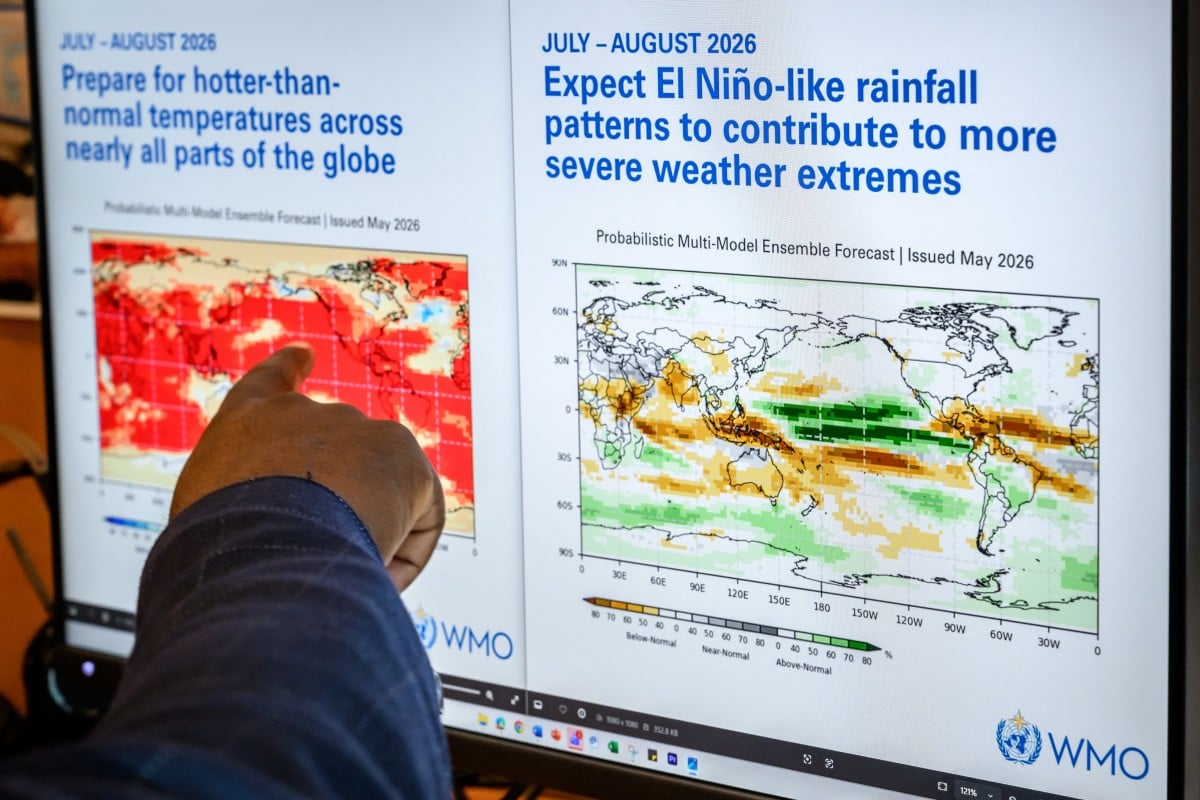
The North American agency's bulletin indicated a 63% probability of the phenomenon becoming very strong, with the potential to be among the largest recorded since 1950. In Rio Grande do Sul, the consolidation of the scenario reignites the warning for extreme rains.
📲 Access the g1 RS channel on WhatsApp
"El Niño conditions are present and expected to intensify during the 2026-2027 winter in the Northern Hemisphere," the US climate agency said.
The development of the phenomenon in the first half of 2026 was already expected after months of gradual warming in the Pacific. In May, the chance was 82%.
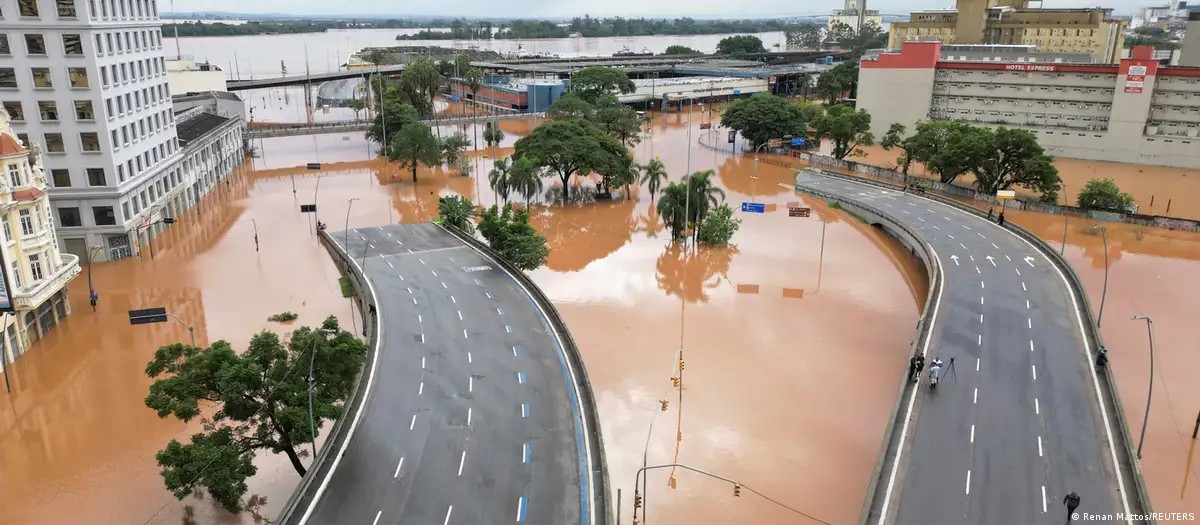
The state is still dealing with the consequences of the 2024 climate tragedy, when Porto Alegre's protection system collapsed and the level of the Guaíba reached 5.37 meters. That year, the catastrophe resulted from the combination of an El Niño that began in 2023, cold fronts and the warming of the Atlantic Ocean. More than 180 people died and almost 95% of Rio Grande do Sul's municipalities were affected.
What is the El Niño phenomenon?
El Niño and La Niña are two phases of the same climate phenomenon, called ENSO (El Niño-Southern Oscillation).
🔥 El Niño is a natural climate phenomenon that occurs at irregular intervals, generally every 2 to 7 years. It is characterized by warming greater than or equal to 0.5ºC of the surface waters of the Equatorial Pacific Ocean. This warming alters the circulation of winds and the distribution of heat and humidity around the globe, impacting climate patterns in different parts of the world.
❄️ La Niña is the opposite: a cooling of these same waters, with equally significant effects, but in the opposite direction, and tends to cause drought in the South.
The effects of the El Niño phenomenon
Art/g1
What are the practical consequences for RS?
In Brazil, the effects of El Niño are distinct: while it causes droughts in the North and Northeast regions, it significantly increases the volume and frequency of rain in the South.
The relationship between El Niño and extreme events in southern Brazil appears in a study by the UFRGS Hydraulic Research Institute, published in 2025 in the scientific journal Communications Earth & Environment. The research analyzed 45 years of river flow data from 788 monitoring stations in South America and concluded that the phenomenon increases the probability of flooding in the Prata Basin, a region that covers part of the state's territory.
Meteorologist Josélia Pegorim, from Climatempo, assesses that the current El Niño has an intensity comparable to that of 2023. She projects that the local effects will begin in winter, but highlights that the period of greatest risk is spring, a season that historically already concentrates intense precipitation events in the South region.
Strong El Niño in 2026 revives flood alert in RS and tests preparedness after 2024 tragedy
For researcher Rodrigo Paiva, from the Hydraulic Research Institute (IPH) at the Federal University of Rio Grande do Sul (UFRGS), it is difficult to say whether there will be a flood like the one in 2024, but El Niño requires the acceleration of preventive measures.
Among the improvements cited by the expert are investments in Civil Defense, forecasting systems and the reconstruction of bridges and roads. The new structures were designed more resiliently to withstand the impacts of climate change.
However, the researcher warns that the main vulnerability persists in the capital. Porto Alegre's flood protection system, formed by the Mauá Wall, dikes and pump houses, was severely damaged and has not yet been fully recovered. According to Paiva, presentations from the Municipal Department of Water and Sewage (Dmae) show that only part of the faults have been resolved, while the majority remain in the design phase or with work in progress. If a major flood occurs, parts of the city may flood again.
The IPH expert concludes that preparation needs to be continuous, as extreme events can occur in any year. He assesses that the population's recent memory of the tragedy helps to mitigate damage, but argues that the strategies remain for posterity through permanent plans.
Map shows recent changes in the oceans used to monitor El Niño and La Niña.
Sentinel-6 Michael Freilich/NASA/NOAA
Extreme rain in Rio Grande do Sul in 2024, caused by overlapping climate events, including El Niño
Renan Mattos/REUTERS via DW
VIDEOS: Everything about RS
🗞️ 2 sources covered this story
📰 Related Articles

Insurance defends changes to the Regional Finance Law
Observador
Fire in Terras de Bouro fought by 200 operatives
Observador
Brazil: urban art from the World Cup returns to Rio de Janeiro
Euronews PT
Toucan is filmed eating bread and biscuits and veterinarian warns of risks to the animal
G1 Globo
EU closes technological partnership with Brazil, seeks to reduce dependence on the USA
G1 Globo