


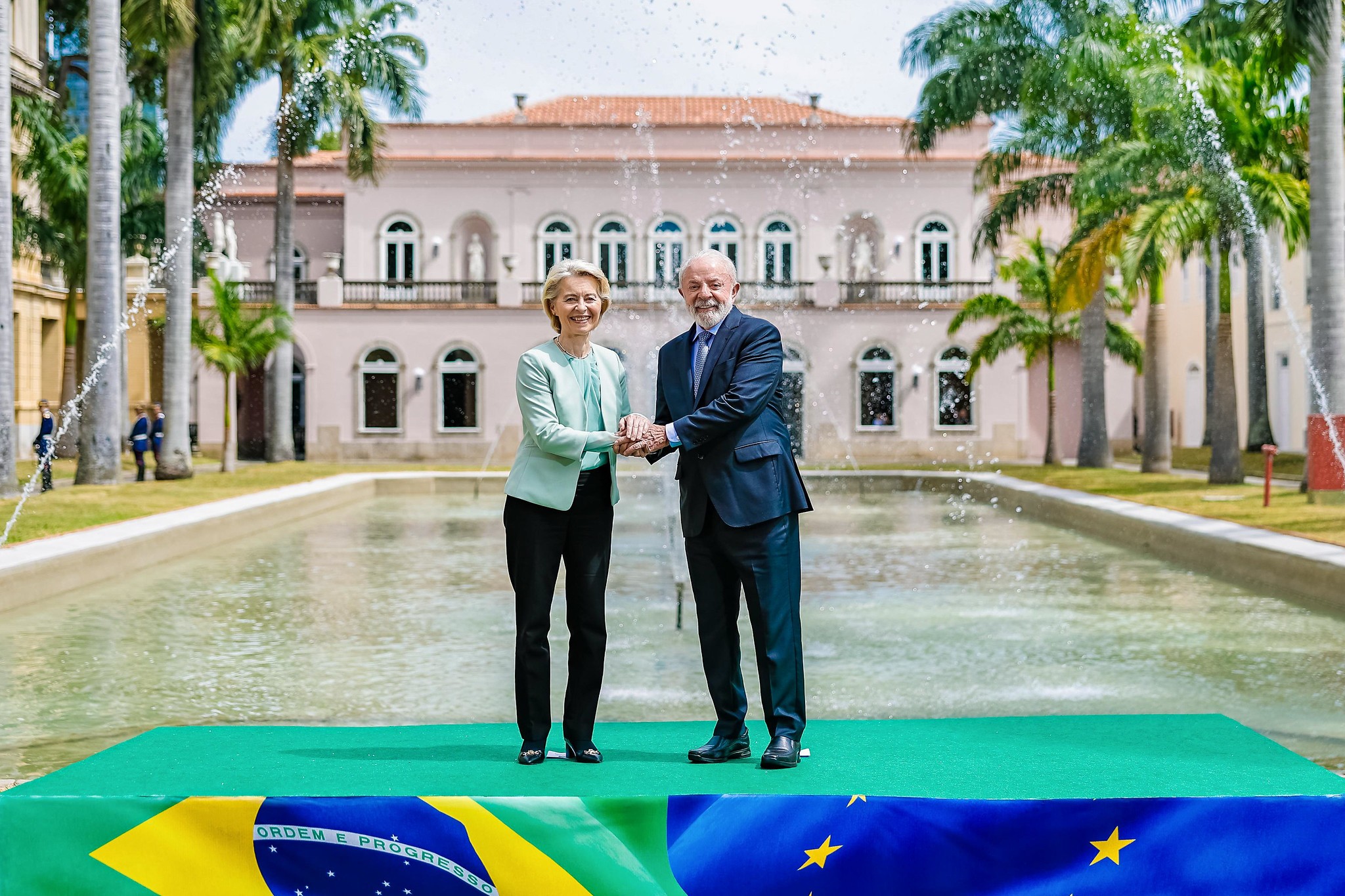
EU closes technological partnership with Brazil, seeks to reduce dependence on the USA
⚡ Quick Summary
The European Union and Brazil will establish a digital partnership as the bloc seeks to deepen ties with more countries and reduce its dependence on United States technology, a European Commission official said on Thursday.
The European Union and Brazil will establish a digital partnership as the bloc seeks to deepen ties with more countries and reduce its dependence on United States technology, a European Commission official said on Thursday.
The partnership will focus on cooperation in areas such as data, connectivity, cybersecurity and protection of minors, said Henna Virkkunen, executive vice-president of the European Commission for Technological Sovereignty, Security and Democracy during the Rio Web Summit conference.
"This is something we want to do with our trusted partners," Virkkunen said in an interview with reporters. "Create better opportunities for companies on both sides, especially now that we have the Mercosur trade agreement."
At the beginning of this year, the European Union and Mercosur (formed by Argentina, Brazil, Paraguay and Uruguay) formally signed an agreement that creates one of the largest free trade zones in the world.
Brazil will now become the fifth country to cooperate with the European bloc on digital issues, joining Canada, Japan, South Korea and Singapore.
Virkkunen is expected to meet this Thursday with vice-president Geraldo Alckmin and continue meetings with Brazilian authorities on Friday, to sign the technological partnership agreement.
"Brazil is a country that broadly shares the values of the European Union," said Virkkunen. "Thus, Brazil is committed to open markets, safe technologies and also to a rules-based order," he said, adding that the EU intends to work to create human-centered technologies.
The EU, she said, wants to build partnerships because it knows that no one can remain competitive alone. At the same time, it works to reduce dependencies in key areas such as chip manufacturing and cloud computing services to avoid what it called the "off-switch element of our services."
The European Commission has just launched a technological sovereignty package with measures to reinforce the EU's internally developed technology, including its cloud services.
She stated that the initiative comes at a time when Europe depends heavily on three North American giants, Amazon, Google and Microsoft, which together control around 70% of the European cloud computing market.
Lula meets with European Union representative in Rio de Janeiro
Ricardo Stuckert/ Presidency of the Republic
🗞️ 1 sources covered this story

📰 Related Articles

End of loud sound? Chamber approves new rule for buses in Maceió
G1 Globo
Doctors become defendants for deaths of pregnant woman and baby in the interior of SP
G1 GloboMan sets up sleeping net on the fence of his ex's house and is arrested for violating protective measures, police say
G1 Globo
“Cork is perhaps Europe’s greatest natural resource”
Observador
Bezos: Prometheus will 'accelerate the invention cycle'
Observador