Millions of bees can live underground; understand how this is possible
⚡ Quick Summary
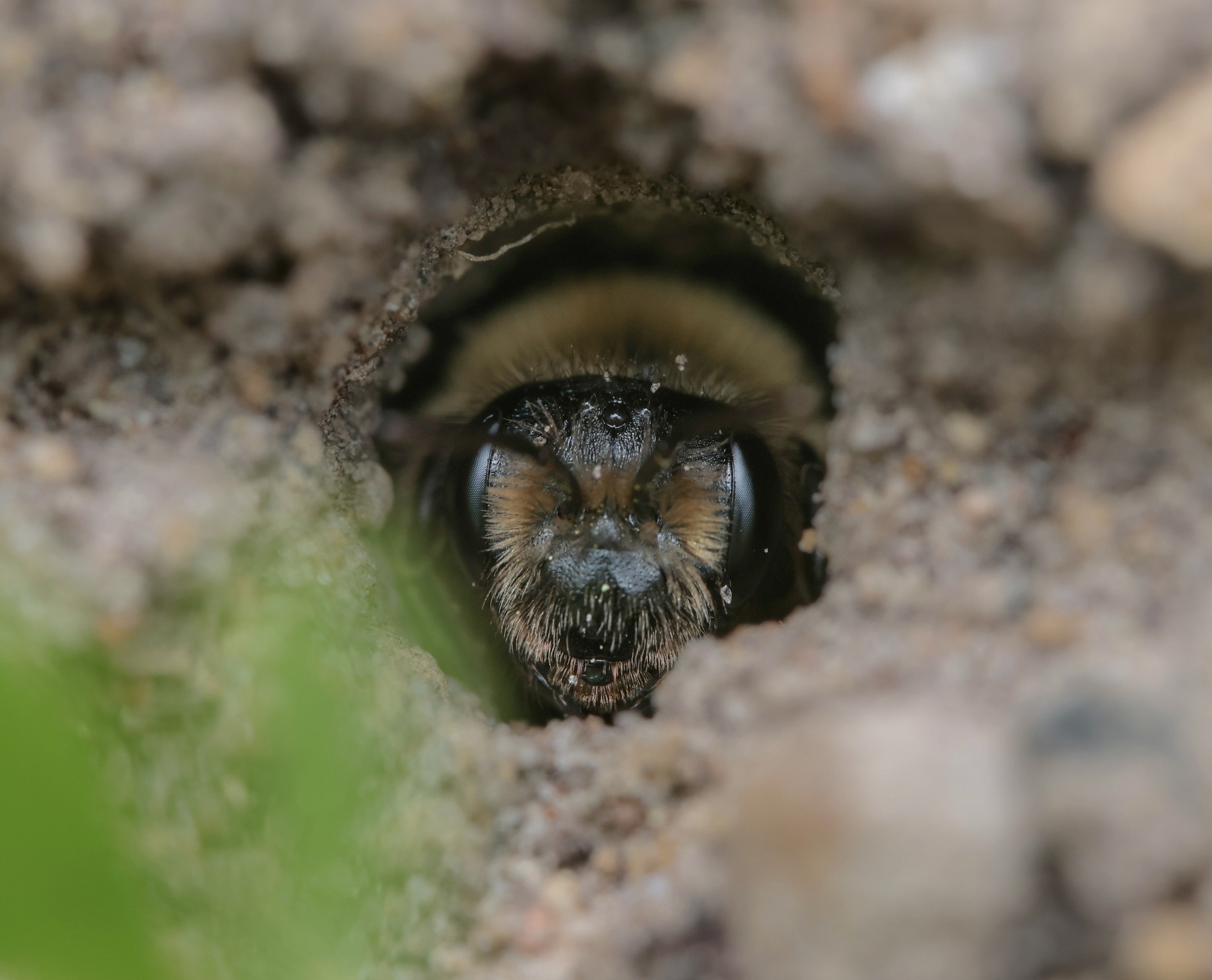
Image of an Andrena regularis bndanforth/iNaturalist When we think of bees, the most common image is of a hive hanging from a tree or installed in a breeding box.
Image of an Andrena regularis
bndanforth/iNaturalist
When we think of bees, the most common image is of a hive hanging from a tree or installed in a breeding box. But some of these important pollinators live in a much less visible environment: underground.
📱 Receive content from Terra da Gente also on WhatsApp
📱Bookmark g1 on Google and follow the main news of the day
The topic gained prominence after the discovery of millions of bees in a cemetery area in New York, USA. The case drew attention to a little-known universe, made up of species that build their nests underground and play a fundamental role in maintaining ecosystems.
To understand how these underground structures work, Terra da Gente spoke with Fabio Santos do Nascimento, professor in the Department of Biology at USP in Ribeirão Preto and an insect specialist.
According to the researcher, nesting in the ground represents the most ancestral condition of bees.
"In bees, underground nests are the most ancestral or 'primitive' condition. Millions of years ago, the ancestor of bees, much like a wasp, made their nests in cavities or excavated tunnels to lay their eggs in galleries", he explains.
See what's trending on g1:
Now on g1
Nests built above ground or in non-underground cavities emerged later in the group's evolutionary history.
This ancestral habit remains present in several species currently found in Brazil. Among stingless bees, known scientifically as meliponines, around 50 species nest in the ground. The remaining, approximately 550 described species, use tree hollows, pre-existing cavities or aerial structures to establish their colonies.
See more news from Terra da Gente, on g1:
DISCOVERY: Serra do Japi reveals species of dragonflies never seen in São Paulo
'OCEAN WITHOUT LIGHT': Study reveals enigma about the most abundant microbes in the depths
MURIQUI: Group of the largest primate in the Americas will be reintroduced after seven years of preparation
Underground architecture
Structures built underground vary depending on the species.
In solitary bees, nests are usually formed by a main gallery connected to small tunnels. In these compartments, the female lays eggs and leaves the food necessary for the development of future larvae.
Structure of underground bee nests
Personal archive / Fabio Santos do Nascimento
Among stingless bees that live on the ground, the organization can be much more complex.
The nests have a main entrance connected to an access tunnel that leads to the chamber where the brood cells and pots used to store honey and pollen are located.
This entire structure receives additional protection through one or more layers of batumen, a material produced from a mixture of wax and clay. This coating helps to isolate the inside of the nest from humidity and variations in soil temperature.
A strategy perfected over millions of years
Individual of the species Andrena regularis
mantises / iNaturalist
Bees have existed for millions of years and have gone through different periods of environmental change throughout their evolution.
According to the researcher, the architecture of the nests, biological cycles and defensive behaviors were improved throughout this process.
"We can say that the well-protected architecture of the nests, their biological cycles and their defensive behavior have been improved over these millions of years", he states.
Among stingless bees, the ability to store food in jars of honey and pollen also functions as an important survival strategy. These reserves help colonies face more critical periods, marked by unfavorable weather conditions.
Growing threats
Despite their long evolutionary history, bees face increasing pressures caused by human activities. Urban expansion reduces the spaces available for nesting, while the increasing mechanization of soils in agricultural areas alters environments used by different species.
"Bees are losing space to increasing urbanization and also to the increasing mechanization of soils in agricultural spaces", warns Nascimento.
Therefore, the preservation of natural fragments, forests and protected areas is considered essential for the maintenance of these populations.
Furthermore, the importance of bees goes far beyond honey production. Pollination carried out by these insects is a fundamental ecosystem service for countless native plants and also for several agricultural crops.
Enlarged image of an Andrena regularis
cedarbee/iNaturalist
According to the researcher, many plant species depend on specific bees to complete their reproduction process. The reduction of these populations can cause significant impacts on ecological chains built over millions of years of interaction between plants and pollinators.
"The absence of bees would certainly cause a significant ecological problem, as several plant species depend exclusively on specific bees for their pollination", he highlights.
A positive sign in the yard
The case recorded in the US cemetery illustrates what can happen when a species finds favorable conditions to establish itself.
According to the researcher, the solitary bee Andrena regularis found a suitable environment for nesting at the site, with available vegetation and low movement of people. These characteristics favored an unusual population expansion.
Therefore, finding the entrance to a nest in the backyard, on a plot of land or in another area close to the home can be seen as a positive sign.
According to the expert, the presence of these bees indicates that the environment continues to offer conditions for the survival of a native species that is important for ecological balance.
"The person can consider themselves lucky, as they are maintaining a native species that plays its role in the ecosystem", he concludes.
Furthermore, subsequent generations tend to reuse the same nesting sites, maintaining the life cycle of these pollinators that help sustain the biodiversity of Brazilian biomes.
VIDEOS: Terra da Gente Highlights
See more content about nature on Terra da Gente
📰 Related Articles

House is destroyed after fire from burning in a lot spreads and hits property in Araguari
G1 Globo
4 reasons why it is difficult to maintain a ceasefire in Iran
BBC Brasil
Sole survivor of plane crash in Marília is discharged from hospital
G1 Globo
World Cup 2026: Brazilian Arena in SP will broadcast games and shows; Ivete and Péricles inaugurate the space, see schedule
G1 Globo
Senate Committee approves new salary floor for doctors and dentists
Agência Brasil