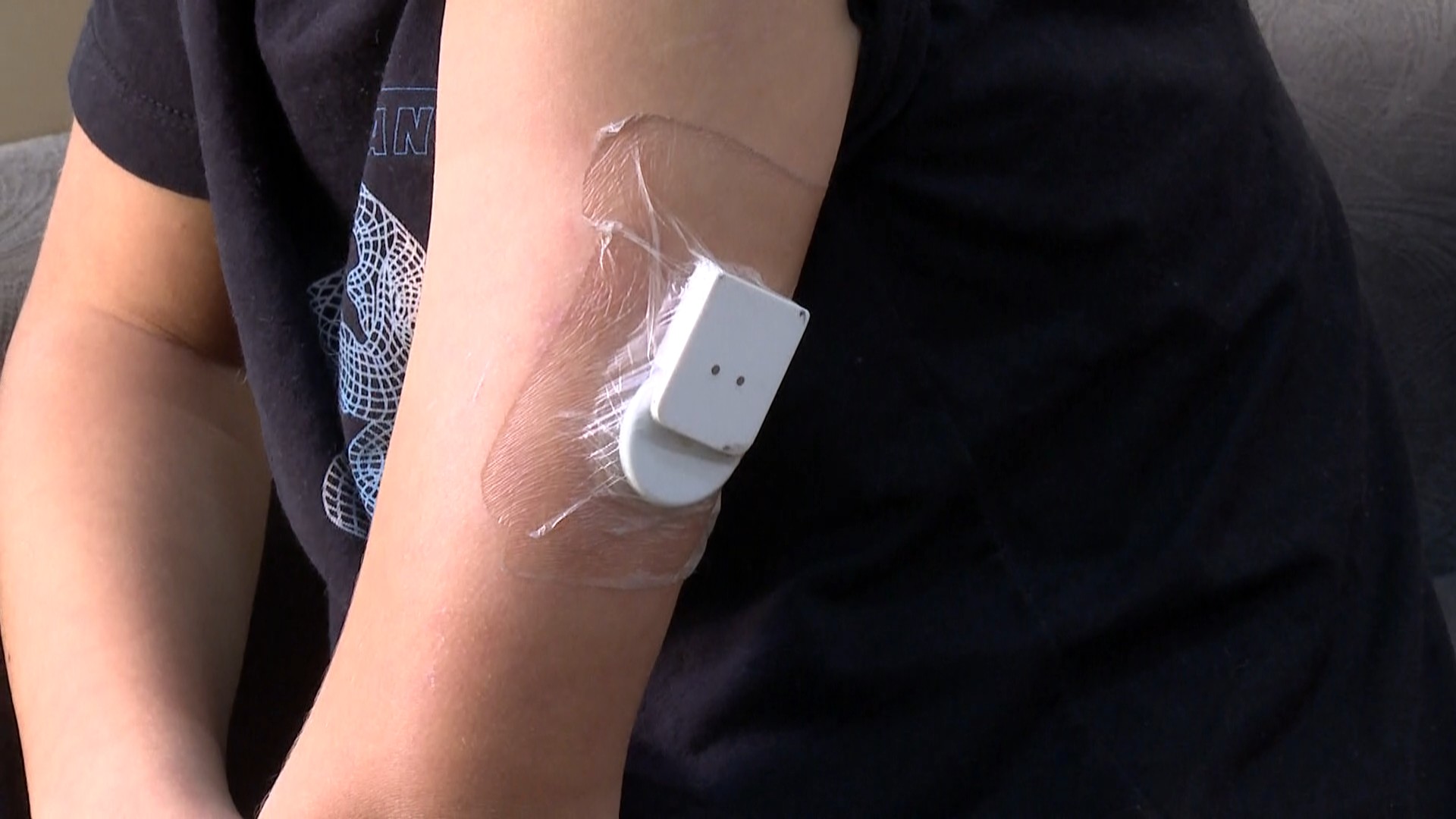
Even with the law passed more than a year ago, families are still waiting for blood glucose sensors for children with diabetes in Paraná
⚡ Quick Summary
Families wait for blood glucose sensors for children with diabetes in Paraná Despite a law enacted in 2024 determining that the public health system in Paraná must offer digital blood glucose measurement devices for children and adolescents with diabetes, the families of these patients are still waiting for the devices to be delivered.
Families wait for blood glucose sensors for children with diabetes in Paraná
Despite a law enacted in 2024 determining that the public health system in Paraná must offer digital blood glucose measurement devices for children and adolescents with diabetes, the families of these patients are still waiting for the devices to be delivered.
This is the case with the family of Felipe, 9 years old. He discovered he was diabetic two years ago and began using the digital sensor while participating in a study, which provided the equipment free of charge.
In general, these devices provide quick results, in seconds, from a small drop of blood, helping to control daily health. Each sensor costs, on average, R$300 and lasts two weeks.
✅ Follow the g1 PR channel on WhatsApp
"Pricking your finger is like a photo and the sensor is like a video. I can see everything that happened in the 24 hours of the day, I can see if the blood sugar was stable, I can see trend arrows, have an idea of what will happen, a certain predictability. With the blood glucose strip, you can't have that idea. Diabetes is very uncontrolled. So the sensor, it gives us a little control", explains Deise Ramos, mother of Philip.
Even with the law passed more than a year ago, families are still waiting for blood glucose sensors for children with diabetes in Paraná
RPC
With the end of the research, the family started to buy the sensors on their own. However, they live with the unpredictability of knowing whether they will be able to afford the device next month.
"I buy two sensors and pay in four installments. Then, the next month, I'll see if I can do it. I won't necessarily be able to do it", details the mother.
The family of 9-year-old Benjamin lives a very similar situation.
"For me, as I am self-employed, every day is a day, every month is a month. We lose ground, we lose that feeling of security. Maybe, tomorrow, I will have to choose between taking care of things around the house, or his treatment", says Alexandre Monteiro de Souza, the boy's father.
READ ALSO:
'I called my children my brothers': PR victim who reported a woman arrested for pretending to be a child in SC tattooed a fake name used by the suspect
Understand: Influencer who filmed UFO decides to move away from social media
Sanction: Tourist who jumped into Iguaçu Falls to get a cell phone could be fined and banned from returning to the park, says Federal Government
Despite the announcement of the distribution, families are still waiting
Even with the law passed more than a year ago, families are still waiting for blood glucose sensors for children with diabetes in Paraná
RPC
The law sanctioned in December 2024 provides for the distribution of the device to patients aged between 4 and 17, and that the application of the law should be regulated by the State Department of Health (SESA).
In addition to age, it provides for the requirements for continuous treatment in the Unified Health System (SUS), proof of hyposufficiency – that is, lack of resources – and a medical report from the SUS that indicates the need for frequent monitoring of blood glucose levels.
According to the secretariat, around 500 people in this age group are already undergoing treatment through the SUS in Paraná. The expectation is that the program will represent an investment of approximately R$5 million per year.
The law would come into effect 60 days after publication in the Official Gazette, that is, around March 2025. However, the distribution of sensors has not yet been implemented and there is no forecast for when this should happen.
In September 2025, Sesa announced that Paraná was the first to formalize the free distribution of digital blood glucose sensors.
Among the criteria released by the secretariat, in addition to those provided for in the law, is that the patient must be a beneficiary of Bolsa Família, which surprised the Paraná Diabetic Association (Apad), which helped in drafting the state law. "The law was supposed to be general, and to come into force as soon as possible, because it is a technology that is available", argues Osvaldo Avelino, president of the association.
In a note, the State Department of Health informed that the process of purchasing the devices is being processed internally and that it will be announced as soon as the notice is officially published. He also said that the Bolsa Família program was chosen as a more agile way of reaching low-income users.
"The program will be implemented gradually and future expansion will depend on the need and acceptance by SUS users", says the note.
Despite this, for families waiting, every day counts.
"Constant hypoglycemia and several severe hypoglycemias can cause neurological damage. I feel that I am preventing my son from having a neurological problem. I can work before the problem arrives", says Deise Ramos.
VIDEOS: Most watched on g1 Paraná
Read more news on g1 Paraná.
🗞️ 4 sources covered this story

PEC on BC autonomy returns to the agenda of the Senate's CCJ even without consensus
CNN Brasil
More than 30 dolphins delight tourists in Arraial do Cabo
CNN Brasil
BYD Atto 2 is a PHEV hybrid that runs more than 1,000 km and costs R$150,000
CNN Brasil
Former Air Canada pilot accused of flying with fake license for 17 years
CNN Brasil📰 Related Articles

The Last Dance of a little Super Hero in a mask
Observador
The mission to straighten what began to be crooked
Observador
Mega-Sena: bet made in Greater Recife hits the corner and wins R$ 26 thousand
G1 Globo
Operation in Maré impacts the routine of residents and causes moments of panic on the BRT
G1 Globo
Military Police seize more than 23 kg of marijuana in an abandoned garage in Banhado, in São José dos Campos
G1 Globo