City Hall proposes granting Praça Roosevelt to the private sector; patrons fear restricted access and price increases
⚡ Quick Summary
Praça Roosevelt, in the city center, will be granted to the private sector São Paulo City Hall opened a public consultation to grant Praça Roosevelt, in the center of the capital, to the private sector.
Praça Roosevelt, in the city center, will be granted to the private sector
São Paulo City Hall opened a public consultation to grant Praça Roosevelt, in the center of the capital, to the private sector. The project foresees renovations, expansion of green areas and improvements in the connection with Parque Augusta, but has generated concern among visitors, who fear access restrictions and increased prices charged at the site.
The concession will have a term of 20 years and will generate, according to estimates by the City of São Paulo, around R$55.8 million over the term of the contract. The value considers investments, operational expenses and payments that the future concessionaire will have to make to the municipality (read more below).
The public hearing will be held virtually on June 17, at 10 am. Contributions from the population can be sent until July 1st, using a virtual form, which must be sent to the email [email protected].
The proposal establishes that the future concessionaire will be responsible for maintenance, cleaning, security and care of the square. Among the planned interventions are the renovation of the pergola, the restoration of two kiosks and the expansion of the dog park.
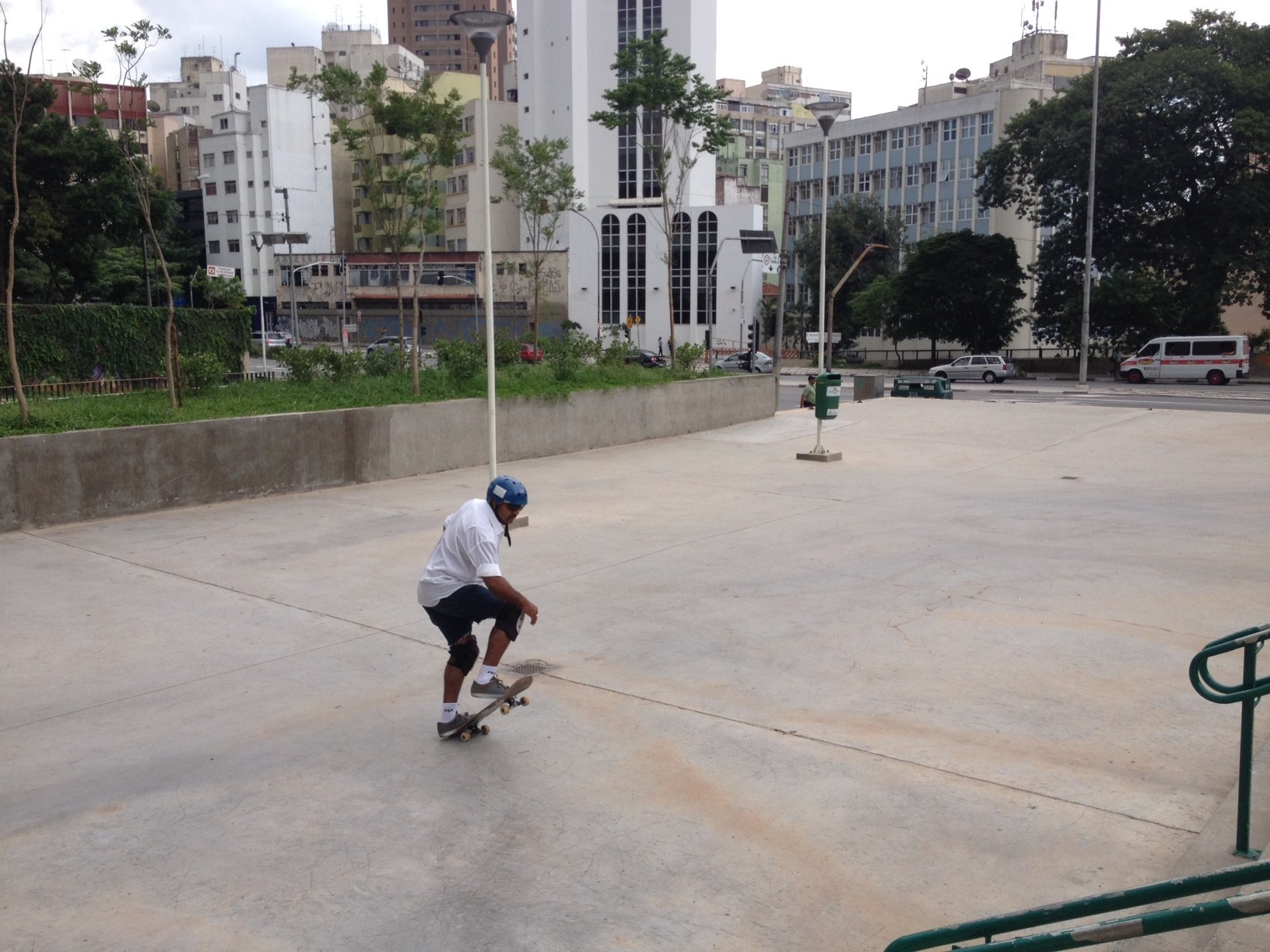
Part of the Praça Roosevelt area that will be reserved for skateboarders
Márcio Pinho/G1
The project also provides for a direct connection between Praça Roosevelt and Parque Augusta via Rua Gravataí. The stretch should receive rain gardens, new trees, lighting and urban furniture.
According to the city hall, access to the space will remain free and open. The concession rules prohibit the partial or total closure of the square for events. Even so, the proposal divides opinions.
"I think that the public authorities do have the resources to maintain the square, to renovate the square. This is a square for everyone, open to everyone. I think it has to continue to be entirely public", said systems analyst Sidnei Viana.
Sidnei cites Vale do Anhangabaú as an example of what he fears will happen at Roosevelt. According to him, the place hosts private events and is "all closed, all sealed".
"Today you will have any event in Anhangabaú, it is completely closed, completely sealed. I think that no private company will take over Praça Roosevelt without wanting to profit and take advantage of this traffic in some way", he said.
Chef Luana Suave also questions whether the concession will keep services accessible.
"People go to Ibirapuera, pay R$10 for coconut water. I go with a family of five, it's already R$50 for coconut water. Will this concession be accessible to the people?", he stated.
Concession
The concession will last 20 years and will generate around R$55.8 million over the course of the contract, according to city hall estimates. The winning company will be chosen by the highest bid offered to the municipality.
The notice establishes that the interested company must pay the city hall a minimum amount of R$2.96 million to take over the management of the complex. Whoever presents the highest offer above this value will win the bid.
The contract also provides for periodic payments to the municipality and sharing of revenue obtained from the economic exploration of the space. Among the expected sources of revenue is the commercialization of so-called naming rights, which allow a private brand to be associated with the name of Praça Roosevelt.
Community participation
For architect and urban planner Ciro Pirondi, an eventual concession could be positive if it preserves the public character of the square.
"The square is a public square. Private interests have to find harmony. It's not that I'm against doing it. But we need to find harmony in this process. It's not easy," he said.
According to him, successful urban projects depend on political will, technical competence and population participation.
"What changes an urban place is when there is sincere political will, technical competence and the involvement of the population", he stated. Pirondi adds that, given the inability of public authorities to manage certain spaces, a concession may be better than abandonment.
"If the public administration is unable to continue managing it, it is better than abandonment. But giving it a use must have fundamental factors in any urban action anywhere in the world", he stated.
Cultural hub
The discussion about the future of Roosevelt takes place in one of the main cultural hubs in the center of São Paulo.
In the 1950s and 1960s, bars in the region became bossa nova strongholds and welcomed artists such as João Gilberto, Johnny Alf and Baden Powell. It was also in the region that Elis Regina made one of her first performances in São Paulo.
Surrounding the square are spaces such as Cine Bijou, Espaço Parlapatões, Teatro Satyros and Teatro Cultura Artística.
For theater director Rodolfo García Vázquez, the community that uses the space must participate in the discussion.
"When you think about private initiative, you always think that private initiative is aimed at profit. And profit is not always related to the interests of a community. So I think that, if we sit down, talk, dialogue and create something together, it would be something that we could think of as a good solution for the square", he stated.
In a note, the city hall informed that the project follows the procedures foreseen for municipal concessions.
📰 Related Articles

[FAKE] Keiko Fujimori is defeated for the fourth time in presidential elections in Peru by a minimal margin
G1 Globo
Home of Jornal Nacional at the World Cup is in the heart of Manhattan Island, in New York
G1 Globo
With Wesley's injury and cut, the Brazilian team suffers again for the third consecutive World Cup with players on the right side
G1 Globo
Dupla Sena today: results of contest 2967 and numbers drawn
G1 Globo
New tests indicate progress in the treatment of Neymar's right calf, says CBF
G1 Globo