


Plant that walks? Meet the Amazon palm tree that appears to move through the forest
⚡ Quick Summary
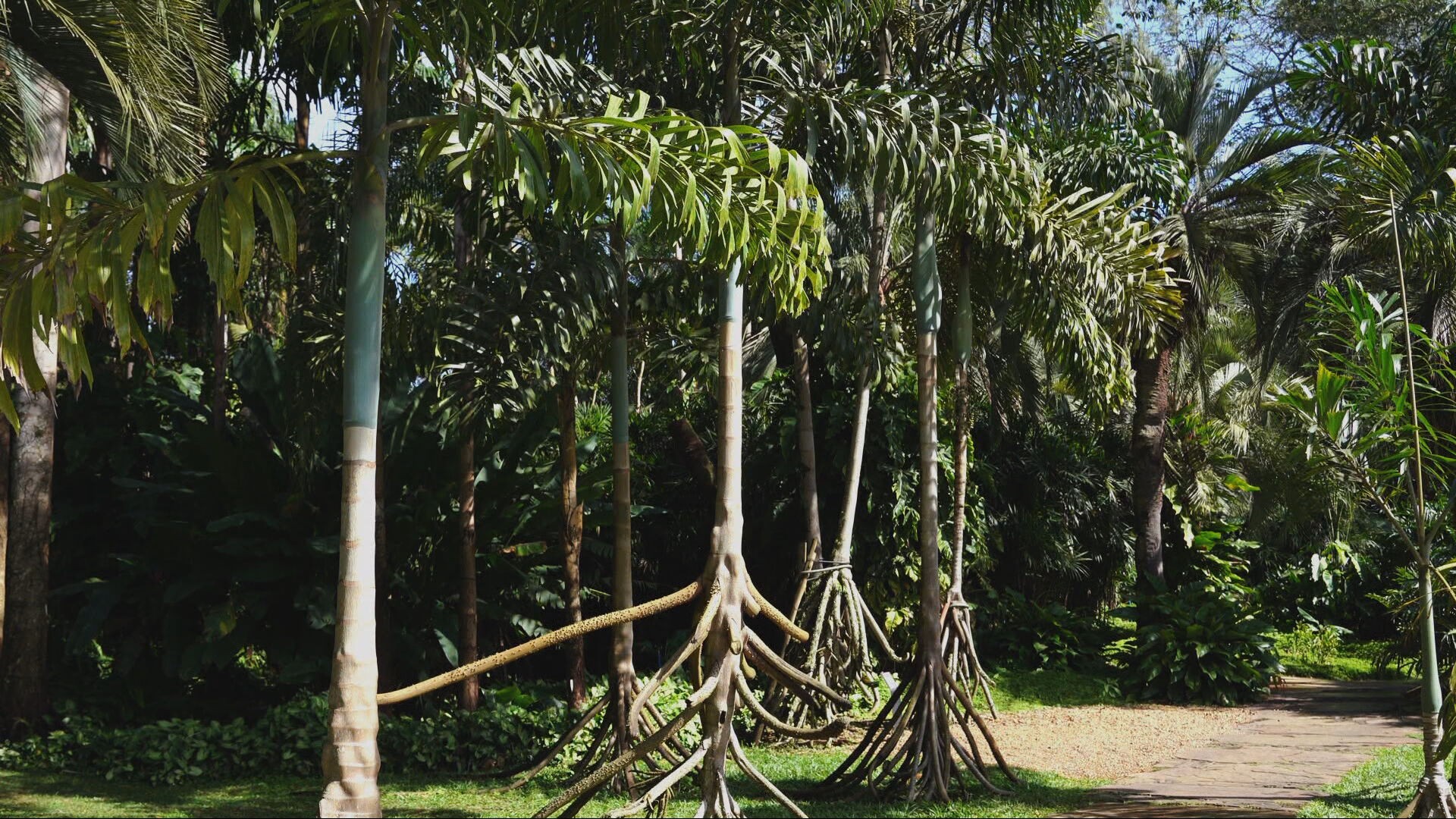
Paxiúba Brendon Campos/Instituto Inhotim In the Amazon, a palm tree resting on roots that resemble giant legs arouses curiosity because it supposedly moves between the trees. But is the plant really alive?
Paxiúba
Brendon Campos/Instituto Inhotim
In the Amazon, a palm tree resting on roots that resemble giant legs arouses curiosity because it supposedly moves between the trees. But is the plant really alive? According to Osvanda Silva de Moura, PhD in Botany and professor at the Federal University of Rondônia (Unir), everything is just an illusion.
"It's a natural process of replacing supporting roots. New roots grow and old ones decompose, generating a false sensation of movement", he explains.
In other words, the new roots grow in other directions, while the old ones die naturally. For anyone who observes the plant at different times, the impression is that it has changed location.
The plant is popularly known as paxiúba or “walking palm”. The belief that it walks through the forest arose precisely because of these "support roots", structures that can reach up to two meters in height and resemble tentacles or large spider legs. However, according to Osvanda, there is no scientific evidence of active displacement of the trunk.
"The result is an illusion. The trunk appears to move when, in fact, it remains in the same place", he explains.
Trending videos on g1:
Now on g1
Adaptation to survive
The roots that gave paxiúba its fame have an essential function for the survival of the species. Found mainly in humid areas, such as floodplains and regions subject to flooding, the plant needs an efficient support system.
"The main function of these roots is to guarantee stability in swampy, unstable and often flooded soils", explains the teacher.
Furthermore, the roots help exchange gases in environments with little oxygen and help the plant achieve better lighting conditions.
Socratea exorrhiza belongs to the Arecaceae family, which occurs from Central America to the Amazon Basin
Carroll Perkins/iNaturalist
Importance for fauna
Paxiúba also plays an important role in the forest’s food chain. Its fruits are consumed by different animals, such as monkeys, tapirs, wild pigs and birds, including toucans.
"It serves as the basis for the local food chain. The animals that consume its fruits also help to disperse the seeds, contributing to the regeneration of the forest", says Osvanda.
The roots also serve as shelter for small mammals, insects and other organisms.
Use by traditional communities
The palm tree is also part of the daily life of Amazonian communities. Wood is used in the construction of houses and rustic structures. The seeds are transformed into handicrafts and biojewelry.
There are records of uses in traditional medicine, in addition to the use of the thorny roots to grate cassava.
"The roots go through a preparation process so that the thorns become more resistant and can be used in this work", explains the researcher.
How to identify paxiúba?
The species, known scientifically as Socratea exorrhiza, is typical of the Amazon, but also occurs in other tropical regions of Central and South America. The plant has thorny aerial roots that form a kind of cone, supporting the trunk above the ground.
The trunk is thin, straight and smooth, reaching between 10 and 20 meters in height — with records of specimens reaching around 30 meters.
The leaves are concentrated in the crown and have a feather-like shape. In addition to paxiúba or paxiubeira, the species is also known as walking palm, walking palm and seven-legged palm.
Risk of disappearance
Like other Amazonian species, paxiúba faces threats such as deforestation, fires and climate change. According to the researcher, the disappearance of the species could cause impacts at different levels of the ecosystem.
"The fruits feed various animals, the roots serve as shelter for fauna and the species participates in the dynamics of the forest. Their absence would cause cascading effects", he states. In addition to environmental damage, communities that use the plant would also be affected.
"Every species has an ecological function. The conservation of paxiúba is essential for maintaining biodiversity and the balance of tropical forests", he concludes.
🗞️ 4 sources covered this story

So much “detail and rigor” that the painting looks “real”
Observador
4 controversies that the 2026 World Cup had before it started
esportes.r7.comPolice will investigate fire in garage that destroyed more than 20 buses in BH
Rádio Itatiaia
The list of Uber da Droga VIP customers that PSP caught
Observador📰 Related Articles

There are six crimes per day against members of the PSP and GNR
Observador
Tagus. River connections will have reinforced opening hours
Observador
Luso-Venezuelans optimistic after capture of Nicolás Maduro
Observador
The Uber of drugs. Mourinho's "per supuesto"
Observador
Financial market assesses more limited impact with new pricing
CNN Brasil