Commission points to 70% progress in plan to combat slave labor in MT
⚡ Quick Summary
The plan was launched in 2024, foreseeing achievement of goals by 2030.
The plan was launched in 2024, foreseeing achievement of goals by 2030.
SESP
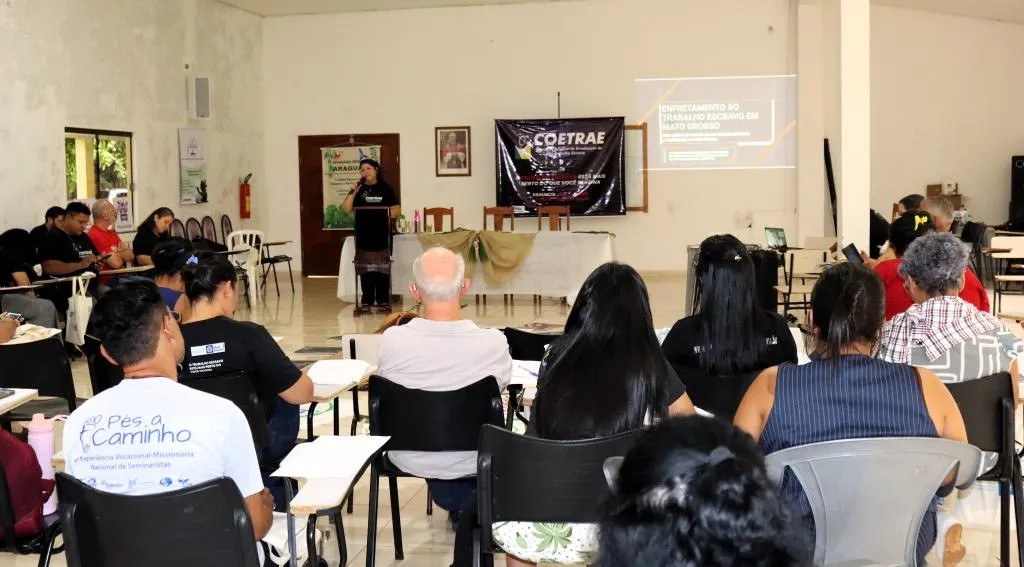
The State Commission to Combat Slave Labor (Coetrae), linked to the State Secretariat for Public Security (Sesp), reported that around 70% of the actions foreseen in the 3rd State Plan for the Eradication of Slave Labor in Mato Grosso have already been completed or are underway, two and a half years after the launch of the initiative.
Established in 2024, the plan brings together 151 goals distributed across five strategic areas: assistance to victims, prevention, repression, management and production of knowledge, in addition to governance. The schedule foresees the execution of actions until 2030.
According to the monitoring carried out by the commission, most of the objectives progressed within the established deadline. The goals still pending depend on external factors, such as the implementation of public policies and decisions from different governmental and social spheres.
✅ Click here to follow the g1 MT channel on WhatsApp
Among the results presented, Coetrae highlighted that 627 workers were removed from situations similar to slavery in Mato Grosso in 2025 alone. After inspection operations, those rescued received care through the specialized support network.
In the area of training, 150 civil police officers underwent training based on the “Slave, Neither Think!” methodology, aimed at improving investigations and welcoming victims.
Preventive actions also reached the entire state education network. Teachers from state schools in the 142 municipalities of Mato Grosso received training in the same methodology, becoming multipliers of information on the topic within school communities.
Now on g1
In partnership with Coetrae, the Integrated Action Project (PAI) qualified 370 professionals in the areas of social assistance and health, including psychologists and social workers, to work in assisting victims. The training covered the reception and referral protocols provided for in the public policy to combat slave labor.
Another initiative provided training to 60 leaders in the Araguaia region, including indigenous representatives, quilombolas, retreateiros and human rights defenders, who began to work on disseminating information on preventing and combating this type of crime.
According to the president of Coetrae, Márcia Ourives, the advances are the result of the joint action of the 24 institutions that make up the commission, in addition to the support and autonomy guaranteed by the Government of Mato Grosso and Sesp.
Last year, the Public Security Secretariat adhered to the Letter of Commitment to Renegotiate National Policies to Combat Slave Labor, reinforcing its commitment to strengthening prevention and repression actions throughout the state.
Sesp highlights that Mato Grosso is the only Brazilian state to have a state commission to combat slave labor inserted directly into the organizational structure of the secretariat. Created in 2007, Coetrae is considered a national reference in the area.
📰 Related Articles

Strike closes most pre-school and 1st cycle schools
Observador
The next poll of voting intentions for president, after Nexus shows Lula in 1st
CartaCapital
USA threatens to deport influencers with 'posts' about the World Cup
Observador
GNR arrests five drug trafficking suspects in Guimarães
ObservadorHeavy rain opens giant crater on the eve of the city's anniversary, in Três Lagoas; see VIDEO
G1 Globo