Rio das Ostras Jazz & Blues attracts tourists and consolidates Festival
⚡ Quick Summary
There were more than 30 attractions, nine of which were international.
There were more than 30 attractions, nine of which were international.
Secom
According to the Secretary of Economic Development and Tourism, Pablo Kling, the 22nd edition reinforced the role of Rio das Ostras as a reference tourist-cultural destination, with regional, state, interstate reach and international presence.
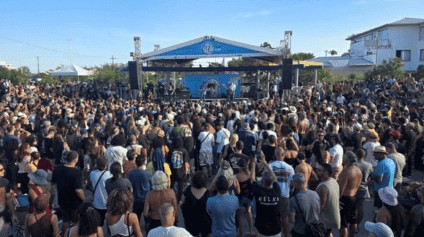
"During the four days of programming, around 100 thousand people circulated around the city, passing through the five stages, commercial establishments, accommodation facilities, bars, restaurants and tourist attractions. This intense movement represented an important milestone, boosting the local economy and strengthening the entire tourism chain", he highlighted.
Pablo highlights that the Rio das Ostras Jazz & Blues Festival promotes the entire production chain of the sector, benefiting everything from artisans to restaurants, including the hotel chain, commerce, services, transport and creative economy.
Furthermore, the visibility generated by the festival contributes to strengthening and promoting the city's image, expanding Rio das Ostras' presence in the cultural tourism and event markets, including internationally, and increasing the potential for attracting foreign visitors.
Research carried out by the Secretariat of Economic Development and Tourism of Rio das Ostras evaluated the profile of visitors to the city during the Jazz & Blues Festival, held between the 4th and 7th of June, during the Corpus Christi holiday. According to data released this Tuesday, the 9th, the event generated direct economic movement in excess of R$10 million, driven by local consumption, day trippers and, mainly, direct tourist spending.
The research identified that 70.5% of the participating public was made up of tourists, 24.2% of residents and 5.3% of day trippers, highlighting the event's strong capacity to attract visitors from other locations.
The data shows that the festival moved different segments of the local economy, benefiting sectors such as commerce, gastronomy, transport, hotels, services, suppliers and the creative economy. The direct economic movement of more than R$10 million reinforces the strategic role of cultural events as instruments of economic development, income generation and strengthening tourism in the municipality.
Within the scope of the creative economy and productive inclusion, the festival doubled the participation of local producers compared to the previous year, bringing together 65 artisans, including eight collectives, and innovating by creating, for the first time, a space for PCD artisans.
With regard to accommodation, the homes of friends and family were the main option for 41.8% of tourists. Hotels and inns were used by 21.4% of respondents, while seasonal rental platforms and temporarily rented properties accounted for 21.7%. Summer homes were chosen by 15.1% of tourists.
Satisfaction and loyalty indicators demonstrated the success of the experience and the public's strong connection with the destination. More than 92% of the evaluations were positive, considering those interviewed who stated that the festival met expectations or exceeded expectations.
The festival also had a high level of loyalty. Around 67.8% of the public reported having already participated in previous editions, while 32.2% experienced the event for the first time.
Finally, the intention to return in less than a year was expressed by a significant 85.8% of the tourists and excursionists interviewed, reinforcing the festival's role in combating seasonality and consolidating Rio das Ostras as one of the main tourist and cultural destinations in the country.
📰 Related Articles

Number of foreign students grew 283% in ten years
Observador
Everyone talks about El Niño, but this heat is not to blame
Observador
About a Michelin meal and crying in the bath
Observador
How reporting channels strengthen management quality
Observador
Why is summer more difficult for pregnant women?
Observador