Banned from the World Cup: fans of two teams are banned from entering the USA
⚡ Quick Summary
Why are fans from Iran and Haiti banned from entering the USA for the World Cup? Citizens of Iran and Haiti are banned from entering the United States by decision of the Donald Trump government.
Why are fans from Iran and Haiti banned from entering the USA for the World Cup?
Citizens of Iran and Haiti are banned from entering the United States by decision of the Donald Trump government. Both countries qualified for the World Cup, but fans living in these territories will be unlikely to be able to watch the games in person.
✅ Follow the g1 international news channel on WhatsApp
In June 2025, Trump signed the order determining that citizens of Iran and Haiti, as well as 17 other countries, would be prevented from entering the USA for reasons of national security. The president stated that the measure was aimed at preventing terrorist attacks and other threats.
The White House said athletes, coaches and close relatives traveling to the World Cup, Olympics or other major sporting events are exempt from the restriction.
Exceptions also include permanent residents and citizens with dual nationality who have passports from countries not affected by the measure.
In the case of Iran, the controversy took on a new shape this year after the country was the target of an offensive by the United States.
The Iranian team's participation itself was placed in doubt, as the team's three games in the group stage will be played in the United States. Although the American government granted visas to the athletes, around 15 members of the coaching staff were denied entry.
Given this scenario, the team chose to establish its base in Tijuana, Mexico. The difficulties, however, were not limited to logistics: just a few days before the start of the World Cup, the Iranian Football Federation had its ticket quota revoked. According to FIFA regulations, 8% of the entries for each match are reserved for the federations of the teams involved.
For five other countries that will also be at the World Cup — Algeria, Cape Verde, Ivory Coast, Senegal and Tunisia — the USA has suspended the requirement for a deposit of up to US$15,000 (R$75,000) for entry into the country. The measure, however, only applies to fans who have tickets to the World Cup.
Scared immigrants
Haitians celebrate national team classification in November 2025
REUTERS/Egeder because Fildor
For many immigrants already living in the US, the challenge is different. Even with tickets, some fans report fear of attending World Cup games and ending up being detained by agents from the Immigration and Customs Service (ICE).
The fear is especially strong among Latin American communities, including thousands of Haitians living in the country.
"Singing my country's national anthem in a stadium, in front of everyone, is a historic moment that no one would want to miss," said Emile, a Haitian who lives in the United States and preferred not to reveal his surname, in an interview with AFP.
"But at the same time, I think twice. I don't want ICE to arrest me," he added. "My lawyer advised me not to travel to avoid being intercepted at the airport."
Fears grew after an immigrant who had sought asylum in the United States was detained and deported after attending a Club World Cup match in New Jersey last year. The information comes from the organization Human Rights Watch.
Human rights groups also fear that immigration agents will increase inspections in areas close to stadiums and in Fan Zones, spaces intended for fans that usually bring together thousands of people during major competitions.
Are there risks?
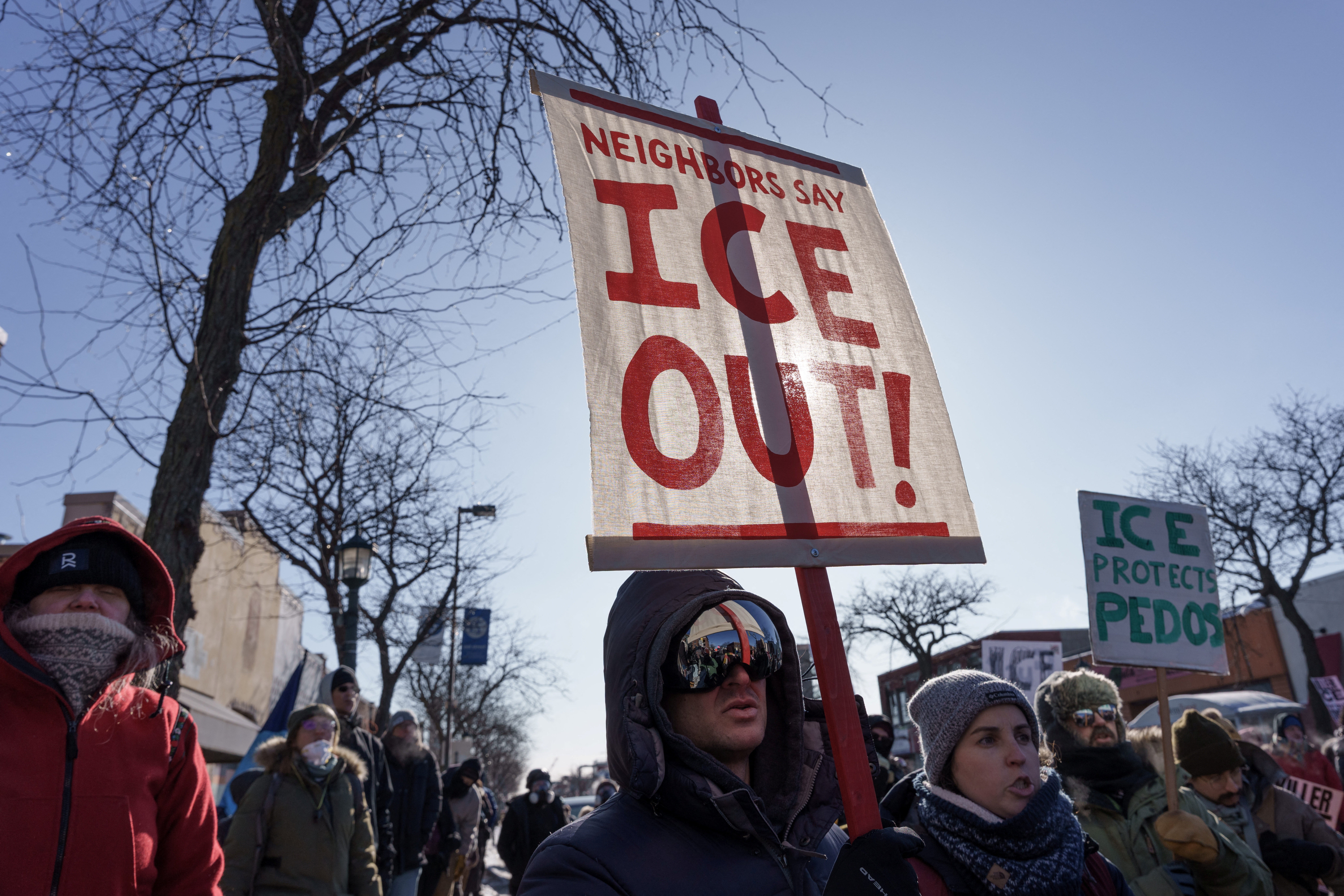
Protesters carry signs condemning Immigration and Customs Enforcement (ICE)
REUTERS/Tim Evans
More than 120 U.S. civil rights organizations issued a travel warning in April warning of the "risk of serious rights violations" against fans, players, journalists and other visitors. According to the warning, people who travel to the US may face risks such as being denied entry, being detained, imprisoned or deported, as well as suffering racial discrimination or "cruel, inhuman or degrading" treatment while in the custody of immigration authorities.
On the other hand, the Trump administration denied the existence of any risk to people legally in the United States and stated that there is no reason to worry in these cases.
"What makes a person a target of immigration authorities is whether or not they are in an irregular situation in the United States," he added.
To AFP, FIFA stated that "it is committed to respecting all internationally recognized human rights and strives to promote the protection of these rights."
VIDEOS: now on g1
Now on g1
🗞️ 4 sources covered this story


📰 Related Articles
/https://i.s3.glbimg.com/v1/AUTH_59edd422c0c84a879bd37670ae4f538a/internal_photos/bs/2026/a/9/IU4S9lRayU86UomkCEEQ/14recreio.jpeg)
Explosion in Recreio dos Bandeirantes
G1 Globo
Israeli army attacks Beirut suburbs amid expectations of peace agreement between US and Iran
G1 Globo
Bonfire measuring almost 20 meters maintains a century-old tradition on Saint Anthony's Day in MG; VIDEO
G1 Globo
New visit by Qatar delegation fuels speculation about Iran-US framework agreement
Euronews PT
'Vem pra Orla' returns this Sunday in Santos; check out the attractions and changes in traffic
G1 Globo