'I was waiting to lose weight to live': Unicamp dancer turns experience with fatphobia into research and show
⚡ Quick Summary
Dancer uses social media and the stage to combat fatphobia in dance Ale Carmona Dancer Júlia Del Bianco, 38, transformed the aesthetic pressure she suffered in ballet into academic research and activism in Campinas (SP).
Dancer uses social media and the stage to combat fatphobia in dance
Ale Carmona
Dancer Júlia Del Bianco, 38, transformed the aesthetic pressure she suffered in ballet into academic research and activism in Campinas (SP).
📲 Join the g1 Campinas channel on WhatsAp
After facing health problems in her youth for trying to achieve extreme thinness, she uses social media and her master's degree at the State University of Campinas (Unicamp) to prove that fat people can also dance.
Aesthetic pressure and activism
Born in Limeira (SP), Júlia says she has always loved dancing. As a teenager, however, he realized that his body did not meet the standard required by ballet. Between the late 1990s and early 2000s, she gave in to aesthetic pressure.
To try to reach the weight considered ideal, the dancer resorted to restrictive diets and medication. This search caused injuries and illnesses. Even after graduating and starting teaching, she continued to face prejudice.
Júlia's perspective changed after her brother's death, around ten years ago. "I started thinking about what I was doing with my life, whether I was really living or just waiting to lose weight to live", he recalls.
It was then that she discovered the "body positive" movement and fat activism. For the artist, the agenda goes beyond self-acceptance. The theme involves the right to dignity, such as access to adequate structures and health treatments without discrimination.
With this change, Júlia started producing content on social media. The goal is to prove that non-standard bodies can also dance. The initiative attracted followers from other countries and messages from people who returned to dancing inspired by it.
"It feels like I'm reflecting what I went through and I'm not letting people be diminished either", says the dancer.
In this process, the dancer sought references in women who influenced her, such as fellow dancer Misty Copeland and models Ashley Graham and Fluvia Lacerda. She also highlights the impact of yoga teacher Jessamyn Stanley.
"It was the first time I saw someone doing the splits with a body like mine, so I said: wow, she is in yoga what I am in dancing", he says.
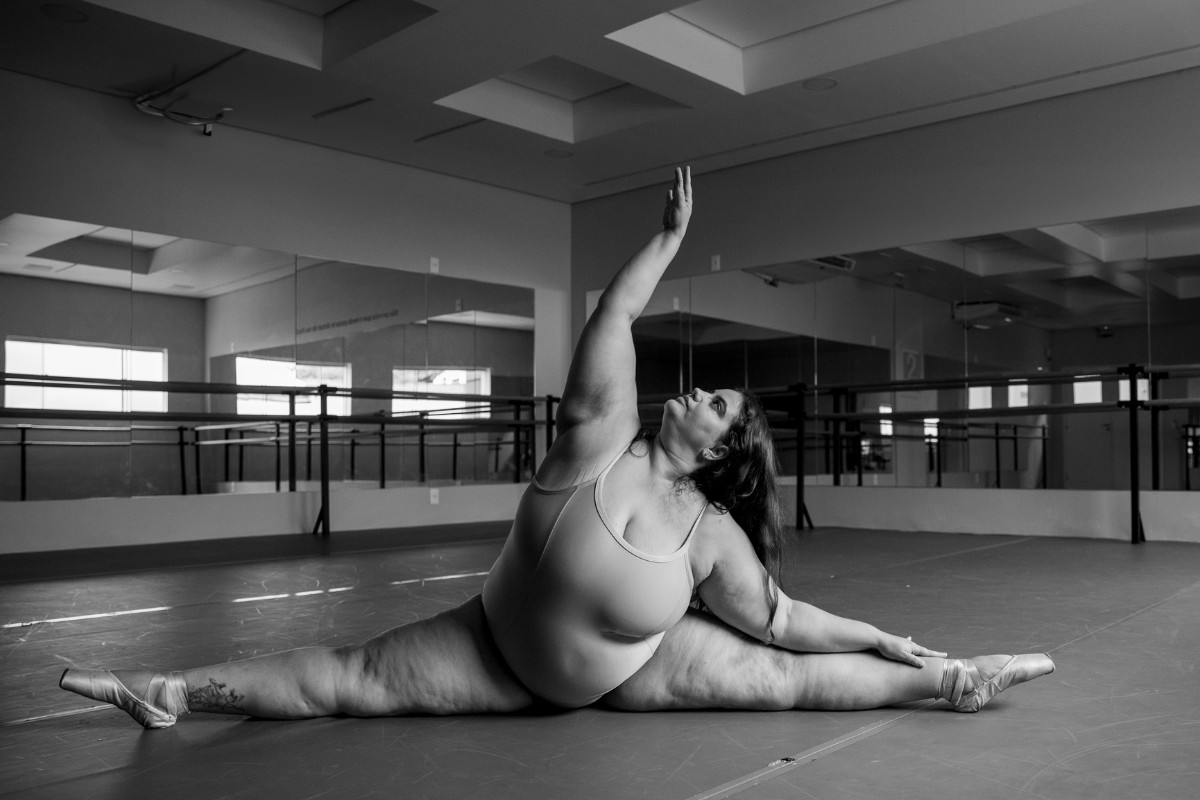
Júlia during the solo 'Não Cabe', created from her master's research on aesthetic pressure in ballet
Iza Seraphim
'Broken machine'
Júlia’s personal experience became academic research. In her master's degree, she investigates the origins of the body standards imposed in ballet. The work combines theory and practice and resulted in the solo show "Não Cabe", already presented at Sesc Piracicaba.
The researcher explains that the perception of weight has changed over time. "A fat body, in the past, was seen as a good thing, because resources were scarce. So, when a person was fat, they were a healthy person, a wealthy person", he states.
This view changed later. "With the industrial revolution, especially after machines and everything else, the fat body ended up becoming a broken machine", says the dancer.
Currently, Júlia warns of a movement to return to valuing extreme thinness. She points out that this trend is driven, among other factors, by the popularization of weight-loss pens.
The researcher also questions the use of the Body Mass Index (BMI) to classify obesity. Created in the 19th century based on European men, the calculation is criticized by her. "It does not cover women or a diversity of race. We need to analyze this. Not all fat people are sick", he points out.
For Júlia, associating fat with disability is a mistake. "Even if I were sick, wouldn't I have the right to dance?" he asks. "So you have to tell a person who has cancer, endometriosis, that they can't dance either. That's where we get prejudice. "
Health and readaptation challenges
In addition to aesthetic barriers, the dancer lives with the consequences of a cholesteatoma (abnormal growth of skin in the middle ear that causes inflammation). Júlia has undergone five surgeries since childhood and lost her hearing on one side.
Deafness on one side causes dizziness and directly affects training and presentations. One of the surgeries lasted more than five hours and required a month of complete rest.
"Staying in bed for a month is already difficult. For a dancer, it is almost death. So, it was a very long process of acceptance, patience and wisdom", he says.
Today, Júlia continues dancing, but respects her limits and her own body at 38 years old. "I'm not going to be the same as I was when I was 20, I can't want that, I have to think about now", he highlights.
For fat people who want to start ballet, the teacher has some advice: "Test an environment, look for places that welcome you, that encourage you to dance and not change your body. And do it."
*Intern under the supervision of Gabriella Ramos.
At 38, Júlia Del Bianco shares her movement routine on the internet to inspire other women
Ricardo Deideno
VIDEOS: everything about Campinas and the region
See more news about the region on g1 Campinas